ÉGLISE SAINT-JULIEN
Description
English
Deutsch
Dutch
Español
Italiano
Description
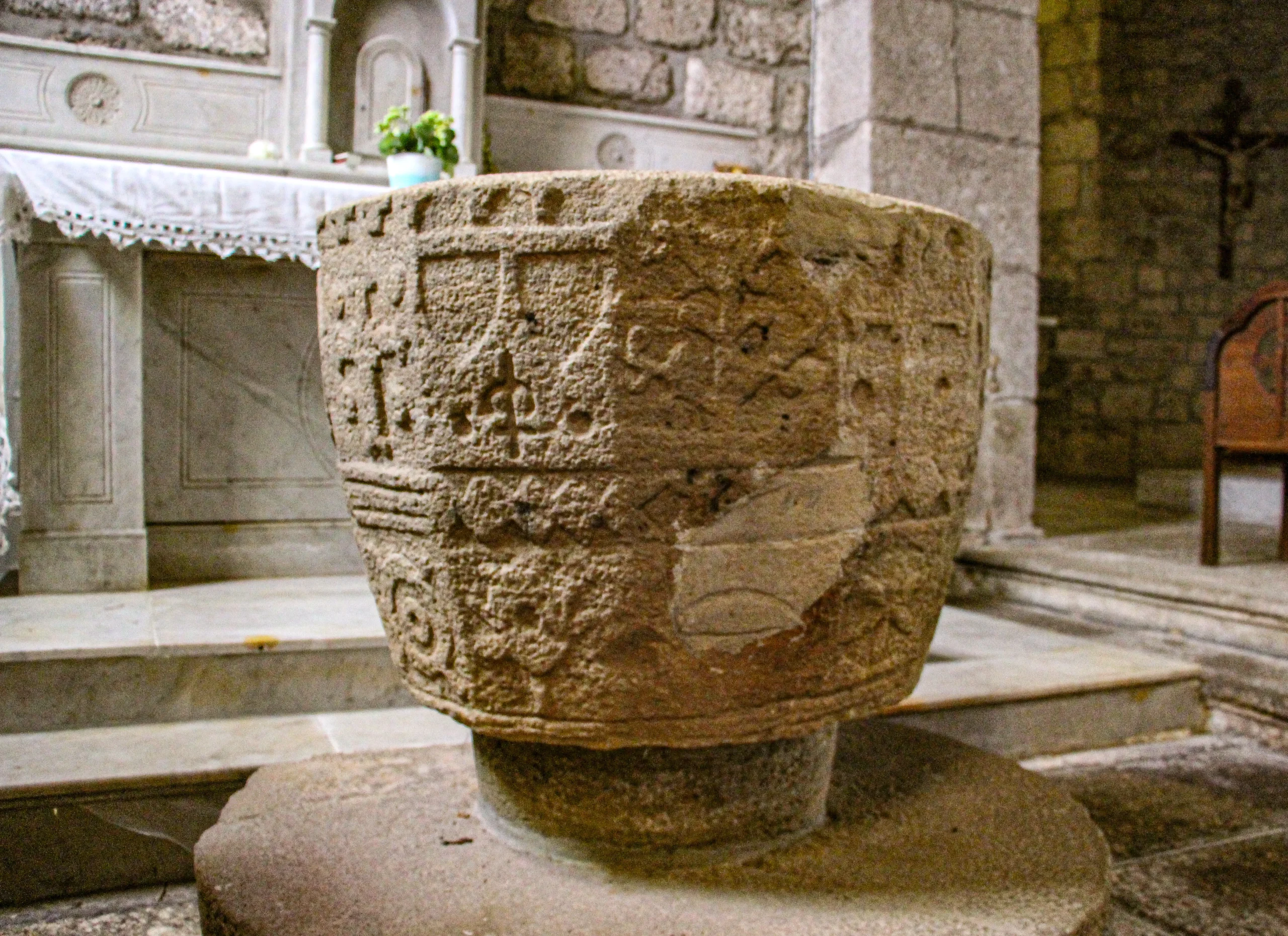
L’ancienne église du village, de facture romane, a été détruite lors de le Révolution. L’édifice actuel sortit de terre au XIXe siècle et est construit en grand appareil de granite. Longue de sept travées, l’église présente un imposant clocher-mur à trois niveaux sur sa façade ouest qui présente la particularité d’avoir une tour à toit flèche abritant un escalier. À l’intérieur, la nef est large de trois vaisseaux dont les deux latéraux se terminent en chapelles. La chapelle des fonts baptismaux abrite un imposant tableau représentant la sainte Famille ainsi que des fonts baptismaux sculptés de motifs géométriques. L’abside semi-circulaire du choeur accueille un tableau représentant saint Ferréol.
English
The old village church, of Romanesque construction, was destroyed during the Revolution. The current building was built in the 19th century and is made of large granite units. The church is seven bays long and has an imposing three-storey wall-belfry on its western façade, which has the particularity of having a tower with a spire roof housing a staircase. Inside, the nave is three vessels wide, the two side vessels ending in chapels. The baptismal font chapel houses an imposing painting representing the Holy Family as well as a baptismal font sculpted with geometric motifs. The semi-circular apse of the choir houses a painting representing Saint Ferréol.
Deutsch
Die alte romanische Dorfkirche wurde während der Revolution zerstört. Das heutige Gebäude wurde im 19. Jahrhundert errichtet und besteht aus großen Granitsteinen. Die Kirche hat sieben Joche und einen imposanten dreistöckigen Glockenturm an der Westfassade, der einen Turm mit Pfeildach und einer Treppe besitzt. Das Kirchenschiff ist dreischiffig, wobei die beiden Seitenschiffe in Kapellen enden. Die Taufbeckenkapelle beherbergt ein imposantes Gemälde der Heiligen Familie und ein Taufbecken mit geometrischen Motiven. Die halbrunde Apsis des Chors beherbergt ein Gemälde, das den Heiligen Ferréol darstellt.
Dutch
De oude dorpskerk, gebouwd in Romaanse stijl, werd verwoest tijdens de Franse Revolutie. De huidige kerk werd in de 19e eeuw gebouwd met grote granieten blokken. De kerk is zeven traveeën lang en heeft een imposante klokkentoren met drie verdiepingen aan de westgevel, die het ongebruikelijke kenmerk heeft van een toren met een torendak waarin een trap is ondergebracht. Binnen is het schip drie beuken breed en de twee zijbeuken eindigen in kapellen. De doopvontkapel herbergt een imposant schilderij met de afbeelding van de Heilige Familie en een doopvont met geometrische motieven. De halfronde apsis van het koor herbergt een schilderij van Saint Ferréol.
Español
La antigua iglesia del pueblo, de estilo románico, fue destruida durante la Revolución Francesa. La iglesia actual se construyó en el siglo XIX con grandes bloques de granito. La iglesia, de siete tramos de longitud, presenta en su fachada oeste un imponente campanario-muro de tres pisos, con la particularidad de una torre con tejado de aguja que alberga una escalera. En el interior, la nave es de tres tramos y las dos laterales terminan en capillas. La capilla de la pila bautismal alberga una imponente pintura que representa a la Sagrada Familia, así como una pila bautismal esculpida con motivos geométricos. El ábside semicircular del coro alberga una pintura de San Ferréol.
Italiano
L'antica chiesa del villaggio, costruita in stile romanico, fu distrutta durante la Rivoluzione francese. La chiesa attuale è stata costruita nel XIX secolo utilizzando grandi blocchi di granito. Lunga sette campate, la chiesa presenta un'imponente torre campanaria a tre piani sulla facciata occidentale, che presenta l'insolita caratteristica di una torre con tetto a cuspide che ospita una scala. L'interno è a tre navate, con le due laterali che terminano in cappelle. La cappella del fonte battesimale ospita un imponente dipinto raffigurante la Sacra Famiglia e un fonte battesimale scolpito con motivi geometrici. L'abside semicircolare del coro ospita un dipinto di San Ferréol.
Rieutort-de-Randon, 48700 Monts-de-Randon
Crédits: © Conseil départemental - Laura Saint-Léger