EGLISE SAINT GERMAIN – LOUVIGNY
Description
English
Deutsch
Dutch
Español
Italiano
Description
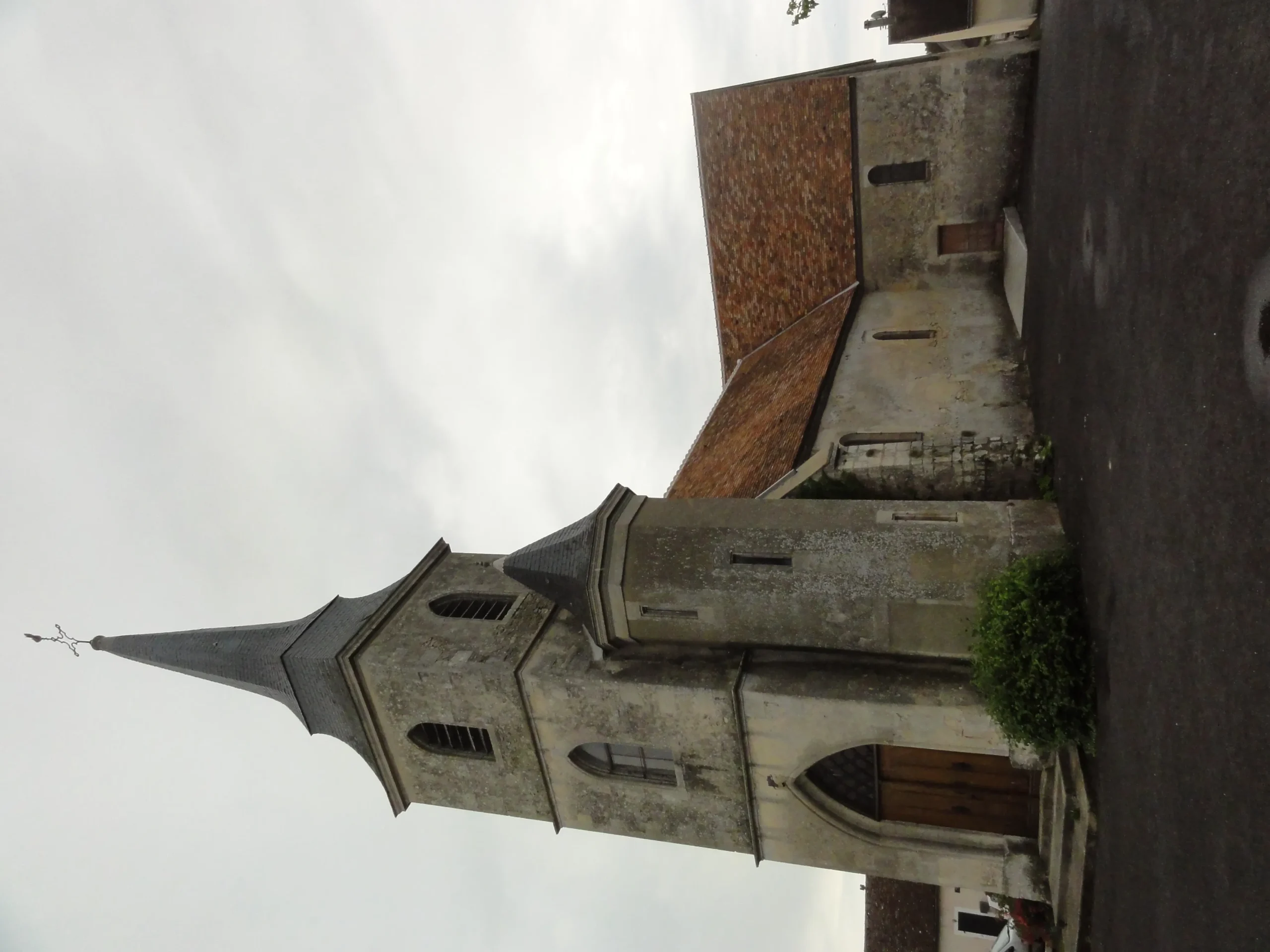
D’origine romane, l’église de Louvigny a subi de nombreuses transformations au fil du temps. Entre autres, les autels et le retable furent offerts au XVIIIème siècle par Monsieur François Thébault, riche donateur né à Louvigny. Une plaque commémorative est dressée en sa mémoire dans la sacristie de l’église après qu’elle fut retrouvée à la fin du XIXe siècle par l’abbé Chartrain, alors curé de la paroisse, sur le toit de son presbytère, à la place d’une tuile. On peut penser qu’on la soustrayait ainsi aux pillages de la Révolution. Le clocher en flèche, lui, date du XIXème siècle. Il remplaçait un campanile. C’est au XIXème aussi que furent posés les vitraux, le chemin de croix et les fonts baptismaux. Généralement en pierre, ceux-ci sont très originaux, puisqu’ornés dans le style Napoléon III, époque de leur fabrication, ils sont en fonte et sans doute un bel exemple de la production industrielle de ce temps. Le portail, typiquement roman, est précédé de deux marches dans lesquelles sont dessinées une étoile à huit branches et une croix. Il s’agit là peut-être d’un résumé de la vie du Christ, de l’Etoile de la Nativité à la Crucifixion. Plusieurs éléments classés au titre des Monuments Historiques ont été restaurés au fil de ces dernières années, grâce aux subventions de l’Etat et du Département de la Sarthe, ainsi qu’à la générosité des souscripteurs de la Fondation du Patrimoine. Ainsi, le remarquable tabernacle du maître-autel en bois doré. Peint en faux marbre au XVIIIème siècle, c’est un des plus grands tabernacles conservés en Sarthe. Le tableau situé juste au-dessus, superbement restauré lui aussi, et attribué à François Mongendre (1644-1690), représentant Saint Germain d’Auxerre rencontrant Sainte Geneviève enfant.
English
Of Romanesque origin, the church of Louvigny has undergone many transformations over the years. Among others, the altars and the altarpiece were donated in the 18th century by Mr François Thébault, a rich donor born in Louvigny. A commemorative plaque was erected in his memory in the sacristy of the church after it was found at the end of the 19th century by Abbot Chartrain, then parish priest, on the roof of his presbytery, in place of a tile. One can think that it was thus saved from the looting of the Revolution. The spire bell tower dates from the 19th century. It replaced a bell tower. It was also in the 19th century that the stained glass windows, the Way of the Cross and the baptismal font were installed. Generally made of stone, these are very original, as they are decorated in the Napoleon III style, the period in which they were made. They are made of cast iron and are undoubtedly a fine example of the industrial production of the time. The portal, typically Romanesque, is preceded by two steps in which are drawn an eight-pointed star and a cross. This may be a summary of the life of Christ, from the Star of the Nativity to the Crucifixion. Several elements classified as Historic Monuments have been restored in recent years, thanks to subsidies from the State and the Department of Sarthe, as well as the generosity of subscribers to the Heritage Foundation. Thus, the remarkable tabernacle of the high altar in gilded wood. Painted in faux marble in the 18th century, it is one of the largest tabernacles preserved in Sarthe The painting located just above, also superbly restored, and attributed to François Mongendre (1644-1690), representing Saint Germain d'Auxerre meeting Saint Geneviève as a child.
Deutsch
Die Kirche von Louvigny ist ursprünglich romanisch und wurde im Laufe der Zeit zahlreichen Umbauten unterzogen. Unter anderem wurden die Altäre und das Altarbild im 18. Jahrhundert von Monsieur François Thébault gestiftet, einem reichen Spender, der in Louvigny geboren wurde. Eine Gedenktafel in der Sakristei der Kirche erinnert an ihn, nachdem sie Ende des 19. Jahrhunderts vom damaligen Gemeindepfarrer Abbé Chartrain auf dem Dach seines Pfarrhauses an der Stelle eines Dachziegels gefunden wurde. Es ist anzunehmen, dass sie auf diese Weise den Plünderungen während der Revolution entzogen wurde. Der Glockenturm mit Pfeil stammt aus dem 19. Jahrhundert. Er ersetzte einen Campanile. Im 19. Jahrhundert wurden auch die Kirchenfenster, der Kreuzweg und das Taufbecken eingebaut. Sie sind im Stil von Napoleon III. verziert, der Epoche ihrer Herstellung. Sie sind aus Gusseisen und zweifellos ein schönes Beispiel für die industrielle Produktion dieser Zeit. Vor dem typisch romanischen Portal befinden sich zwei Stufen, in denen ein achtstrahliger Stern und ein Kreuz eingezeichnet sind. Möglicherweise handelt es sich hierbei um eine Zusammenfassung des Lebens Christi vom Stern der Geburt bis zur Kreuzigung. Mehrere denkmalgeschützte Elemente wurden im Laufe der letzten Jahre dank der Subventionen des Staates und des Departements Sarthe sowie der Großzügigkeit der Zeichner der Stiftung für das Kulturerbe restauriert. So zum Beispiel der bemerkenswerte Tabernakel des Hochaltars aus vergoldetem Holz. Jahrhundert mit falschem Marmor bemalt und ist eines der größten in der Sarthe erhaltenen Tabernakel Das Gemälde direkt darüber, das ebenfalls hervorragend restauriert wurde und François Mongendre (1644-1690) zugeschrieben wird, stellt den Heiligen Germain von Auxerre dar, der der Heiligen Geneviève als Kind begegnet.
Dutch
De van oorsprong Romaanse kerk van Louvigny heeft in de loop der jaren talrijke transformaties ondergaan. Onder andere de altaren en het altaarstuk werden in de 18e eeuw geschonken door de heer François Thébault, een rijke schenker geboren in Louvigny. In de sacristie van de kerk is een gedenkplaat ter nagedachtenis aan hem aangebracht, nadat deze aan het eind van de 19e eeuw door abbé Chartrain, de toenmalige pastoor, op het dak van zijn pastorie was gevonden, op de plaats van een dakpan. Waarschijnlijk is het zo gered van plundering tijdens de Revolutie. De hoge klokkentoren dateert uit de 19e eeuw. Het verving een klokkentoren. Het was ook in de 19e eeuw dat de gebrandschilderde ramen, de kruisweg en de doopvont werden geïnstalleerd. Deze zijn over het algemeen van steen en zeer origineel, want ze zijn versierd in de stijl van Napoleon III, de periode waarin ze zijn gemaakt, en zijn gemaakt van gietijzer, ongetwijfeld een mooi voorbeeld van de industriële productie van die tijd. Het portaal, typisch Romaans, wordt voorafgegaan door twee treden waarin een achtpuntige ster en een kruis zijn getekend. Dit kan een samenvatting zijn van het leven van Christus, van de Geboortester tot de Kruisiging. Verschillende als Historisch Monument geclassificeerde elementen zijn in de afgelopen jaren gerestaureerd, dankzij subsidies van de Staat en het Departement van de Sarthe, alsmede de vrijgevigheid van abonnees van de Fondation du Patrimoine. Bijvoorbeeld het opmerkelijke vergulde houten tabernakel van het hoofdaltaar. Het is een van de grootste tabernakels die in de Sarthe bewaard zijn gebleven Het schilderij hierboven, ook prachtig gerestaureerd en toegeschreven aan François Mongendre (1644-1690), stelt Saint Germain d'Auxerre voor, die Saint Geneviève als kind ontmoet.
Español
De origen románico, la iglesia de Louvigny ha sufrido numerosas transformaciones a lo largo de los años. Entre otras cosas, los altares y el retablo fueron donados en el siglo XVIII por el Sr. François Thébault, un rico donante nacido en Louvigny. Se ha erigido una placa conmemorativa en su memoria en la sacristía de la iglesia después de que el abate Chartrain, párroco de la época, la encontrara a finales del siglo XIX en el tejado de su presbiterio, en lugar de una teja. Es probable que así se salvara de ser saqueada durante la Revolución. El elevado campanario data del siglo XIX. Sustituyó a un campanario. Fue también en el siglo XIX cuando se instalaron las vidrieras, el Vía Crucis y la pila bautismal. Generalmente son de piedra, pero son muy originales, ya que están decoradas al estilo de Napoleón III, época en la que se fabricaron, y están hechas de hierro fundido, lo que sin duda es un buen ejemplo de la producción industrial de la época. El portal, típicamente románico, está precedido por dos escalones en los que se dibujan una estrella de ocho puntas y una cruz. Puede ser un resumen de la vida de Cristo, desde la Estrella de la Natividad hasta la Crucifixión. En los últimos años se han restaurado varios elementos catalogados como Monumentos Históricos, gracias a las subvenciones del Estado y del Departamento de Sarthe, así como a la generosidad de los suscriptores de la Fondation du Patrimoine. Así, el notable tabernáculo de madera dorada del altar mayor. Pintado en falso mármol en el siglo XVIII, es uno de los mayores tabernáculos conservados en la Sarthe El cuadro situado justo encima, también magníficamente restaurado, y atribuido a François Mongendre (1644-1690), representa a San Germán de Auxerre conociendo a Santa Genoveva de niña.
Italiano
Di origine romanica, la chiesa di Louvigny ha subito numerose trasformazioni nel corso degli anni. Tra l'altro, gli altari e la pala d'altare furono donati nel XVIII secolo dal signor François Thébault, un ricco donatore nato a Louvigny. Una targa commemorativa è stata eretta in sua memoria nella sacrestia della chiesa, dopo essere stata trovata alla fine del XIX secolo dall'Abbé Chartrain, parroco dell'epoca, sul tetto del suo presbiterio, al posto di una tegola. È probabile che in questo modo si sia salvato dal saccheggio durante la Rivoluzione. Lo svettante campanile risale al XIX secolo. Ha sostituito un campanile. Sempre nel XIX secolo furono installate le vetrate, la Via Crucis e il fonte battesimale. Sono generalmente in pietra, ma sono molto originali, in quanto decorati in stile Napoleone III, l'epoca in cui sono stati realizzati, e sono in ghisa, che è senza dubbio un bell'esempio della produzione industriale dell'epoca. Il portale, tipicamente romanico, è preceduto da due gradini in cui sono disegnate una stella a otto punte e una croce. Può essere un riassunto della vita di Cristo, dalla Stella della Natività alla Crocifissione. Diversi elementi classificati come Monumenti storici sono stati restaurati negli ultimi anni, grazie alle sovvenzioni dello Stato e del Dipartimento della Sarthe, nonché alla generosità dei sottoscrittori della Fondation du Patrimoine. Così, il notevole tabernacolo in legno dorato dell'altare maggiore. Dipinto a finto marmo nel XVIII secolo, è uno dei più grandi tabernacoli conservati nella Sarthe Il dipinto appena sopra, anch'esso superbamente restaurato e attribuito a François Mongendre (1644-1690), rappresenta San Germano d'Auxerre che incontra Santa Genoveffa da bambino.