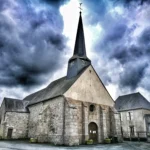
Eglise romane Saint-Pierre-aux-Liens – Varenne-l'Arconce
Description
English
Deutsch
Dutch
Español
Italiano
Description
Édifiée au début du XIIème siècle, cette église dépendait autrefois d'un prieuré clunisien. La filiation clunisienne s'exprime dans les choix architecturaux innovants, initiés à Cluny, telle la voûte en berceau brisé. La rude pierre de grès s'est révélée peu propice à l'épanouissement de la sculpture (hormis l'agneau mystique sur le tympan du portail sud), mais a permis la construction d'un édifice puissant, dominé par son imposant clocher ajouré de baies géminées sur deux niveaux.
English
Built in the early 12th century, this church was once part of a Cluniac priory. Its Cluniac origins can be seen in the innovative architectural choices made at Cluny, such as the pointed barrel vault. The rough sandstone was not conducive to the development of sculpture (apart from the mystical lamb on the tympanum of the south portal), but it did allow for the construction of a powerful building, dominated by its imposing bell tower with its two-storey twin windows.
Deutsch
Die Kirche wurde Anfang des 12. Jahrhunderts erbaut und gehörte einst zu einem Priorat von Cluny. Die Zugehörigkeit zu den Cluniazensern zeigt sich in den innovativen architektonischen Entscheidungen, die in Cluny getroffen wurden, wie z. B. das gebrochene Tonnengewölbe. Der raue Sandstein erwies sich als wenig geeignet für die Entfaltung von Skulpturen (abgesehen von dem mystischen Lamm auf dem Tympanon des Südportals), ermöglichte jedoch den Bau eines mächtigen Gebäudes, das von seinem imposanten Glockenturm dominiert wird, der auf zwei Ebenen mit Zwillingsöffnungen versehen ist.
Dutch
Deze kerk, gebouwd in het begin van de 12e eeuw, maakte ooit deel uit van een Cluniacus priorij. De Cluniale filiatie komt tot uiting in de vernieuwende architecturale keuzes, geïnitieerd in Cluny, zoals het gebroken tongewelf. De ruwe zandsteen was niet erg bevorderlijk voor de ontwikkeling van beeldhouwwerk (afgezien van het mystieke lam op het timpaan van het zuidportaal), maar het maakte de bouw mogelijk van een krachtig gebouw, gedomineerd door de imposante klokkentoren met zijn gemetselde traveeën van twee verdiepingen.
Español
Construida a principios del siglo XII, esta iglesia formaba parte de un priorato cluniacense. La filiación cluniacense se expresa en las opciones arquitectónicas innovadoras, iniciadas en Cluny, como la bóveda de cañón roto. La piedra arenisca rugosa no era muy propicia para el desarrollo de la escultura (aparte del cordero místico del tímpano del portal sur), pero permitió la construcción de un edificio poderoso, dominado por su imponente campanario con sus vanos geminados de dos plantas.
Italiano
Costruita all'inizio del XII secolo, questa chiesa faceva parte di un priorato cluniacense. La filiazione cluniacense si esprime nelle scelte architettoniche innovative, iniziate a Cluny, come la volta a botte spezzata. L'arenaria grezza non favorì molto lo sviluppo della scultura (a parte l'agnello mistico sul timpano del portale sud), ma permise la costruzione di un edificio possente, dominato dall'imponente campanile a due piani con campate geminate.
Roman
Le Bourg, 71110 Varenne-l'Arconce