Eglise Notre-Dame de l'Assomption – La Chapelle-Faucher
Description
English
Deutsch
Dutch
Español
Italiano
Description
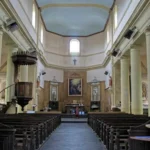
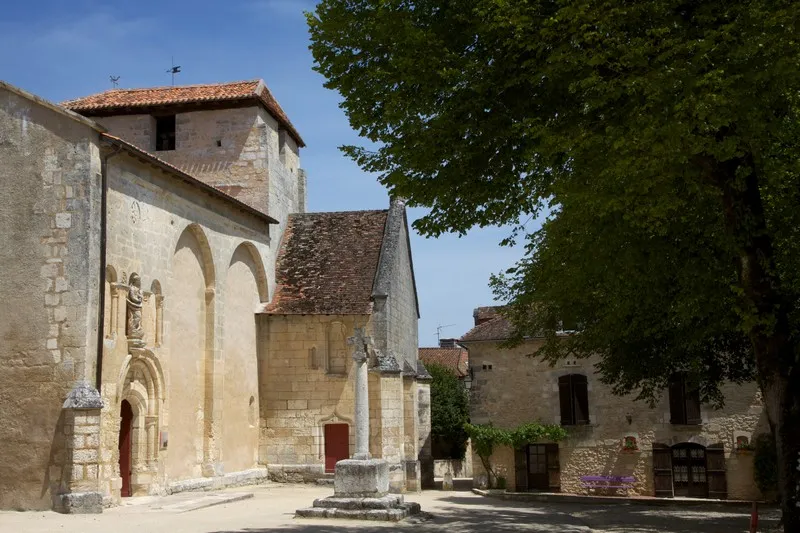
Ancienne chapelle d’un prieuré bénédictin du XIIe siècle, l’église paroissiale de la Chapelle-Faucher était de pur style roman à coupole et comptait trois travées. Très endommagée par les Anglais à la fin du XIVe siècle, elle perdit une travée lors de sa restauration. Le portail fut transporté sur le côté sud de la deuxième travée avec ce qui restait des sculptures de l’ancienne porte. L’abside est en cul-de-four, la croisée du transept possède toujours une coupole sur pendentifs et une chapelle latérale de style gothique, ajoutée au sud, reste la propriété du châtelain. Tout l’intérieur de l'église est recouvert de peintures murales protégées par un revêtement de plâtre.
English
Former chapel of a Benedictine priory dating from the 12th century, the parish church of La Chapelle-Faucher was in pure Romanesque style with cupola and numbered three bays. Very damaged by the English in the 14th century, it lost one bay during its restoration. The portal was moved to the south side of the second bay along with what remained of the sculptures of the old door. The apse has the shape of a semi dome, the crossing is still surmounted by a cupola on pendentives. A Gothic style lateral chapel, added on the south side, is owned by the landlord. The inside of the church is ornamented with mural paintings protected by a plaster coating.
Deutsch
Die Pfarrkirche von La Chapelle-Faucher war eine ehemalige Kapelle eines Benediktinerpriorats aus dem 12. Jahrhundert, ein rein romanischer Kuppelbau mit drei Jochen. Jahrhunderts von den Engländern stark beschädigt und verlor bei der Restaurierung ein Joch. Das Portal wurde zusammen mit den Überresten der Skulpturen des alten Tores auf die Südseite des zweiten Jochs verlegt. Die Apsis ist ein Cul-de-four, das Vierungskreuz besitzt noch immer eine Kuppel mit Zwickeln und eine gotische Seitenkapelle, die im Süden hinzugefügt wurde, bleibt im Besitz des Schlossherrn. Das gesamte Innere der Kirche ist mit Wandmalereien bedeckt, die durch eine Gipsverkleidung geschützt sind.
Dutch
De parochiekerk van La Chapelle-Faucher, de voormalige kapel van een benedictijnse priorij uit de 12e eeuw, was in zuivere romaanse stijl met een koepel en had drie traveeën. Het werd zwaar beschadigd door de Engelsen aan het einde van de 14e eeuw en verloor een baai tijdens de restauratie. De deuropening werd verplaatst naar de zuidkant van de tweede travee met wat overbleef van het houtsnijwerk van de oude deuropening. De apsis is halfrond, het dwarsschip heeft nog steeds een koepel op pendentieven en een gotische zijkapel, toegevoegd aan het zuiden, blijft eigendom van de landheer. Het hele interieur van de kerk is bedekt met muurschilderingen die beschermd worden door een pleisterlaag.
Español
Originalmente capilla de un priorato benedictino del siglo XII, la iglesia parroquial de La Chapelle-Faucher estaba de puro estilo románico con cúpula y presentaba tres intercolumnios. Muy deteriorada por los Ingleses a fines del siglo XIV, perdió un intercolumnio durante su restauración. El portal fue transportado al lado meridional del segundo intercolumnio con lo que subsistía de las esculturas de la puerta antigua. El ábside está cubierto por una bóveda de horno, el crucero del transepto tiene todavía una cúpula sobre pechinas. Una capilla lateral de estilo gótico, añadida al sur, es la propiedad del castellano. El interior de la iglesia es recubierto de pinturas murales protegidas por un revestimiento de yeso.
Italiano
Antica cappella di un priorato benedettino del XII secolo, la chiesa parrocchiale di La Chapelle-Faucher fu costruita in puro stile romanico con una cupola e tre campate. Fu gravemente danneggiata dagli inglesi alla fine del XIV secolo e perse una baia durante il restauro. Il portale è stato spostato sul lato sud della seconda campata con ciò che rimaneva degli intagli della vecchia porta. L'abside è un cul-de-four, l'incrocio del transetto ha ancora una cupola su pennacchi e una cappella laterale gotica, aggiunta a sud, rimane di proprietà del signorotto. L'intero interno della chiesa è ricoperto da dipinti murali protetti da un rivestimento in gesso.
Classement: Monument Historique
Le bourg, 24530 La Chapelle-Faucher
Crédits: © Frédéric Tessier, Office de Tourisme PÉRIGORD Dronne Belle
Licence
Licence