Église néo gothique – Flastroff
Description
English
Deutsch
Dutch
Español
Italiano
Description
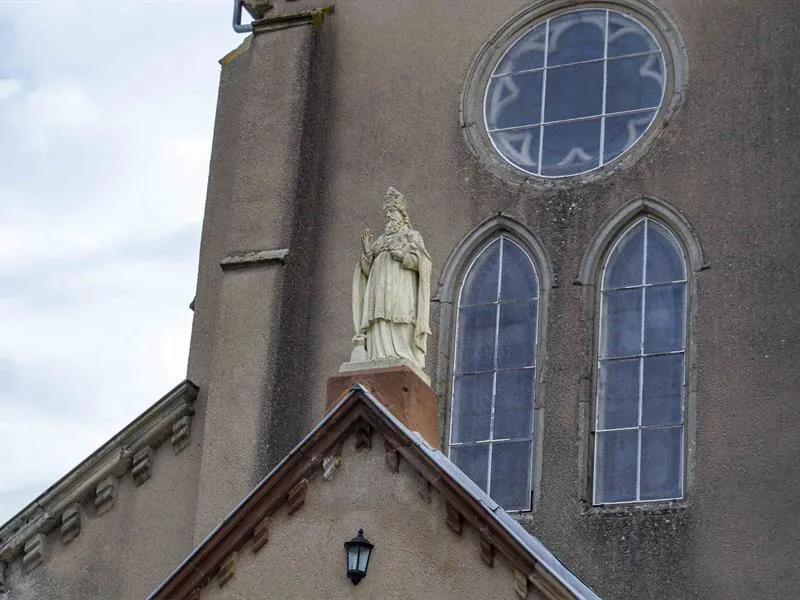
L’église paroissiale néo-gothique Saint-Éloi a remplacé la chapelle Saint-Éloi avec ermitage datant du milieu du XVIII ème siècle. L’église actuelle fut reconstruite de 1858 à 1866. La première pierre fut posée en 1861 et la consécration eut lieu le 3 juillet 1865 (but d’un pèlerinage au cours duquel se faisait la bénédiction des chevaux, aujourd’hui des tracteurs agricoles).
English
The neo-Gothic parish church of Saint-Eloi replaced the chapel of Saint-Eloi with hermitage dating from the middle of the 18th century. The present church was rebuilt between 1858 and 1866. The first stone was laid in 1861 and the consecration took place on July 3, 1865 (the goal of a pilgrimage during which the blessing of the horses, nowadays agricultural tractors, took place).
Deutsch
Die neugotische Pfarrkirche Saint-Éloi ersetzte die Kapelle Saint-Éloi mit Eremitage aus der Mitte des 18. Die heutige Kirche wurde von 1858 bis 1866 umgebaut. Der Grundstein wurde 1861 gelegt und die Weihe fand am 3. Juli 1865 statt (Ziel einer Wallfahrt, bei der die Segnung von Pferden, heute landwirtschaftlichen Traktoren, stattfand).
Dutch
De neogotische parochiekerk van St. Eloi verving de kapel van St. Eloi met hermitage uit het midden van de 18e eeuw. De huidige kerk werd herbouwd tussen 1858 en 1866. De eerste steen werd gelegd in 1861 en de inwijding vond plaats op 3 juli 1865 (het doel van een bedevaart waarbij paarden, tegenwoordig landbouwtrekkers, werden gezegend).
Español
La iglesia parroquial neogótica de San Eloy sustituyó a la capilla con ermita de mediados del siglo XVIII. La iglesia actual fue reconstruida entre 1858 y 1866. La primera piedra se colocó en 1861 y la consagración tuvo lugar el 3 de julio de 1865 (objetivo de una peregrinación durante la cual se bendijeron los caballos, hoy tractores agrícolas).
Italiano
La chiesa parrocchiale neogotica di Sant'Eloi ha sostituito la cappella di Sant'Eloi con eremo della metà del XVIII secolo. La chiesa attuale fu ricostruita tra il 1858 e il 1866. La prima pietra fu posata nel 1861 e la consacrazione avvenne il 3 luglio 1865 (scopo di un pellegrinaggio durante il quale furono benedetti i cavalli, oggi trattori agricoli).
Néogothique
Rue Saint Eloi, 57320 Flastroff
Crédits: Julie Moritz - Trois Frontières Tourisme