Eglise Assomption de la Sainte Vierge
Description
English
Deutsch
Dutch
Español
Italiano
Description
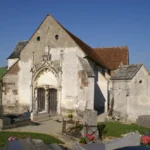
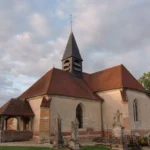
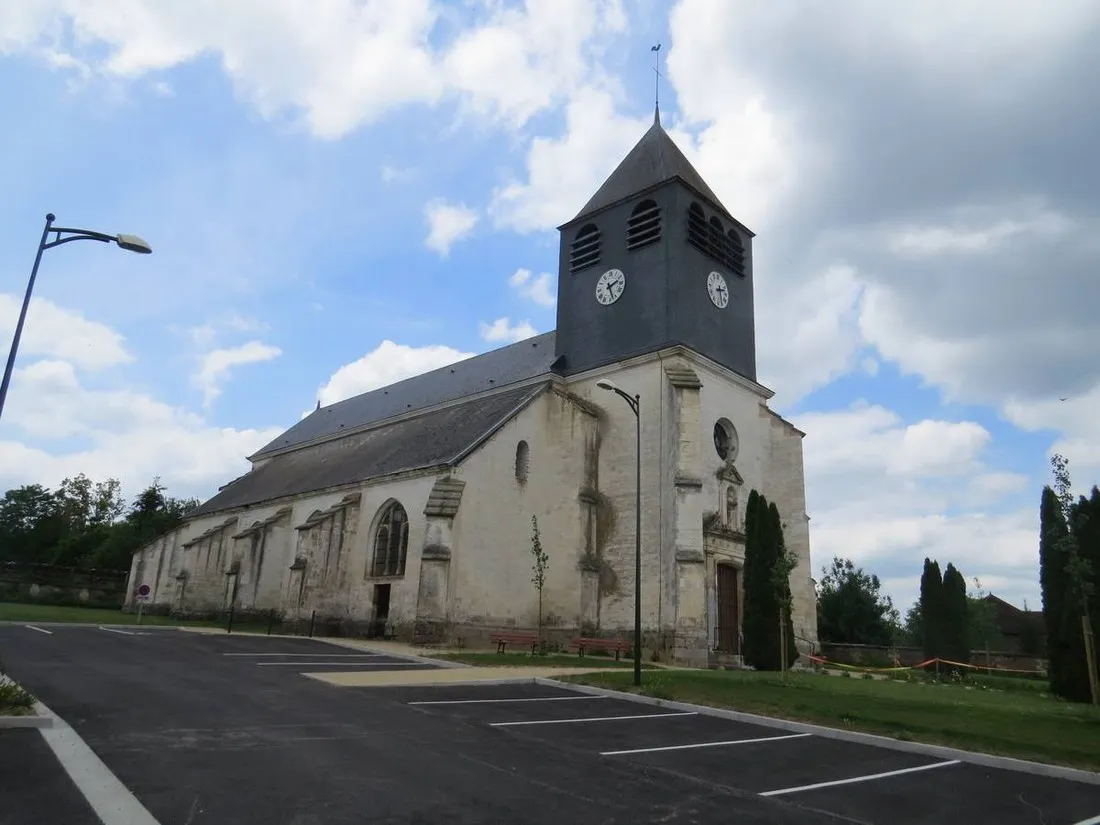
Malgré sa construction au XVIIIe siècle, l’architecture rappelle les constructions précédentes avec les croisées d’ogives au plafond. Néanmoins, l’église est marquée par le XVIIIe siècle et l’engouement pour l’antiquité gréco-romaine : pilastres et frontons encadrent le portail d’entrée et ponctuent l’élévation intérieure. Le néo-classicisme s’allie avec l’architecture religieuse.
Pour tous ces précieux témoignages de l’art du XVIIIe siècle, l’église est classée monument historique en 1986. Une vingtaine d’objets conservés dans l’église de Vauchassis sont classés monuments historiques dont le maître-autel en marbre rouge et gris du XVIIIe, un panneau de bois peint, Ecce Homo, daté du 1er quart du XVIIe et issu de l’école hollandaise, une huile sur toile, L’immaculée conception, daté du XVIIIe siècle et exécuté d’après Edme Bouchardon et un retable en bois du XIXe siècle.
English
Despite its 18th-century construction, the architecture is reminiscent of earlier buildings, with ribbed ceilings. Nevertheless, the church is marked by 18th-century infatuation with Greco-Roman antiquity: pilasters and pediments frame the entrance portal and punctuate the interior elevation. Neo-classicism blends with religious architecture.
For all these precious testimonials to 18th-century art, the church was listed as a historic monument in 1986. Some twenty objects preserved in the Vauchassis church are classified as historic monuments, including the 18th-century red and grey marble high altar, a painted wood panel, Ecce Homo, dating from the 1st quarter of the 17th century and originating from the Dutch school, an oil on canvas, L'immaculée conception, dating from the 18th century and executed after Edme Bouchardon, and a 19th-century wooden altarpiece.
Deutsch
Trotz ihrer Errichtung im 18. Jahrhundert erinnert die Architektur mit den Spitzbogenkreuzen an der Decke an frühere Bauten. Dennoch ist die Kirche vom 18. Jahrhundert und der Begeisterung für die griechisch-römische Antike geprägt: Pilaster und Giebel umrahmen das Eingangsportal und punktieren die innere Elevation. Der Neoklassizismus verbindet sich mit der religiösen Architektur.
Wegen all dieser wertvollen Zeugnisse der Kunst des 18. Jahrhunderts wurde die Kirche 1986 unter Denkmalschutz gestellt. Etwa zwanzig der in der Kirche von Vauchassis aufbewahrten Objekte stehen unter Denkmalschutz, darunter der Hochaltar aus rotem und grauem Marmor aus dem 18. Jahrhundert, eine bemalte Holztafel, Ecce Homo, aus dem ersten Viertel des 17. Jahrhunderts, die aus der holländischen Schule stammt, ein Ölgemälde, L'immaculée conception, aus dem 18.
Dutch
Hoewel de kerk in de 18e eeuw werd gebouwd, doet de architectuur denken aan vroegere gebouwen, met geribbelde plafonds. Toch is de kerk getekend door de 18e eeuw en de verliefdheid op de Grieks-Romeinse oudheid: pilasters en frontons omlijsten het toegangsportaal en versieren de binnengevel. Neoclassicisme vermengd met religieuze architectuur.
Voor al deze waardevolle voorbeelden van 18e-eeuwse kunst werd de kerk in 1986 op de monumentenlijst geplaatst. Ongeveer twintig objecten in de kerk van Vauchassis staan op de monumentenlijst, waaronder het rood en grijs marmeren hoogaltaar uit de 18e eeuw, een beschilderd houten paneel, Ecce Homo, uit het 1e kwart van de 17e eeuw en van de Hollandse school, een olieverf op doek, De onbevlekte ontvangenis, uit de 18e eeuw en gemodelleerd naar Edme Bouchardon, en een houten altaarstuk uit de 19e eeuw.
Español
A pesar de haber sido construida en el siglo XVIII, la arquitectura recuerda a edificios anteriores, con techos de crucería. No obstante, la iglesia está marcada por el siglo XVIII y la obsesión por la antigüedad grecorromana: pilastras y frontones enmarcan el portal de entrada y puntúan el alzado interior. El neoclasicismo se combina con la arquitectura religiosa.
Por todos estos preciosos ejemplos del arte del siglo XVIII, la iglesia fue declarada monumento histórico en 1986. Una veintena de objetos de la iglesia de Vauchassis están catalogados como monumentos históricos, entre ellos el altar mayor de mármol rojo y gris del siglo XVIII, un panel de madera pintada, Ecce Homo, de la escuela holandesa, que data del primer cuarto del siglo XVII, un óleo sobre lienzo, L'immaculée conception, del siglo XVIII, obra de Edme Bouchardon, y un retablo de madera del siglo XIX.
Italiano
Nonostante sia stata costruita nel XVIII secolo, l'architettura ricorda quella degli edifici precedenti, con soffitti a nervature. Tuttavia, la chiesa è segnata dal XVIII secolo e dall'infatuazione per l'antichità greco-romana: lesene e frontoni incorniciano il portale d'ingresso e punteggiano il prospetto interno. Il neoclassicismo si unisce all'architettura religiosa.
Per tutti questi preziosi esempi di arte settecentesca, la chiesa è stata dichiarata monumento storico nel 1986. Una ventina di oggetti della chiesa di Vauchassis sono classificati come monumenti storici, tra cui l'altare maggiore in marmo rosso e grigio del XVIII secolo, un pannello ligneo dipinto, Ecce Homo, di scuola olandese, risalente al primo quarto del XVII secolo, un olio su tela, L'immacolata concezione, del XVIII secolo, di Edme Bouchardon, e una pala d'altare lignea del XIX secolo.
Histoire
Rue de l’église, 10190 Vauchassis
Crédits: Daniel Kaufmann