Domaine de la Manufacture Royale – La Vôge-les-Bains
Description
English
Deutsch
Dutch
Español
Italiano
Description
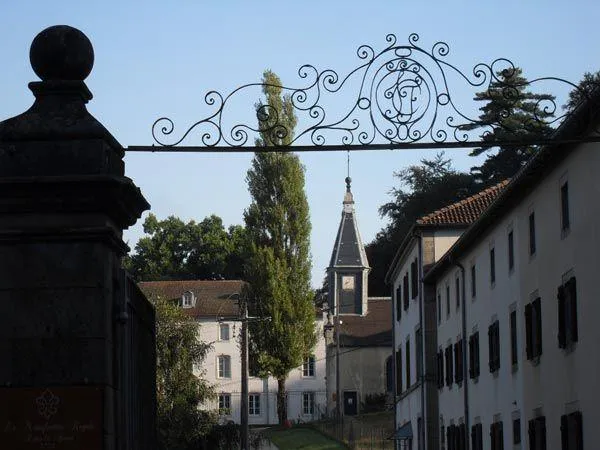
La Manufacture Royale de Bains, entre forêt, canal, et rivière, longe la voie verte.
Plus importante ferblanterie du Royaume au XVIII° siècle, la Manufacture Royale, industrie née du bois et de l’eau, est l'un des sites industriels français du XVIII° siècle les mieux préservés. L’histoire de ce site industriel est fabuleuse. Le Baron Falatieu qui porta la Manufacture Royale à son apogée y a laissé son empreinte. D’autres personnages l’ont également marquée tels que Julie Victoire Daubié, première bachelière de France, née dans la Maison du caissier en 1824, Cavour, Fondateur de l’Unité italienne qui y séjourna en 1839, ou encore l’homme politique Jules Méline.
La visite du parc aux arbres centenaires permet de découvrir le hêtre tortillard, arbre de l’année à l’Unesco en 2011, et les essences rares témoignent du riche passé industriel du domaine (Ginko Biloba, Catalpa, Tulipier de Virginie). Dans la halle au charbon, destinée au stockage du charbon de bois, on peut découvrir les expositions qui retracent l’histoire de la ferblanterie, grâce aux recherches de Chantal Starck, Remi Ritter, et Anny Thouvenin avec les Archives Départementales…
La Manufacture Royale a été maintes fois primée, d’une part pour la beauté de son parc, de ses jardins en terrasses, d’autre part pour sa chapelle et ses vitraux, signés Nathalie Noirjean restaurés avec l’aide de donateurs et de la Fondation du Patrimoine.
Un des plus anciens sites industriels paternalistes de Lorraine, aujourd’hui transformé en Maisons d’habitation, Maisons d’hôte, gites et chambres au château qui racontent, comme les visites guidées cette histoire hors du temps. Les visites guidées du site industriel, de son parc, et sa chapelle se déroulent les 2ème et 4ème vendredis du mois d'avril à octobre, sur inscriptions préalables au bureau d'information touristique. Groupes sur réservation. Des animations, concerts et exposition sont proposés en juin, juillet et septembre. Le site reste ouvert et accessible toute l'année, et une exposition en visite libre vous est proposée gratuitement.
English
The Manufacture Royale de Bains, between forest, canal, and river, runs along the green way.
The most important tinsmith's workshop of the Kingdom in the 18th century, the Royal Manufactory, an industry born from wood and water, is one of the best preserved French industrial sites of the 18th century The history of this industrial site is fabulous. Baron Falatieu, who brought the Manufacture Royale to its apogee, left his mark here. Other figures have also left their mark, such as Julie Victoire Daubié, France's first bachelor, born in the Cashier's House in 1824, Cavour, Founder of the Italian Unity who stayed there in 1839, and the politician Jules Méline.
A visit to the park with its century-old trees allows you to discover the twisted beech, tree of the year at the Unesco in 2011, and the rare species testify to the rich industrial past of the estate (Ginko Biloba, Catalpa, Tulipier de Virginie). In the charcoal hall, intended for the storage of charcoal, one can discover the exhibitions that retrace the history of the tinsmithing, thanks to the research of Chantal Starck, Remi Ritter, and Anny Thouvenin with the Departmental Archives
The Manufacture Royale has received numerous awards, firstly for the beauty of its park and terraced gardens, and secondly for its chapel and stained glass windows, designed by Nathalie Noirjean and restored with the help of donors and the Fondation du Patrimoine.
One of the oldest paternalistic industrial sites in Lorraine, today transformed into residential houses, guesthouses, gites and rooms in the castle that tell, like the guided tours, this timeless story Guided tours of the industrial site, its park and its chapel take place on the 2nd and 4th Fridays from April to October, upon prior registration at the tourist information office. Groups on reservation. Activities, concerts and exhibitions are offered in June, July and September. The site remains open and accessible all year round, and an exhibition can be visited free of charge.
Deutsch
Die Manufacture Royale de Bains liegt zwischen Wald, Kanal und Fluss entlang des Grünen Wegs.
Die Manufacture Royale, die im 18. Jahrhundert die größte Spenglerei des Königreichs war, ist eine aus Holz und Wasser entstandene Industrie und eine der am besten erhaltenen französischen Industrieanlagen des 18. Jahrhunderts Die Geschichte dieses Industriestandorts ist sagenhaft. Baron Falatieu, der die Manufacture Royale auf ihren Höhepunkt brachte, hat hier seine Spuren hinterlassen. Auch andere Persönlichkeiten wie Julie Victoire Daubié, die erste Abiturientin Frankreichs, die 1824 im Haus des Kassierers geboren wurde, Cavour, der Gründer der italienischen Einheit, der sich 1839 hier aufhielt, oder der Politiker Jules Méline prägten die Manufaktur.
Beim Besuch des Parks mit seinen jahrhundertealten Bäumen können Sie die Tortillard-Buche, 2011 Unesco-Baum des Jahres, entdecken. Seltene Baumarten zeugen von der reichen industriellen Vergangenheit des Anwesens (Ginko Biloba, Catalpa, Virginia-Tulpenbaum). In der Kohlehalle, die zur Lagerung von Holzkohle bestimmt war, kann man Ausstellungen entdecken, die die Geschichte der Spenglerei dank der Forschungen von Chantal Starck, Remi Ritter und Anny Thouvenin mit dem Archives Départementales… nachzeichnen
Die Manufacture Royale wurde mehrfach ausgezeichnet, einerseits für die Schönheit ihres Parks und ihrer Terrassengärten, andererseits für ihre Kapelle und ihre Glasfenster, die von Nathalie Noirjean signiert wurden und mit Hilfe von Spendern und der Stiftung für das Kulturerbe restauriert wurden.
Einer der ältesten paternalistischen Industriestandorte Lothringens, der heute in Wohnhäuser, Gästehäuser, Ferienwohnungen und Zimmer im Schloss umgewandelt wurde, die ebenso wie die Führungen diese zeitlose Geschichte erzählen Die Führungen durch das Industriegelände, seinen Park und seine Kapelle finden von April bis Oktober am 2. und 4. Freitag des Monats statt, nach vorheriger Anmeldung im Touristeninformationsbüro. Gruppen nach vorheriger Anmeldung. Animationen, Konzerte und Ausstellungen werden im Juni, Juli und September angeboten. Die Stätte bleibt das ganze Jahr über geöffnet und zugänglich, und eine Ausstellung zur freien Besichtigung wird Ihnen kostenlos angeboten.
Dutch
De Manufacture Royale de Bains, tussen bos, kanaal en rivier, loopt langs de greenway.
De Koninklijke Manufactuur, de belangrijkste blikfabriek van het Koninkrijk in de 18e eeuw, een industrie geboren uit hout en water, is een van de best bewaarde Franse industriële sites van de 18e eeuw De geschiedenis van dit industrieterrein is fabelachtig. Baron Falatieu, die de Manufacture Royale tot een hoogtepunt bracht, heeft er zijn stempel op gedrukt. Ook andere persoonlijkheden hebben hun sporen nagelaten, zoals Julie Victoire Daubié, de eerste vrijgezel van Frankrijk, die in 1824 in het kashuis werd geboren, Cavour, stichter van de Italiaanse eenheid, die er in 1839 verbleef, en de politicus Jules Méline.
Tijdens een bezoek aan het park met zijn eeuwenoude bomen kunt u de gedraaide beuk ontdekken, Unesco Boom van het Jaar in 2011, en de zeldzame soorten die getuigen van het rijke industriële verleden van het landgoed (Ginko Biloba, Catalpa, Virginia Tulip boom). In de houtskoolhal, waar de houtskool werd opgeslagen, kunt u de tentoonstellingen ontdekken die de geschiedenis van de blikfabriek weergeven, dankzij het onderzoek van Chantal Starck, Remi Ritter en Anny Thouvenin met het departementale archief?
De Manufacture Royale heeft vele onderscheidingen gekregen, enerzijds voor de schoonheid van het park en de terrastuinen, anderzijds voor de kapel en de gebrandschilderde ramen, getekend door Nathalie Noirjean en gerestaureerd met de hulp van schenkers en de Fondation du Patrimoine.
Een van de oudste paternalistische industrieterreinen van Lotharingen, vandaag omgevormd tot woningen, gastenverblijven, gîtes en kamers in het kasteel die, net als de rondleidingen, dit tijdloze verhaal vertellen Rondleidingen door het industrieterrein, het park en de kapel vinden plaats op de 2e en 4e vrijdag van de maand van april tot oktober, na voorafgaande aanmelding bij het VVV-kantoor. Groepen op reservering. Activiteiten, concerten en tentoonstellingen worden aangeboden in juni, juli en september. De site blijft het hele jaar open en toegankelijk, en een tentoonstelling wordt gratis aangeboden.
Español
La Manufactura Real de Bains, entre el bosque, el canal y el río, bordea la vía verde.
La fábrica de hojalata más importante del Reino en el siglo XVIII, la Manufactura Real, una industria nacida de la madera y el agua, es uno de los emplazamientos industriales franceses mejor conservados del siglo XVIII La historia de este emplazamiento industrial es fabulosa. El barón Falatieu, que llevó a la Manufactura Real a su apogeo, dejó su huella en ella. Otras personalidades también han dejado su huella, como Julie Victoire Daubié, primera soltera de Francia, que nació en la casa del cajero en 1824, Cavour, fundador de la unidad italiana, que se alojó allí en 1839, y el político Jules Méline.
Una visita al parque con sus árboles centenarios permite descubrir el haya retorcida, Árbol del Año de la Unesco en 2011, y las especies raras que dan testimonio del rico pasado industrial de la finca (Ginko Biloba, Catalpa, Tulipán de Virginia). En la sala de carbones, que se utilizaba para almacenar el carbón vegetal, podrá descubrir las exposiciones que recorren la historia de la fábrica de hojalata, gracias a las investigaciones de Chantal Starck, Remi Ritter y Anny Thouvenin con los Archivos Departamentales?
La Manufactura Real ha recibido numerosos premios, por un lado por la belleza de su parque y sus jardines en terrazas, y por otro por su capilla y sus vidrieras, firmadas por Nathalie Noirjean y restauradas con la ayuda de donantes y de la Fundación del Patrimonio.
Uno de los emplazamientos industriales paternalistas más antiguos de Lorena, hoy transformado en viviendas, casas de huéspedes, casas rurales y habitaciones en el castillo que cuentan, al igual que las visitas guiadas, esta historia intemporal Las visitas guiadas al polígono industrial, su parque y su capilla tienen lugar los 2º y 4º viernes de cada mes, de abril a octubre, previa inscripción en la oficina de turismo. Grupos en reserva. En junio, julio y septiembre se ofrecen actividades, conciertos y exposiciones. El sitio permanece abierto y accesible durante todo el año, y una exposición está disponible de forma gratuita.
Italiano
La Manufacture Royale de Bains, tra foresta, canale e fiume, costeggia la greenway.
La Manifattura Reale, la più importante fabbrica di latta del Regno nel XVIII secolo, un'industria nata dal legno e dall'acqua, è uno dei siti industriali francesi meglio conservati del XVIII secolo La storia di questo sito industriale è favolosa. Il barone Falatieu, che ha portato la Manifattura Royale al suo apogeo, ha lasciato il suo segno. Anche altre personalità hanno lasciato il segno, come Julie Victoire Daubié, la prima scapola di Francia, nata nella casa del cassiere nel 1824, Cavour, fondatore dell'unità d'Italia, che vi soggiornò nel 1839, e il politico Jules Méline.
Una visita al parco con i suoi alberi secolari permette di scoprire il faggio contorto, albero dell'anno Unesco nel 2011, e le specie rare che testimoniano il ricco passato industriale della tenuta (Ginko Biloba, Catalpa, Tulipano della Virginia). Nella sala del carbone, che veniva utilizzata per conservare il carbone, si possono scoprire le mostre che ripercorrono la storia della fabbrica di latta, grazie alle ricerche di Chantal Starck, Remi Ritter e Anny Thouvenin con gli Archivi Dipartimentali?
La Manufacture Royale ha ricevuto numerosi riconoscimenti, da un lato per la bellezza del suo parco e dei suoi giardini terrazzati, dall'altro per la cappella e le vetrate, firmate da Nathalie Noirjean e restaurate con l'aiuto di donatori e della Fondation du Patrimoine.
Uno dei più antichi siti industriali paternalisti della Lorena, oggi trasformato in abitazioni, pensioni, gites e camere del castello che raccontano, come le visite guidate, questa storia senza tempo Le visite guidate al sito industriale, al parco e alla cappella si svolgono il 2° e il 4° venerdì del mese da aprile a ottobre, previa registrazione presso l'ufficio informazioni turistiche. Gruppi su prenotazione. Attività, concerti e mostre sono proposti nei mesi di giugno, luglio e settembre. Il sito rimane aperto e accessibile tutto l'anno e una mostra è disponibile gratuitamente.
Langues: Deutsch - English - Italiano
Clientèle: Tout public - Groupes
Classement: Jardin protégé Monument Historique
Moyens de paiement: Espèce - Chèque - Virements
, 88240 La Vôge-les-Bains
Crédits: La Manufacture


