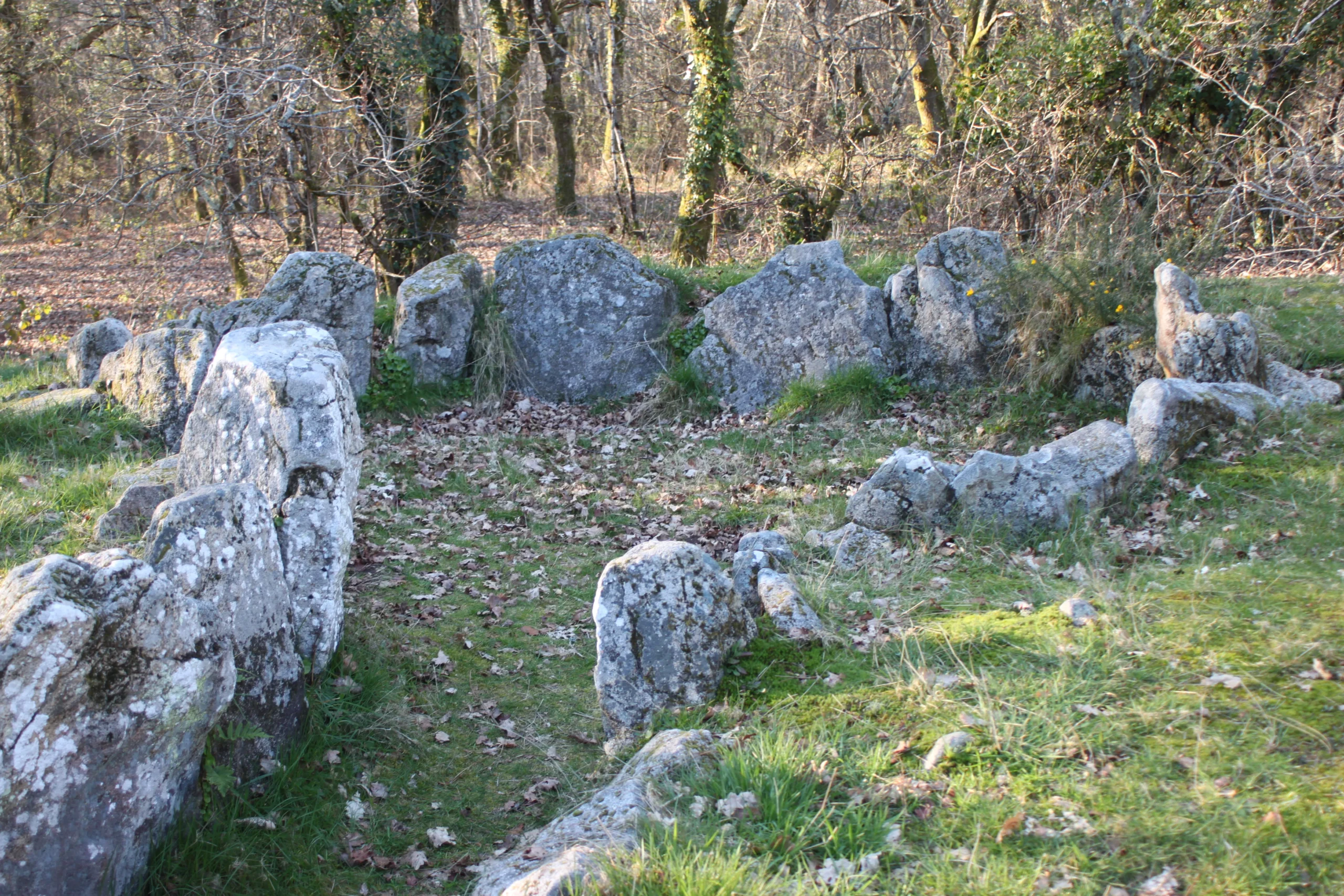
Dolmen de Mané Bogad
Description
English
Deutsch
Dutch
Español
Italiano
Description
Patrimoine culturel
English
A dolmen placed on a promontory.The monument of Mané Bogad is a corridor dolmen. It is a ruined burial site of which the circular funerary chamber and the access corridor delimited by vertically placed granite slabs remain. The cover of the monument has now disappeared, but the remains of the tumulus that covered it can be seen, in the form of a mound of earth around the dolmen. This form of architecture would have developed between 4000 and 3500 B.C. The monument is voluntarily built on a promontory, indicating a desire for ostentation and visibility in the landscape on the part of the Neolithic builders.
Deutsch
Das Monument von Mané Bogad ist ein sogenannter Korridordolmen. Es handelt sich um eine zerstörte Grabstätte, von der noch die runde Grabkammer und der Zugangskorridor erhalten sind, die durch senkrecht verlegte Granitplatten abgegrenzt sind. Die Abdeckung des Monuments ist heute verschwunden, aber man kann die Überreste des Grabhügels, der es bedeckte, in Form eines Erdhügels um den Dolmen herum beobachten. Der Hügel wurde von weiteren kleinen Steinplatten begrenzt, die heute einen Bogen auf der Ostseite des Dolmens bilden.Diese Form der Architektur soll sich zwischen -4000 und -3500 v. Chr. entwickelt haben.Das Monument wurde absichtlich auf einem Vorsprung errichtet, was auf den Willen der neolithischen Erbauer hindeutet, zu protzen und in der Landschaft sichtbar zu sein.Das Monument ist seit 1931 als historisches Monument klassifiziert.
Dutch
Cultureel erfgoed
Español
El monumento de Mané Bogad es un dolmen de corredor. Se trata de un enterramiento en ruinas del que se conserva la cámara funeraria circular y el pasillo de acceso, delimitado por losas de granito colocadas verticalmente. La cubierta del monumento ha desaparecido, pero se pueden ver los restos del túmulo que lo cubría, en forma de un montículo de tierra alrededor del dolmen. Se cree que esta forma de arquitectura se desarrolló entre el 4000 y el 3500 a.C. El monumento está construido deliberadamente en un promontorio, lo que indica un deseo de ostentación y visibilidad en el paisaje por parte de los constructores neolíticos.
Italiano
Il monumento di Mané Bogad è un dolmen a corridoio. Si tratta di una sepoltura in rovina di cui rimangono la camera sepolcrale circolare e il corridoio di accesso, delimitato da lastre di granito disposte verticalmente. La copertura del monumento è ormai scomparsa, ma sono visibili i resti del tumulo che lo ricopriva, sotto forma di un cumulo di terra intorno al dolmen. Si pensa che questa forma di architettura si sia sviluppata tra il 4000 e il 3500 a.C. Il monumento è stato deliberatamente costruito su un promontorio, indicando un desiderio di ostentazione e visibilità nel paesaggio da parte dei costruttori neolitici.