CHATEAU ET ANCIEN ORPHELINAT DES CHOISINETS – Saint-Flour-de-Mercoire
My Tourisme > Sites Culturels > CHATEAU ET ANCIEN ORPHELINAT DES CHOISINETS – Saint-Flour-de-Mercoire
Description
English
Deutsch
Dutch
Español
Italiano
Description
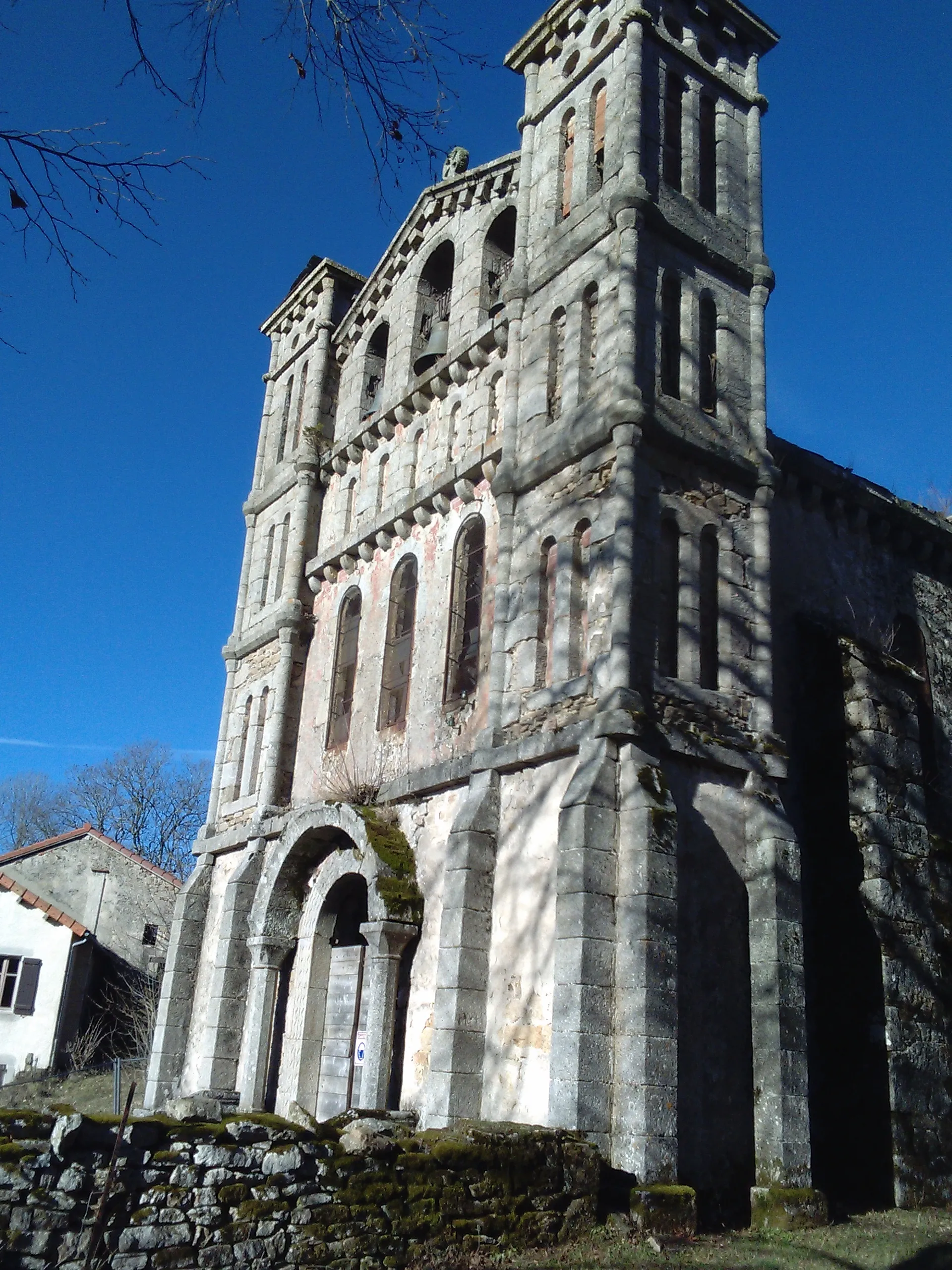
L’ensemble a été construit tout au long du 2ème millénaire ce qui donne aujourd’hui au lieu sont aspect atypique. Les ruines de deux tours datant du 12ème et du 17ème siècles sont les seuls vestiges qui rappellent l’ancien château où plusieurs seigneuries se sont succédées. En 1851 l’Abbé Favier acquiert le lieu avec le projet d’en faire un orphelinat. Avec le soutien des frères des écoles Chrétiennes, il ajoute au domaine existant l’imposant bâtiment central de trois étages, l’église attenante édifiée entre 1864 et 1872, ainsi qu’un couvent pour les sœurs appelées en renfort. Les lois de 1904 et 1905 ont amorcé le déclin de l’institution. Les frères quittent les Choisinets en 1908 et l’orphelinat ferme ses portes. Le site est exploité de 1904 à 1924 mais un incendie ravage tous les bâtiments. Le site est fermé au public car dangereux mais il est très bien visible de l'extérieur.
English
The ensemble was built throughout the 2nd millennium, which gives the place its atypical appearance today. The ruins of two towers dating from the 12th and 17th centuries are the only remains that recall the old castle where several lordships succeeded one another. In 1851, Abbot Favier acquired the place with the intention of turning it into an orphanage. With the support of the Brothers of the Christian Schools, he added the imposing three-storey central building to the existing estate, the adjoining church built between 1864 and 1872, and a convent for the sisters who were called in as reinforcements. The laws of 1904 and 1905 marked the beginning of the decline of the institution. The brothers left Les Choisinets in 1908 and the orphanage closed its doors. The site was used from 1904 to 1924 but a fire destroyed all the buildings. The site is closed to the public because it is dangerous but it is very visible from the outside.
Deutsch
Der gesamte Komplex wurde im Laufe des zweiten Jahrtausends erbaut, was dem Ort heute sein atypisches Aussehen verleiht. Die Ruinen zweier Türme aus dem 12. und 17. Jahrhundert sind die einzigen Überreste, die an die alte Burg erinnern, in der mehrere Herrschaften aufeinander folgten. Im Jahr 1851 erwarb Abbé Favier den Ort mit dem Plan, daraus ein Waisenhaus zu machen. Mit der Unterstützung der Brüder der Christlichen Schulen fügte er dem bestehenden Anwesen das imposante dreistöckige Zentralgebäude, die zwischen 1864 und 1872 errichtete angrenzende Kirche sowie ein Kloster für die zur Unterstützung herangezogenen Schwestern hinzu. Die Gesetze von 1904 und 1905 leiteten den Niedergang der Einrichtung ein. Die Brüder verließen die Choisinets 1908 und das Waisenhaus schloss seine Pforten. Die Anlage wurde von 1904 bis 1924 betrieben, doch ein Brand zerstörte alle Gebäude. Die Anlage ist für die Öffentlichkeit nicht zugänglich, da sie gefährlich ist, aber sie ist von außen sehr gut sichtbar.
Dutch
Het complex werd gedurende het 2e millennium gebouwd, wat de plaats vandaag zijn atypische uiterlijk geeft. De ruïnes van twee torens uit de 12e en 17e eeuw zijn de enige overblijfselen die herinneren aan het oude kasteel waar verschillende heerlijkheden elkaar opvolgden. In 1851 kocht abt Favier het terrein met de bedoeling er een weeshuis van te maken. Met de steun van de Broeders van de Christelijke Scholen voegde hij het imposante centrale gebouw van drie verdiepingen toe aan het bestaande landgoed, de aangrenzende kerk die tussen 1864 en 1872 werd gebouwd, en een klooster voor de zusters die als versterking werden opgeroepen. De wetten van 1904 en 1905 markeerden het begin van het verval van de instelling. De broers verlieten Les Choisinets in 1908 en het weeshuis sloot zijn deuren. Het terrein werd gebruikt van 1904 tot 1924, maar een brand verwoestte alle gebouwen. Het terrein is gesloten voor het publiek omdat het gevaarlijk is, maar het is van buitenaf goed zichtbaar.
Español
El complejo se construyó a lo largo del segundo milenio, lo que da al lugar su aspecto atípico actual. Las ruinas de dos torres de los siglos XII y XVII son los únicos vestigios del antiguo castillo, en el que se sucedieron varios señoríos. En 1851, el abad Favier adquirió el lugar con la intención de convertirlo en un orfanato. Con el apoyo de los Hermanos de las Escuelas Cristianas, añadió a la finca existente el imponente edificio central de tres plantas, la iglesia contigua construida entre 1864 y 1872, y un convento para las monjas que fueron llamadas como refuerzo. Las leyes de 1904 y 1905 iniciaron el declive de la institución. Los hermanos dejaron a los Choisinet en 1908 y el orfanato cerró. El lugar se utilizó de 1904 a 1924, pero un incendio destruyó todos los edificios. El sitio está cerrado al público porque es peligroso, pero es muy visible desde el exterior.
Italiano
Il complesso fu costruito nel corso del II millennio, il che conferisce al luogo il suo aspetto atipico odierno. Le rovine di due torri risalenti al XII e al XVII secolo sono gli unici ricordi dell'antico castello in cui si sono succedute diverse signorie. Nel 1851, l'abate Favier acquistò il sito con l'intenzione di trasformarlo in un orfanotrofio. Con il sostegno dei Fratelli delle Scuole Cristiane, aggiunse alla proprietà esistente l'imponente edificio centrale a tre piani, l'annessa chiesa costruita tra il 1864 e il 1872 e un convento per le suore chiamate in rinforzo. Le leggi del 1904 e del 1905 avviarono il declino dell'istituzione. I fratelli lasciarono i Choisinet nel 1908 e l'orfanotrofio chiuse. Il sito fu utilizzato dal 1904 al 1924, ma un incendio distrusse tutti gli edifici. Il sito è chiuso al pubblico perché pericoloso, ma è molto visibile dall'esterno.
A la campagne
Hameau des Choisinets, 48300 Saint-Flour-de-Mercoire
Crédits: Association LE CHOISINAIT