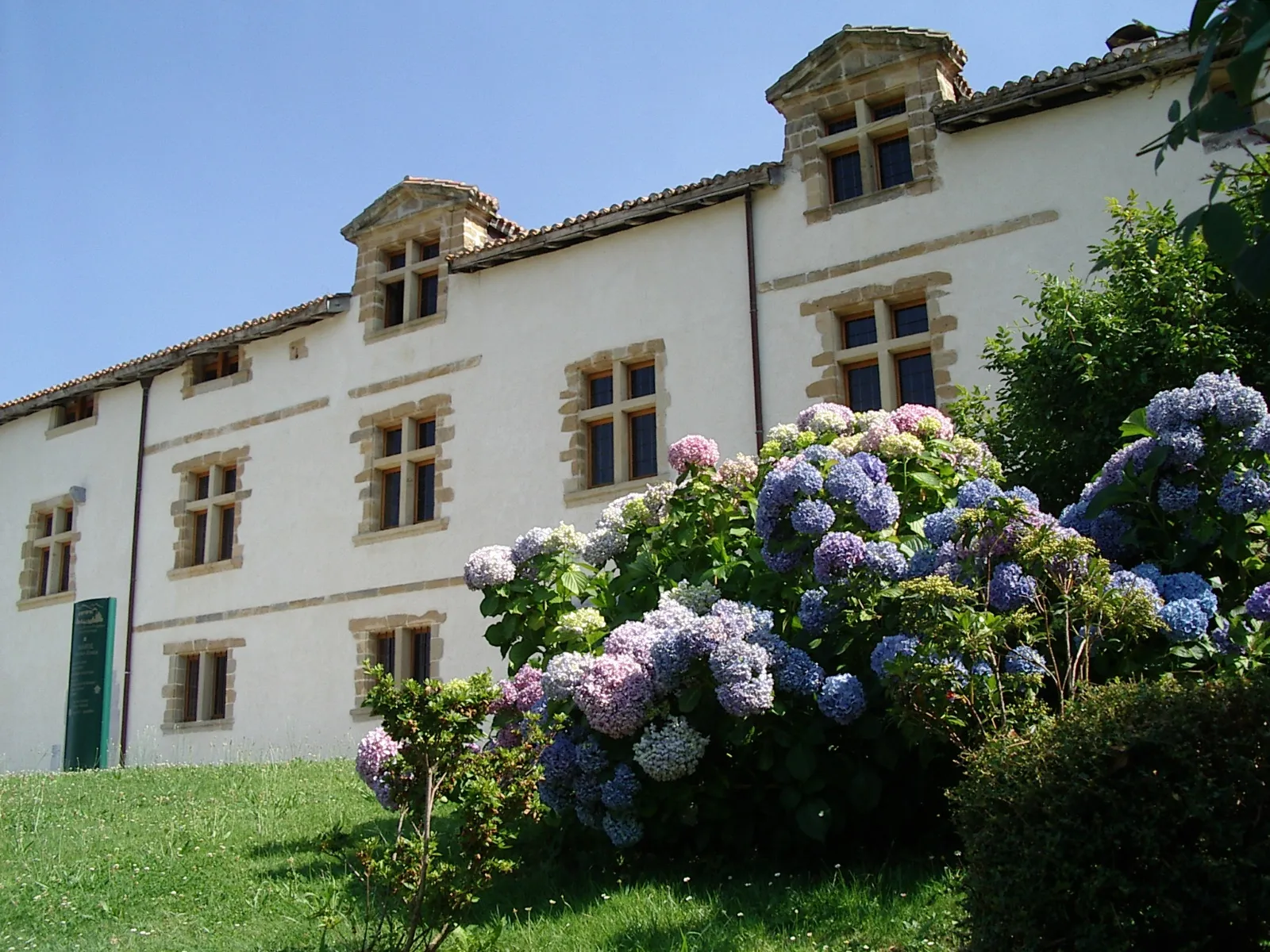
Château des Barons d'Ezpeleta – Espelette
Description
English
Deutsch
Dutch
Español
Italiano
Description
Les Barons d'Ezpeleta firent bâtir un château vers l'an 1000. La Baronne Juliana Henriquez mourut sans descendance en 1694, et légua aux habitants d'Espelette le château. En 1997, une prospection archéologique à sa périphérie, sous forme de sondages en tranchées, a révélé les vestiges d'une forteresse de la fin du Moyen-Age. Ces vestiges sont en fait ceux d'une vaste enceinte flanquée de 5 tours, en forme de polygone irrégulier qui, semble-t-il, s'étendait sur tout le quartier. La tour d'angle a été inscrite à l'inventaire des Monuments historiques en 1937 et l'ensemble du château en 1993. Il abrite des expositions permanentes.
English
The Barons of Ezpeleta had a castle built around the year 1000. Baroness Juliana Henriquez died without descendants in 1694, and bequeathed the castle to the inhabitants of Espelette. In 1997, an archaeological survey on its periphery, in the form of trench borings, revealed the remains of a fortress from the late Middle Ages. These vestiges are in fact those of a vast enclosure flanked by 5 towers, in the shape of an irregular polygon which, it seems, extended over the whole district. The corner tower was listed in the inventory of Historic Monuments in 1937 and the entire castle in 1993. It houses permanent exhibitions.
Deutsch
Die Barone von Ezpeleta ließen um das Jahr 1000 eine Burg errichten. Baronin Juliana Henriquez starb 1694 ohne Nachkommen und vermachte die Burg den Einwohnern von Espelette. Im Jahr 1997 wurden bei einer archäologischen Prospektion an seinem Rand in Form von Grabenbohrungen die Überreste einer spätmittelalterlichen Festung entdeckt. Bei den Überresten handelt es sich um eine große, von fünf Türmen flankierte Ringmauer in Form eines unregelmäßigen Polygons, die sich offenbar über das gesamte Viertel erstreckte. Der Eckturm wurde 1937 und die gesamte Burg 1993 in das Verzeichnis der historischen Monumente aufgenommen. Es beherbergt Dauerausstellungen.
Dutch
De baronnen van Ezpeleta bouwden een kasteel rond het jaar 1000. Barones Juliana Henriquez stierf zonder nakomelingen in 1694 en liet het kasteel na aan de inwoners van Espelette. In 1997 heeft een archeologisch onderzoek in de buitenwijken, in de vorm van proefsleuven, de resten van een fort uit de late middeleeuwen aan het licht gebracht. Deze overblijfselen zijn in feite die van een grote omheining geflankeerd door 5 torens, in de vorm van een onregelmatige veelhoek die zich, naar het schijnt, over de hele wijk uitstrekte. De hoektoren werd in 1937 op de monumentenlijst geplaatst en het hele kasteel in 1993. Het herbergt permanente tentoonstellingen.
Español
Los barones de Ezpeleta construyeron un castillo alrededor del año 1000. La baronesa Juliana Henríquez murió sin descendencia en 1694 y legó el castillo a los habitantes de Espelette. En 1997, una prospección arqueológica en sus afueras, en forma de zanjas de prueba, reveló los restos de una fortaleza de la Baja Edad Media. Estos restos son en realidad los de un vasto recinto flanqueado por 5 torres, en forma de polígono irregular que, al parecer, se extendía por todo el distrito. La torre de la esquina fue declarada Monumento Histórico en 1937 y todo el castillo en 1993. Alberga exposiciones permanentes.
Italiano
I baroni di Ezpeleta costruirono un castello intorno all'anno 1000. La baronessa Juliana Henriquez morì senza discendenti nel 1694 e lasciò il castello in eredità agli abitanti di Espelette. Nel 1997, un'indagine archeologica alla sua periferia, sotto forma di trincee di prova, ha rivelato i resti di una fortezza del tardo Medioevo. Questi resti sono in realtà quelli di un vasto recinto fiancheggiato da 5 torri, a forma di poligono irregolare che, a quanto pare, si estendeva su tutto il territorio. La torre d'angolo è stata dichiarata monumento storico nel 1937 e l'intero castello nel 1993. Ospita mostre permanenti.