Château de Montépilloy – Montépilloy
Description
English
Deutsch
Dutch
Español
Italiano
Description
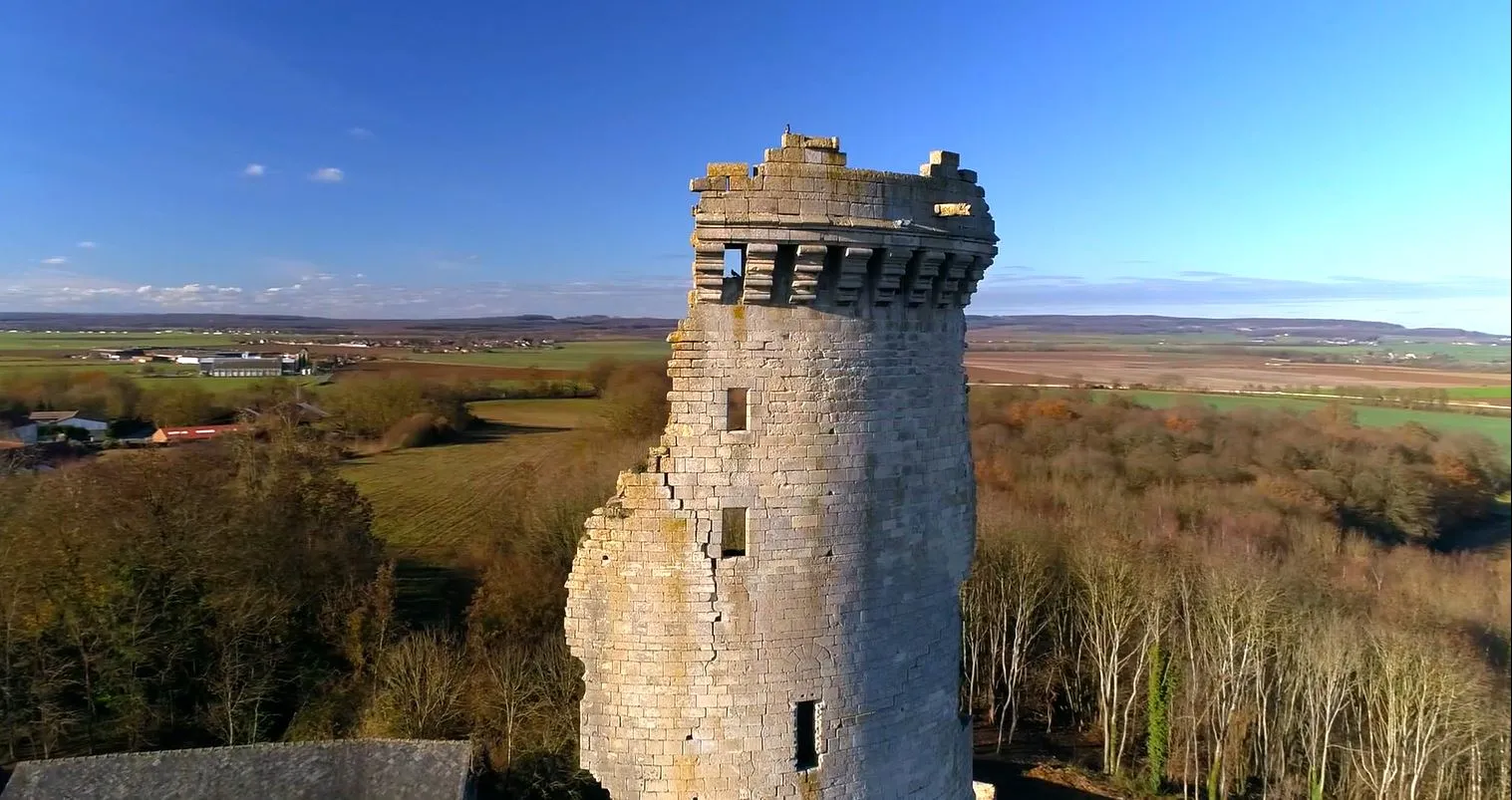
Édifié vers 1150 par Guy III le Bouteiller de Senlis, le château domine le comté de Senlis, grâce à son formidable donjon, probablement le plus haut du domaine royal à l'époque de sa construction (vers 1190-1200). Témoignage d'un passé médiéval prestigieux, les vestiges du château-fort, comportent, outre le donjon, une enceinte avec fossé polygonal, un châtelet d'entrée (XIIe, XIIIe, XVe) par lequel on accède à la basse-cours, une courtine avec mâchicoulis (XIVe) reliant le donjon au logis seigneurial et sa tour de flanquement semi-circulaire (XIVe). Le château et sa seigneurie ont appartenu à une succession de personnages historiques, chacun proche d'un roi de France. Ouverture au public de juin à septembre.
English
Built around 1150 by Guy III le Bouteiller de Senlis, the castle dominates the county of Senlis, thanks to its formidable keep, probably the highest in the royal domain at the time of its construction (around 1190-1200). Testimony to a prestigious medieval past, the remains of the castle-fortress include, in addition to the keep, an enclosure with a polygonal ditch, an entrance châtelet (12th, 13th, 15th) through which one reaches the bailey, a curtain wall with machicolations (14th) linking the keep to the lord's dwelling and its semi-circular flanking tower (14th). The castle and its seigneury belonged to a succession of historical characters, each one close to a king of France. Open to the public from June to September.
Deutsch
Die Burg wurde um 1150 von Guy III. le Bouteiller de Senlis errichtet und dominiert die Grafschaft Senlis dank ihres gewaltigen Bergfrieds, der zur Zeit seiner Errichtung (ca. 1190-1200) wahrscheinlich der höchste Bergfried des königlichen Besitzes war. Die Überreste der Burg, die von einer glanzvollen mittelalterlichen Vergangenheit zeugen, umfassen neben dem Bergfried eine Ringmauer mit polygonalem Graben, ein Eingangstor (12., 13. und 15. Jh.), durch das man in den unteren Hof gelangt, eine Mauer mit Maschikulis (14. Jh.), die den Bergfried mit dem Herrenhaus verbindet, sowie einen halbrunden Flankierungsturm (14. Jh.). Das Schloss und seine Herrschaft gehörten einer Reihe von historischen Persönlichkeiten, die jeweils einem französischen König nahestanden. Von Juni bis September für die Öffentlichkeit zugänglich.
Dutch
Het kasteel, rond 1150 gebouwd door Guy III le Bouteiller de Senlis, domineert het graafschap Senlis dankzij zijn formidabele donjon, waarschijnlijk de hoogste van het koninklijke domein ten tijde van zijn bouw (rond 1190-1200). De resten van het kasteel-fort getuigen van een prestigieus middeleeuws verleden en omvatten, naast de donjon, een omheining met een veelhoekige gracht, een toegangskasteel (12de, 13de, 15de eeuw) waardoor de vesting toegankelijk is, een gordijnmuur met machicoulis (14de eeuw) die de donjon verbindt met de woning van de heer en zijn halfronde flankerende toren (14de eeuw). Het kasteel en zijn heerlijkheid hebben toebehoord aan een opeenvolging van historische figuren, elk dicht bij een koning van Frankrijk. Open voor het publiek van juni tot september.
Español
Construido hacia 1150 por Guy III le Bouteiller de Senlis, el castillo domina el condado de Senlis, gracias a su formidable torreón, probablemente el más alto del dominio real en la época de su construcción (hacia 1190-1200). Testimonio de un prestigioso pasado medieval, los restos del castillo-fortaleza incluyen, además de la torre del homenaje, un recinto con un foso poligonal, un châtelet de entrada (siglos XII, XIII, XV) por el que se accede al patio de armas, una cortina de muralla con matacanes (siglo XIV) que une la torre del homenaje con la vivienda del señor y su torre semicircular de flanqueo (siglo XIV). El castillo y su señorío han pertenecido a una sucesión de personajes históricos, cada uno cercano a un rey de Francia. Abierto al público de junio a septiembre.
Italiano
Costruito intorno al 1150 da Guy III le Bouteiller de Senlis, il castello domina la contea di Senlis grazie al suo formidabile mastio, probabilmente il più alto del dominio reale all'epoca della sua costruzione (1190-1200 circa). Testimonianza di un prestigioso passato medievale, i resti del castello-fortezza comprendono, oltre al mastio, un recinto con un fossato poligonale, uno châtelet d'ingresso (XII, XIII, XV secolo) attraverso il quale si accede al bailamme, una cortina muraria con caditoie (XIV secolo) che collega il mastio alla dimora del signore e la sua torre semicircolare di fiancheggiamento (XIV secolo). Il castello e la sua signoria sono appartenuti a una successione di personaggi storici, ognuno vicino a un re di Francia. Aperto al pubblico da giugno a settembre.
3 Place du château, 60810 Montépilloy
Crédits: Chantilly-Senlis Tourisme
Licence
Licence