Château de La Faye – Saint-Dizier-la-Tour
Description
English
Deutsch
Dutch
Español
Italiano
Description
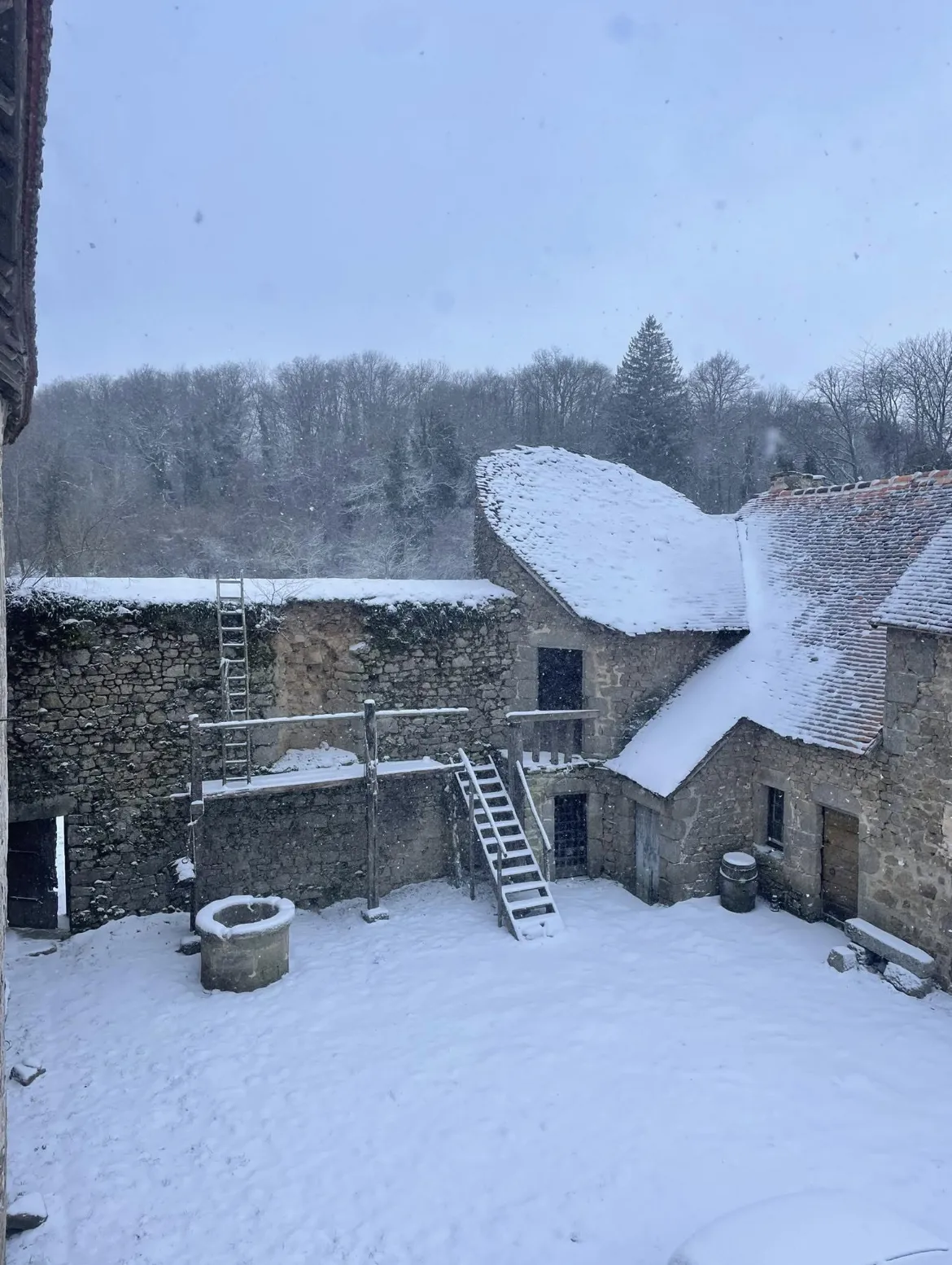
Le château de La Faye, très ancienne place forte des XIlle et XVe siècle. Quadrilatère flanqué de 4 tours aux angles (une disparue). Edifié sur un point hautement stratégique aux confins du duché d’Aquitaine. En 1474 Pannet de Chamborand illustre famille de la Marche depuis l’an Mil, seigneur de La Faye. Un écrit le concernant rédigé en 1506 à la demande d’Anne de France, fille du roi Louis XI, se trouve à la Faye. Plusieurs postes de tir sont présents. Les tours étaient à l’origine en poivrières. Sa cour intérieure est entièrement pavée où se trouve un très joli puits. En dehors de la bâtisse principale, il existe une petite chapelle, une ancienne cave voutée, une boulangerie, et des écuries. Témoin authentique du Moyen Age de l’ancien comté de la Marche. Vestiges gallo-romains découverts sur le site. Les 2 visites sont à heures fixes : à 15h et 17h
English
La Faye's Castle is a fortress of the 13the century and 15th century. Rectangular flanked by 4 towers on the corners (one disappeared). Built on a strategic point on the limits of the Duchy of Aquitaine. In 1474 Pannet de Chamborand famous family of the March since the 10th century, lord of La Faye. A letter concerning him, written in 1506 at the request of Anne de France, daughter of King Louis XI, is located in la Faye. Several firing stations are present. Its inner courtyard is entirely paved where there is a very nice well. Outside the main building, there is a small chapel, an old vaulted cellar, a bakery and stables. Authentic witness of the Middle Ages of the old county of the Marche. Gallo-Roman remains discovered on the site. The 2 visits are at fixed times: at 15h and 17h
Deutsch
Das Schloss La Faye, eine sehr alte Festung aus dem 11. und 15. Jahrhundert. Jahrhundert, viereckig, flankiert von vier Ecktürmen (einer verschwunden). An einem strategisch wichtigen Punkt an der Grenze des Herzogtums Aquitanien errichtet. Mehrere Schießstände sind vorhanden. Die Türme waren ursprünglich Pfefferkörbe. Der Innenhof ist vollständig gepflastert und beherbergt einen sehr schönen Brunnen. Außerhalb des Hauptgebäudes gibt es eine kleine Kapelle, einen alten Gewölbekeller, eine Bäckerei und Stallungen. Authentisches Zeugnis des Mittelalters in der ehemaligen Grafschaft La Marche. Auf dem Gelände wurden gallorömische Überreste entdeckt. Die Besichtigungen finden zu festen Zeiten statt: eine erste um 14.30 Uhr, dann eine zweite um 16.30 Uhr
Dutch
Château de La Faye, een zeer oude vesting uit de 11e en 15e eeuw. Een vierhoek geflankeerd door 4 hoektorens (waarvan er één verdwenen is). Gebouwd op een zeer strategisch punt aan de grenzen van het hertogdom Aquitanië. Er zijn verschillende schietposten. De torens werden oorspronkelijk gebouwd als peperbussen. De binnenplaats is volledig geplaveid en bevat een mooie waterput. Buiten het hoofdgebouw is er een kleine kapel, een oude gewelfde kelder, een bakkerij en stallen. Een authentieke getuige van de middeleeuwen in het voormalige graafschap La Marche. Gallo-Romeinse overblijfselen ontdekt op de site. Bezoeken vinden plaats op vaste tijden: de eerste om 14.30 uur, de tweede om 16.30 uur
Español
Castillo de La Faye, antigua fortaleza de los siglos XI y XV. Un cuadrilátero flanqueado por 4 torres angulares (una de las cuales ha desaparecido). Construido en un punto muy estratégico en las fronteras del Ducado de Aquitania. Hay varios puestos de tiro. Las torres se construyeron originalmente como pimenteras. El patio interior está totalmente pavimentado y alberga un bonito pozo. Fuera del edificio principal, hay una pequeña capilla, una antigua bodega abovedada, una panadería y establos. Un auténtico testimonio de la Edad Media en el antiguo condado de La Marche. Restos galo-romanos descubiertos en el lugar. Las visitas tienen lugar a horas fijas: la primera a las 14:30 y la segunda a las 16:30
Italiano
Château de La Faye, antichissima roccaforte risalente ai secoli XI e XV. Un quadrilatero fiancheggiato da 4 torri angolari (una delle quali è scomparsa). Costruito in un punto altamente strategico ai confini del Ducato d'Aquitania. Nel 1474, Pannet de Chamborand, illustre famiglia marchigiana fin dall'anno 1000, era signore di La Faye. Un documento che lo riguarda, redatto nel 1506 su richiesta di Anna di Francia, figlia del re Luigi XI, si trova a La Faye. Ci sono diverse postazioni di tiro. Le torri sono state originariamente costruite come contenitori per il pepe. Il cortile interno è interamente pavimentato e presenta un grazioso pozzo. All'esterno dell'edificio principale si trovano una piccola cappella, un'antica cantina a volta, un forno e delle stalle. Un'autentica testimonianza del Medioevo nell'ex contea delle Marche. Sul sito sono stati rinvenuti resti gallo-romani. Le 2 visite sono a orari fissi: 15.00 e 17.00
Langues: Español
Classement: Monument Historique
23130, 23130 Saint-Dizier-la-Tour
Crédits: Yves de Bujadoux
Licence
Licence