Château de Bernicourt – Roost-Warendin
Description
English
Deutsch
Dutch
Español
Italiano
Description
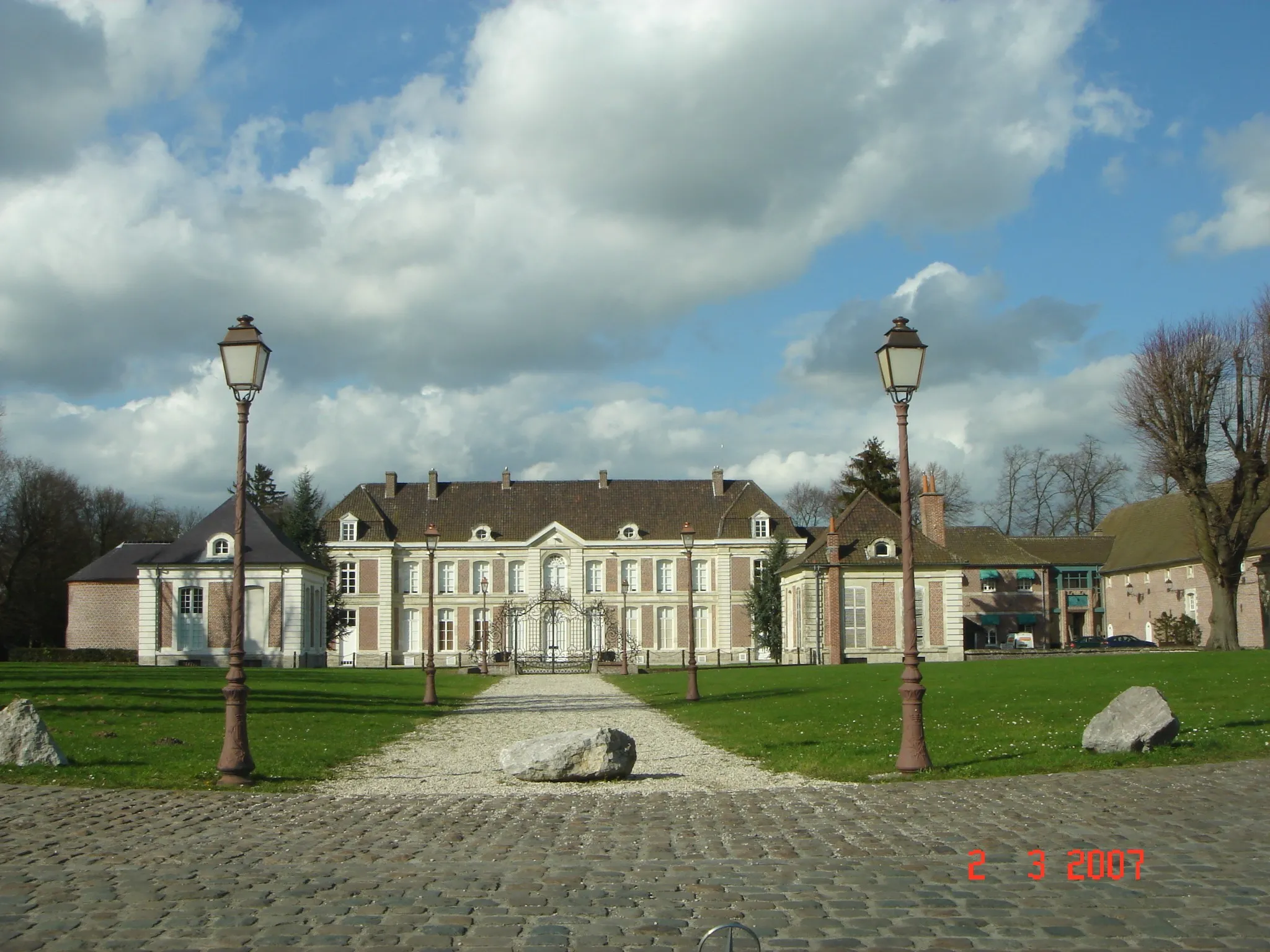
Construit en 1743 sous cette forme sur un domaine de 25 hectares, le château de Bernicourt fut antérieurement (vers 1374) un manoir avec basse cour. Jusqu’au début du XXème siècle, ce fut une demeure seigneuriale. Il fut la propriété des Houillères de 1930 à 1985, les cadres et employés y furent logés. Depuis 1985, il appartient à la ville de Roost-Warendin. Restauré par la volonté de la ville, il retrouve, année après année, ses fastes d’antan. Ouvert en 1989 au public, ce château, vidé de son mobilier d’époque, accueille aujourd’hui des expositions temporaires au rez-de-chaussée et un écomusée au 1er étage et à la cave. La terrasse du château s’ouvre sur un parc.
English
Built in 1743 in this form on a domain of 25 hectares, the castle of Bernicourt was previously (around 1374) a manor house with a low court. Until the beginning of the 20th century, it was a seigneurial residence. It was the property of the Houillères from 1930 to 1985, the executives and employees were housed there. Since 1985, it belongs to the city of Roost-Warendin. Restored by the will of the city, it finds, year after year, its splendor of former days. Opened to the public in 1989, the castle, emptied of its period furniture, now hosts temporary exhibitions on the first floor and an eco-museum on the first floor and in the basement. The terrace of the castle opens on a park.
Deutsch
Das Schloss Bernicourt wurde 1743 in dieser Form auf einem 25 Hektar großen Grundstück errichtet und war zuvor (um 1374) ein Herrenhaus mit einem niedrigen Hof. Bis zum Beginn des 20. Jahrhunderts war es ein herrschaftlicher Wohnsitz. Von 1930 bis 1985 war es im Besitz der Houillères (Kohlebergwerke), deren Führungskräfte und Angestellte dort untergebracht waren. Seit 1985 ist es im Besitz der Stadt Roost-Warendin. Es wurde auf Wunsch der Stadt restauriert und erstrahlt nun Jahr für Jahr wieder in seinem alten Glanz. Das Schloss wurde 1989 für die Öffentlichkeit zugänglich gemacht und beherbergt heute im Erdgeschoss wechselnde Ausstellungen und im ersten Stock und im Keller ein Ökomuseum. Die Terrasse des Schlosses öffnet sich zu einem Park hin.
Dutch
Het kasteel van Bernicourt, dat in 1743 in deze vorm werd gebouwd op een landgoed van 25 hectare, was vroeger (rond 1374) een herenhuis met een burcht. Tot het begin van de 20e eeuw was het een herenhuis. Van 1930 tot 1985 was het eigendom van de Houillères, waar de beheerders en het personeel werden gehuisvest. Sinds 1985 is het eigendom van de stad Roost-Warendin. Het werd door de stad gerestaureerd en kreeg jaar na jaar zijn oude luister terug. Het in 1989 voor het publiek opengestelde kasteel, ontdaan van zijn antieke meubilair, herbergt nu tijdelijke tentoonstellingen op de begane grond en een ecomuseum op de eerste verdieping en in de kelder. Het terras van het kasteel geeft uit op een park.
Español
Construido en 1743 con esta forma en una finca de 25 hectáreas, el castillo de Bernicourt fue anteriormente (hacia 1374) una casa solariega con un patio de armas. Hasta principios del siglo XX, fue una residencia señorial. De 1930 a 1985 fue propiedad de los Houillères, donde se alojaban los directivos y empleados. Desde 1985, pertenece a la ciudad de Roost-Warendin. Restaurado por la ciudad, ha recuperado su antiguo esplendor año tras año. Abierto al público en 1989, el castillo, despojado de su mobiliario de época, alberga actualmente exposiciones temporales en la planta baja y un ecomuseo en la primera planta y en el sótano. La terraza del castillo da a un parque.
Italiano
Costruito nel 1743 in questa forma su una tenuta di 25 ettari, il castello di Bernicourt era in precedenza (intorno al 1374) un maniero con un cortile. Fino all'inizio del XX secolo è stato una residenza signorile. Dal 1930 al 1985 è stato proprietà degli Houillères, dove erano ospitati i dirigenti e i dipendenti. Dal 1985 appartiene alla città di Roost-Warendin. Restaurato dalla città, ha riacquistato il suo antico splendore anno dopo anno. Aperto al pubblico nel 1989, il castello, spogliato dei suoi arredi d'epoca, ospita oggi mostre temporanee al piano terra e un eco-museo al primo piano e in cantina. La terrazza del castello si apre su un parco.
408 allée du château, 59286 Roost-Warendin
Crédits: Ottaviani Serge
Public domain
Public domain