Centre européen du résistant déporté – Site de l'ancien camp de concentration de Natzweiler-Struthof – Natzwiller
My Tourisme > Sites Culturels > Centre européen du résistant déporté – Site de l'ancien camp de concentration de Natzweiler-Struthof – Natzwiller
Description
English
Deutsch
Dutch
Español
Italiano
Description
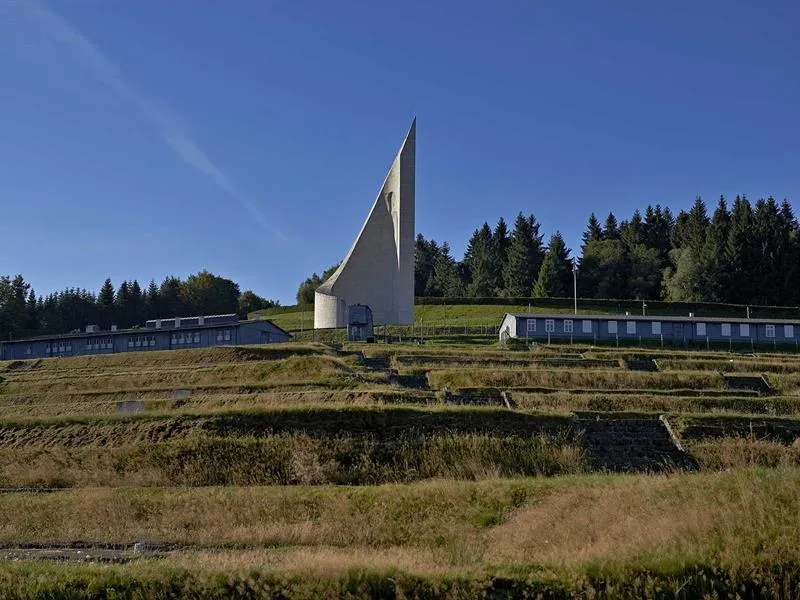
Le KL-Natzweiler ouvre en mai 1941. Destiné à fournir au Reich une main d’œuvre d’esclaves pour son industrie, il regroupe avant tout des déportés politiques. Il compta aussi des déportés juifs, tziganes, homosexuels et des Témoins de Jehovah. 52 000 déportés sont passés par ce camp (soit au camp central, soit dans l’un de ses 70 camps extérieurs). Près d’un tiers y sont morts. Dans l’enceinte de l’ancien camp, le visiteur peut découvrir quatre baraques dont la prison et le four crématoire, ainsi qu’un musée historique. Située 1.5 km plus bas, la chambre à gaz se visite également. En 2005 a été inauguré le Centre européen du résistant déporté. Vaste de 2 000 m2, il abrite une exposition permanente consacrée au nazisme et à la résistance, des salles pédagogiques et un espace d’exposition temporaire.
English
KL-Natzweiler opened in May 1941. Intended to provide the Reich with slave labor for its industry, the camp primarily housed political deportees, as well as Jews, gypsies, homosexuals and Jehovah?s Witnesses. It also included Jews, Gypsies, homosexuals and Jehovah?s Witnesses. 52,000 deportees passed through the camp (either in the central camp or in one of its 70 external camps). Nearly a third died there. Within the grounds of the former camp, visitors can discover four barracks, including the prison and the crematorium, as well as a historical museum. The gas chamber, 1.5 km down the road, can also be visited. In 2005, the European Center for Deported Resistance Members was inaugurated. Spanning 2,000 m2, it houses a permanent exhibition devoted to Nazism and the Resistance, educational rooms and a temporary exhibition space.
Deutsch
Das KL-Natzweiler wurde im Mai 1941 eröffnet. Das KL-Natzweiler sollte dem Deutschen Reich Sklavenarbeit für seine Industrie liefern und umfasste vor allem politische Deportierte. Es gab auch jüdische Deportierte, Sinti und Roma, Homosexuelle und Zeugen Jehovas. 52.000 Deportierte durchliefen das Lager (entweder im Hauptlager oder in einem der 70 Außenlager). Fast ein Drittel von ihnen starb dort. Auf dem Gelände des ehemaligen Lagers kann der Besucher vier Baracken, darunter das Gefängnis und den Krematoriumsofen, sowie ein historisches Museum besichtigen. Die Gaskammer befindet sich 1,5 km weiter unten und kann ebenfalls besichtigt werden. Im Jahr 2005 wurde das Centre Européen du Résistant Déporté (Europäisches Zentrum des deportierten Widerstandskämpfers) eingeweiht. Es ist 2.000 m2 groß und beherbergt eine Dauerausstellung über den Nationalsozialismus und den Widerstand, pädagogische Räume und einen Bereich für temporäre Ausstellungen.
Dutch
KL-Natzweiler werd geopend in mei 1941. Dit kamp was bedoeld om het Reich te voorzien van slavenarbeiders voor de industrie en huisvestte voornamelijk politieke gedeporteerden. Het bevatte ook Joodse gedeporteerden, zigeuners, homoseksuelen en Jehova's Getuigen. 52.000 gedeporteerden passeerden dit kamp (in het centrale kamp of in één van de 70 externe kampen). Bijna een derde stierf daar. Op het terrein van het voormalige kamp kunnen bezoekers vier barakken ontdekken, waaronder de gevangenis en het crematorium, evenals een historisch museum. De gaskamer, die 1,5 km verderop ligt, kan ook worden bezocht. In 2005 werd het Europees Centrum voor Gedeporteerde Verzetsstrijders geopend. Het is 2.000 m2 groot en huisvest een permanente tentoonstelling gewijd aan het nazisme en het verzet, educatieve ruimtes en een tijdelijke tentoonstellingsruimte.
Español
El KL-Natzweiler abrió sus puertas en mayo de 1941. Destinado a proporcionar al Reich mano de obra esclava para su industria, albergó principalmente a deportados políticos. También incluía deportados judíos, gitanos, homosexuales y testigos de Jehová. 52.000 deportados pasaron por este campo (en el campo central o en uno de sus 70 campos externos). Casi un tercio murió allí. En el recinto del antiguo campo, los visitantes pueden descubrir cuatro barracones, incluida la prisión y el crematorio, así como un museo histórico. También se puede visitar la cámara de gas, situada 1,5 km más adelante. En 2005 se inauguró el Centro Europeo de Deportados de la Resistencia. Con una superficie de 2.000 m2, alberga una exposición permanente dedicada al nazismo y la Resistencia, salas educativas y una zona de exposiciones temporales.
Italiano
Il KL-Natzweiler fu aperto nel maggio 1941. Destinato a fornire al Reich manodopera schiava per l'industria, ospitava principalmente deportati politici. Vi erano anche deportati ebrei, zingari, omosessuali e testimoni di Geova. 52.000 deportati passarono per questo campo (nel campo centrale o in uno dei 70 campi esterni). Quasi un terzo vi morì. All'interno dell'area dell'ex campo, i visitatori possono scoprire quattro baracche, tra cui la prigione e il crematorio, oltre a un museo storico. È possibile visitare anche la camera a gas, situata a 1,5 km di distanza. Nel 2005 è stato inaugurato il Centro europeo per i deportati della Resistenza. Su una superficie di 2.000 m2 , ospita una mostra permanente dedicata al nazismo e alla Resistenza, sale didattiche e un'area per mostre temporanee.
Langues: Deutsch - English
Moyens de paiement: Chèque - Chèques vacances
route départementale 130, 67130 Natzwiller
Crédits: © Office de tourisme de la vallée de la Bruche / Stéphane Spach