BASILIQUE SAINT-PAUL – Narbonne
Description
English
Deutsch
Dutch
Español
Italiano
Description
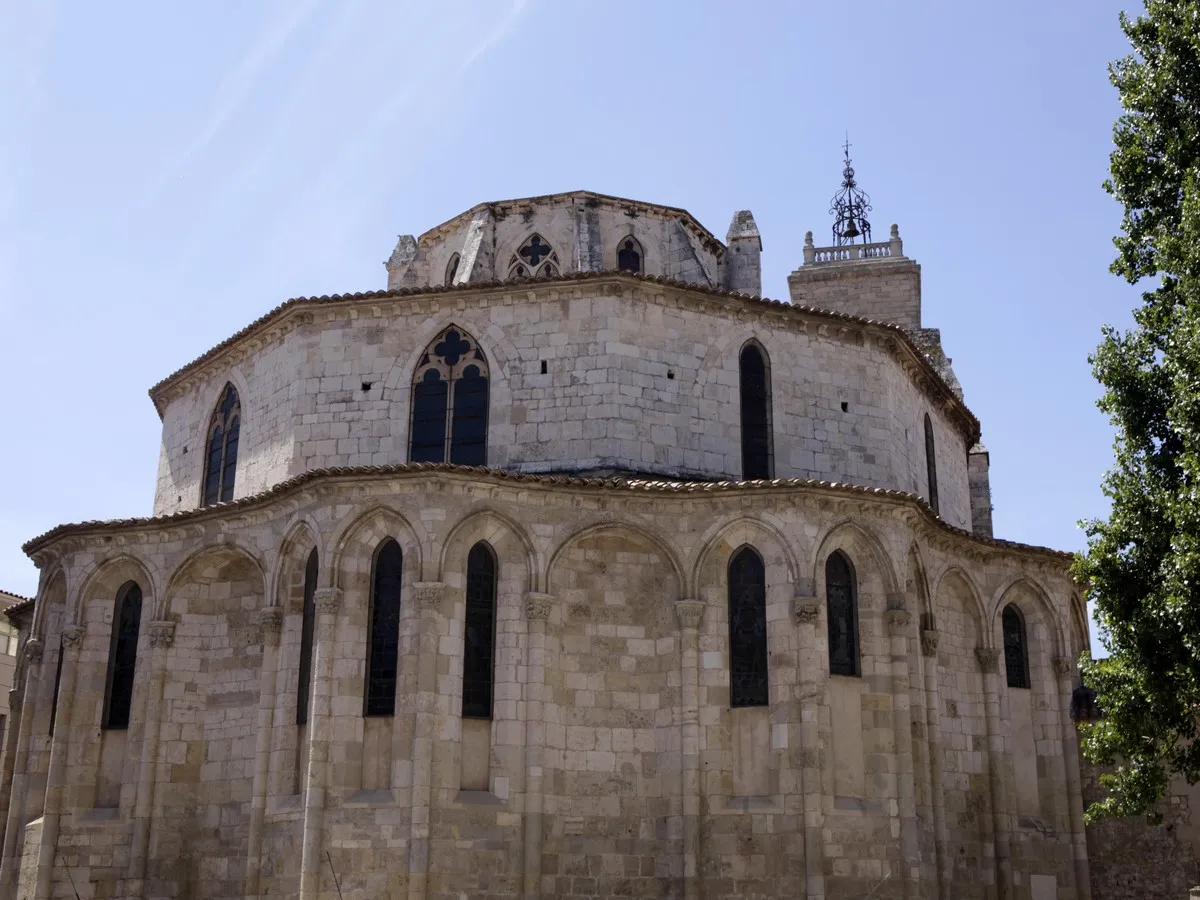
Première église gothique de Narbonne et l'une des plus anciennes du Midi. Bâtie sur le tombeau du premier évêque de Narbonne, saint-Paul, sa "crypte" correspond à l'ancien cimetière paléochrétien (IIIe-IVe siècles).
Edifiée en 1180, le choeur ne sera construit qu'entre 1224 et 1230 les voûtes quant à elles sont refaites vers 1368. Au XVe siècle, deux travées allongent la nef vers l'ouest.
Au XVIè siècle, les piliers sont consolidés et trois arcs, dits arcs diaphragmes, sont rajoutés. Cet édifice religieux a la particularité de présenter art roman et art gothique étrangement mêlés dans l'architecture.
A voir : le chapiteau du jugement dernier, chef d’œuvre de la sculpture médiévale et la grenouille légendaire sculptée au cœur du fameux bénitier en marbre blanc.
Fermetures annuelles les 01/01, 01/05, 11/11 & 25/12.
English
Narbonne's first Gothic church, and one of the oldest in the Midi. Built over the tomb of Narbonne's first bishop, St. Paul, its "crypt" corresponds to the ancient Paleochristian cemetery (3rd-4th centuries).
Built in 1180, the choir was only completed between 1224 and 1230, while the vaults were rebuilt around 1368. In the 15th century, two bays were added to extend the nave to the west.
In the 16th century, the pillars were consolidated and three diaphragm arches were added. This religious edifice is unusual in that its architecture is a strange blend of Romanesque and Gothic styles.
Highlights include the Last Judgment capital, a masterpiece of medieval sculpture, and the legendary frog carved into the heart of the famous white marble stoup.
Annual closures 01/01, 01/05, 11/11 & 25/12.
Deutsch
Erste gotische Kirche in Narbonne und eine der ältesten im Süden Frankreichs. Sie wurde über dem Grab des ersten Bischofs von Narbonne, St. Paul, errichtet. Ihre Krypta entspricht dem alten frühchristlichen Friedhof (3.-4. Jh.).
Der 1180 errichtete Chor wurde erst zwischen 1224 und 1230 gebaut, die Gewölbe wurden um 1368 erneuert. Im 15. Jahrhundert wurde das Schiff um zwei Joche nach Westen verlängert.
Im 16. Jahrhundert wurden die Pfeiler konsolidiert und drei Bögen, die sogenannten Blendbögen, hinzugefügt. Dieses religiöse Gebäude hat die Besonderheit, dass romanische und gotische Kunst in der Architektur auf seltsame Weise miteinander vermischt sind.
Sehenswert: das Kapitell des Jüngsten Gerichts, ein Meisterwerk der mittelalterlichen Bildhauerkunst, und der legendäre Frosch, der in das Herz des berühmten Weihwasserbeckens aus weißem Marmor gemeißelt wurde.
Jährlich geschlossen am 01/01, 01/05, 11/11 & 25/12.
Dutch
De eerste gotische kerk van Narbonne en een van de oudste in het zuiden van Frankrijk. De "crypte" is gebouwd op de graftombe van de eerste bisschop van Narbonne, Saint Paul, en komt overeen met het voormalige paleochristelijke kerkhof (3e-4e eeuw).
Gebouwd in 1180, werd het koor pas gebouwd tussen 1224 en 1230, en de gewelven werden herbouwd rond 1368. In de 15e eeuw werden twee traveeën toegevoegd om het schip naar het westen uit te breiden.
In de 16e eeuw werden de pilaren geconsolideerd en werden er drie bogen, diafragmabogen genoemd, toegevoegd. Dit religieuze gebouw is ongewoon omdat de architectuur een vreemde mix is van romaanse en gotische stijlen.
Bezienswaardig: het kapiteel van het Laatste Oordeel, een meesterwerk van middeleeuwse beeldhouwkunst, en de legendarische kikker die in het hart van de beroemde witmarmeren stomp is uitgehouwen.
Gesloten op 01/01, 01/05, 11/11 & 25/12.
Español
Primera iglesia gótica de Narbona y una de las más antiguas del sur de Francia. Construida sobre la tumba del primer obispo de Narbona, San Pablo, su "cripta" corresponde al antiguo cementerio paleocristiano (siglos III-IV).
Edificada en 1180, el coro no se construyó hasta entre 1224 y 1230, y las bóvedas se reconstruyeron hacia 1368. En el siglo XV, se añadieron dos tramos para ampliar la nave hacia el oeste.
En el siglo XVI, se consolidaron los pilares y se añadieron tres arcos, llamados de diafragma. Este edificio religioso tiene la particularidad de que su arquitectura es una extraña mezcla de estilos románico y gótico.
Merece la pena ver: el capitel del Juicio Final, obra maestra de la escultura medieval, y la legendaria rana tallada en el corazón de la famosa pila de mármol blanco.
Cerrado el 01/01, 01/05, 11/11 y 25/12.
Italiano
La prima chiesa gotica di Narbona e una delle più antiche del sud della Francia. Costruita sulla tomba del primo vescovo di Narbona, San Paolo, la sua "cripta" corrisponde all'antico cimitero paleocristiano (III-IV secolo).
Costruita nel 1180, il coro fu costruito solo tra il 1224 e il 1230, mentre le volte furono ricostruite intorno al 1368. Nel XV secolo furono aggiunte due campate per estendere la navata a ovest.
Nel XVI secolo, i pilastri furono consolidati e furono aggiunti tre archi, noti come archi diaframmatici. Questo edificio religioso è insolito perché la sua architettura è una strana miscela di stili romanico e gotico.
Da vedere: il capitello del Giudizio Universale, capolavoro della scultura medievale, e la leggendaria rana scolpita nel cuore della famosa acquasantiera di marmo bianco.
Chiuso il 01/01, 01/05, 11/11 e 25/12.
Rue Dupleix et rue de l'Hôtel Dieu, 11100 Narbonne
Crédits: OT Narbonne