Architecture remarquable – Abbaye bénédictine – Saint-Mihiel
Description
English
Deutsch
Dutch
Español
Italiano
Description
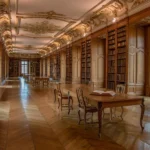
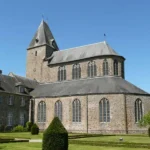
Une première abbaye est fondée au VIIIe siècle sur le mont Castillon, une colline boisée à quelques kilomètres de la future ville de Saint-Mihiel. Entre 816 et 824, l'abbé Smaragde, célèbre grammairien et auteur spirituel, fait déplacer l'abbaye à son emplacement actuel pour profiter du fleuve, mais les bâtiments existants ne sont réalisés qu'à partir de la fin du XVIIe siècle sous l'abbatiat de Don Hennezon, maître d'oeuvre du "grand logis", aujourd'hui occupé par les services de la mairie. De l'ancienne abbaye ne sont visitables que la Bibliothèque bénédictine, l'ancien tribunal et le musée d'Art sacré. La salle capitulaire et la salle des mariages (anciennement réfectoire) se découvrent aux Journées européennes du Patrimoine en septembre.
English
The first abbey was founded in the 8th century on Mount Castillon, a wooded hill a few kilometres from the future town of Saint-Mihiel. Between 816 and 824, Abbot Smaragde, a famous grammarian and spiritual author, had the abbey moved to its present location to take advantage of the river, but the existing buildings were not completed until the end of the 17th century under the abbot of Don Hennezon, master builder of the "grand logis", now occupied by the town hall services. Of the former abbey, only the Benedictine Library, the former court and the Museum of Sacred Art can be visited. The chapter house and the wedding hall (formerly refectory) can be discovered during the European Heritage Days in September.
Deutsch
Eine erste Abtei wurde im 8. Jahrhundert auf dem Mont Castillon, einem bewaldeten Hügel einige Kilometer von der späteren Stadt Saint-Mihiel entfernt, gegründet. Zwischen 816 und 824 ließ Abt Smaragde, ein berühmter Grammatiker und geistlicher Autor, die Abtei an ihren heutigen Standort verlegen, um den Fluss zu nutzen. Die bestehenden Gebäude wurden jedoch erst Ende des 17. Jahrhunderts unter dem Abt Don Hennezon errichtet, dem Baumeister des "Grand Logis", das heute von den Dienststellen des Rathauses genutzt wird. Von der ehemaligen Abtei können nur die Benediktinerbibliothek, das ehemalige Gerichtsgebäude und das Museum für sakrale Kunst besichtigt werden. Der Kapitelsaal und der Hochzeitssaal (ehemaliges Refektorium) können an den Europäischen Tagen des Kulturerbes im September besichtigt werden.
Dutch
Een eerste abdij werd in de 8e eeuw gesticht op de berg Castillon, een beboste heuvel op enkele kilometers van de toekomstige stad Saint-Mihiel. Tussen 816 en 824 liet abt Smaragde, een beroemd grammaticus en spiritueel schrijver, de abdij verplaatsen naar de huidige locatie om te profiteren van de rivier, maar de bestaande gebouwen werden pas aan het eind van de 17e eeuw voltooid onder abt Don Hennezon, die verantwoordelijk was voor de "grand logis", waarin nu het stadhuis is gevestigd. Alleen de benedictijnse bibliotheek, het voormalige hof en het museum voor heilige kunst kunnen worden bezocht. De kapittelzaal en de trouwzaal (vroeger de refter) zijn te bezichtigen tijdens de Europese Erfgoeddagen in september.
Español
En el siglo VIII se fundó una primera abadía en el monte Castillon, una colina boscosa situada a pocos kilómetros de la futura ciudad de Saint-Mihiel. Entre 816 y 824, el abad Smaragde, famoso gramático y escritor espiritual, hizo trasladar la abadía a su ubicación actual para aprovechar el río, pero los edificios existentes no se completaron hasta finales del siglo XVII bajo el abad de Don Hennezon, responsable del "grand logis", que hoy ocupa el ayuntamiento. Sólo se pueden visitar la biblioteca benedictina, la antigua corte y el museo de arte sacro. La sala capitular y la sala de bodas (antiguo refectorio) pueden visitarse durante las Jornadas Europeas del Patrimonio en septiembre.
Italiano
Una prima abbazia fu fondata nell'VIII secolo sul Monte Castillon, una collina boscosa a pochi chilometri dalla futura città di Saint-Mihiel. Tra l'816 e l'824, l'abate Smaragde, famoso grammatico e scrittore spirituale, fece trasferire l'abbazia nella posizione attuale per sfruttare il fiume, ma gli edifici esistenti furono completati solo alla fine del XVII secolo sotto l'abate di Don Hennezon, che fu responsabile del "grand logis", oggi occupato dal municipio. Sono visitabili solo la biblioteca benedettina, l'antica corte e il museo di arte sacra. La sala capitolare e la sala dei matrimoni (ex refettorio) possono essere visitate durante le Giornate Europee del Patrimonio a settembre.
Classique - Médiéval
Classement: Monument Historique
Moyens de paiement: Espèce - Chèque
Place des Moines, 55300 Saint-Mihiel