Ancien corps de garde – Colmar
Description
English
Deutsch
Dutch
Español
Italiano
Description
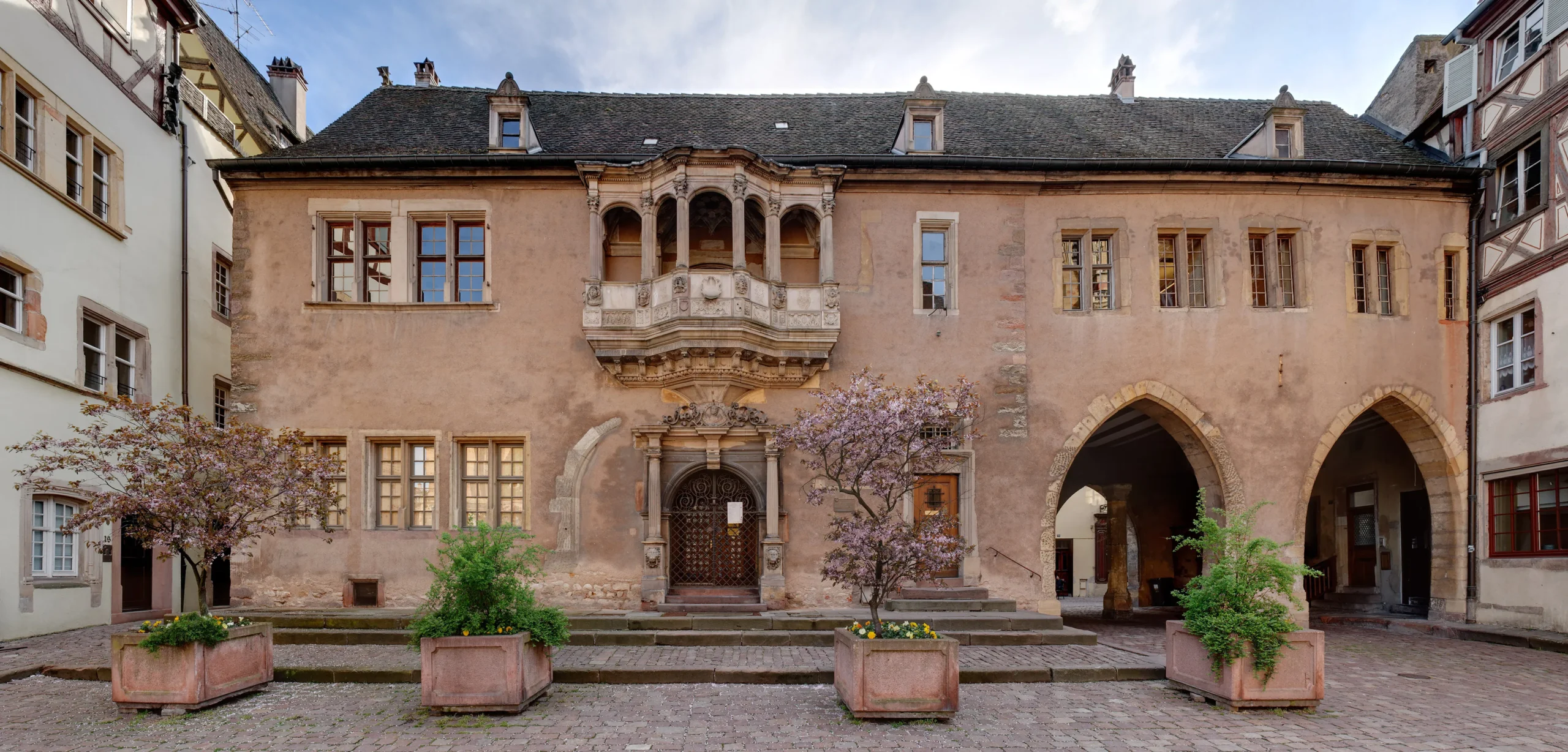
S’appuyant sur l’ancienne chapelle Saint-Jacques (mentionnée dès 1286) qui servit un temps comme hôtel de ville, l’édifice a été aménagé en 1575 à des fins laïques. Au-dessus d’un ossuaire vouté, le bâtiment accueillit un corps de garde au rez-de-chaussée et des salles à l’étage. La loggia, exécutée de 1577 à 1582, et son prolifique répertoire décoratif, constitue avec le portail un joyau de l’architecture de la Renaissance dans le Rhin supérieur. L’édifice servit également à des fins mercantiles, en accueillant un marché aux noix et aux oléagineux, ainsi que comme lieu de justice. La loggia était alors utilisée comme tribune par les magistrats, lors de l’annonce des condamnations. A partir de 1860, le bâtiment servit comme bureau des logements militaires, puis comme commissariat de police.
English
Based on the former St. James' Chapel (mentioned as early as 1286), which served for a time as the town hall, the building was converted in 1575 for secular purposes. Above a vaulted ossuary, the building housed a guardhouse on the ground floor and rooms on the first floor. The loggia, executed between 1577 and 1582, and its prolific decorative repertoire, together with the portal, constitute a jewel of Renaissance architecture in the Upper Rhine. The building was also used for mercantile purposes, hosting a nut and oilseed market, and as a place of justice. The loggia was then used as a tribune by the magistrates, when sentences were announced. From 1860 onwards, the building was used as a military housing office and later as a police station.
Deutsch
Aufbauend auf der ehemaligen Kapelle Saint-Jacques (1286 erwähnt), die eine Zeit lang als Rathaus diente, wurde das Gebäude 1575 für weltliche Zwecke umgebaut. Über einem gewölbten Beinhaus beherbergte das Gebäude im Erdgeschoss ein Wachhaus und im Obergeschoss Räume. Die zwischen 1577 und 1582 errichtete Loggia mit ihrem reichen dekorativen Repertoire ist zusammen mit dem Portal ein Juwel der Renaissance-Architektur am Oberrhein. Das Gebäude diente auch zu Handelszwecken, indem es einen Markt für Nüsse und Ölsaaten beherbergte, sowie als Ort der Gerichtsbarkeit. Die Loggia wurde von den Richtern als Tribüne für die Verkündung von Urteilen genutzt. Ab 1860 diente das Gebäude als Büro der Militärunterkünfte und später als Polizeistation.
Dutch
Gebaseerd op de voormalige kapel van St. James (reeds vermeld in 1286), die een tijdlang dienst deed als stadhuis, werd het gebouw in 1575 verbouwd voor wereldlijke doeleinden. Boven een gewelfd ossuarium bevatte het gebouw een wachthuis op de begane grond en kamers op de eerste verdieping. De loggia, gebouwd tussen 1577 en 1582, is met zijn overvloedige decoratieve repertoire samen met het portaal een juweel van de renaissance-architectuur in de Boven-Rijn. Het gebouw werd ook gebruikt voor commerciële doeleinden, als markt voor noten en oliehoudende zaden, en als plaats van rechtspraak. De loggia werd door de magistraten gebruikt als tribune bij de bekendmaking van vonnissen. Vanaf 1860 werd het gebouw gebruikt als militair huisvestingskantoor, daarna als politiebureau.
Español
Basado en la antigua capilla de Santiago (mencionada ya en 1286), que sirvió durante un tiempo como ayuntamiento, el edificio fue convertido en 1575 para fines seculares. Sobre un osario abovedado, el edificio albergaba una caseta de vigilancia en la planta baja y habitaciones en el primer piso. La logia, construida entre 1577 y 1582, con su prolífico repertorio decorativo, es, junto con el portal, una joya de la arquitectura renacentista en el Alto Rin. El edificio también se utilizaba con fines comerciales, como mercado de frutos secos y semillas oleaginosas, y como lugar de justicia. La logia era utilizada como tribuna por los magistrados para anunciar las sentencias. A partir de 1860, el edificio se utilizó como oficina de alojamiento militar y, posteriormente, como comisaría de policía.
Italiano
Basato sull'antica cappella di San Giacomo (menzionata già nel 1286), che per un certo periodo servì da municipio, l'edificio fu convertito nel 1575 per scopi secolari. Sopra un ossario a volta, l'edificio ospitava un corpo di guardia al piano terra e camere al primo piano. La loggia, costruita tra il 1577 e il 1582, con il suo prolifico repertorio decorativo, è, insieme al portale, un gioiello dell'architettura rinascimentale dell'Alto Reno. L'edificio era utilizzato anche per scopi commerciali, come mercato di noci e semi oleosi e come luogo di giustizia. La loggia era utilizzata come tribuna dai magistrati per l'annuncio delle sentenze. A partire dal 1860, l'edificio fu utilizzato come ufficio per gli alloggi militari e successivamente come stazione di polizia.
Place de la Cathédrale, 68000 Colmar
Crédits: Eric Gaba
CC BY-SA 3.0
CC BY-SA 3.0