Château de Budos – Budos
Description
English
Deutsch
Dutch
Español
Italiano
Description
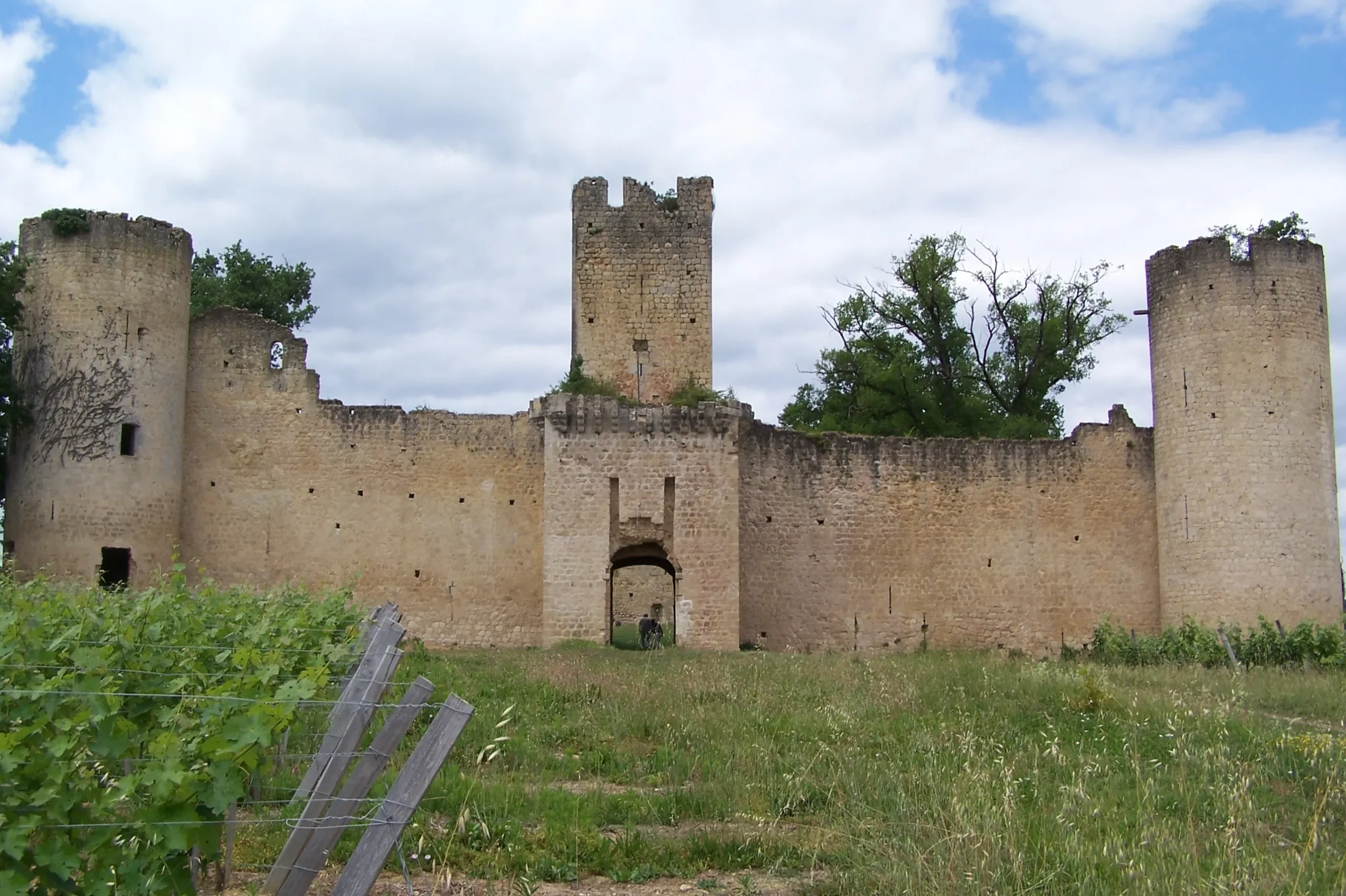
Le château de Budos construit au XIVe siècle pour un neveu du pape Clément V, Raymond Guilhem de Budos, est à la fois une forteresse et un palais. Le monument imite le château pontifical de Villandraut par son plan. L’enceinte est cantonnée à chaque angle d’une tour saillante, trois cylindriques et une octogonale, percées d’archères en croix pattée. Dans l’enceinte se répartissent les logis, constitués de trois ailes principales. La courtine sud-est comporte une remarquable tour-porte, couronnée d’un parapet crénelé supporté par des consoles avec mâchicoulis. Le château est aménagé pour l’artillerie lors des guerres de Religion. A la Révolution, le château, déclaré bien national est démantelé et sert de carrière. Aujourd'hui, l'association Adichats sauvegarde et met en valeur ce magnifique site. Ruines et sous-sol inscrits à l'Inventaire Supplémentaire des Monuments Historiques (1988).
English
The castle of Budos was built during the 14th century by a nephew pf the french pope Clement V, Raymond Guilhem de Budos. It is a fortress and a palace, and looks like the pontifical castle of Villandraut, according to its organisation.
The surrounding wall contains a tower at each corner, three circulars and an octogonal one, with arrow slits.
In the enclosure there are three main wings containing the dwellings. The southeastern curtain wall has a remarkable tower-gate, crwned with a crenelated parapet and a shel with machicolation.
The castle was fitted out for artillery during the french wars of religion (1562-1598).
During the french revolution, the castle was declared as a national good, was demolished and served as a quarry.
Today the volunteers of Adichats conserve and highlight this beautiful site.
Ruins and basement are listed since 1988.
Deutsch
Das Schloss von Budos, das im 14. Jahrhundert für einen Neffen von Papst Clemens V., Raymond Guilhem de Budos, gebaut wurde, ist sowohl eine Festung als auch ein Palast. Das Monument ahmt mit seinem Grundriss das päpstliche Schloss von Villandraut nach. Die Umfassungsmauer ist an jeder Ecke von einem vorspringenden Turm umgeben, drei zylindrische und ein achteckiger, die von Bogenschützen in Form eines Pattern Cross durchbrochen sind. Innerhalb der Mauern befinden sich die Wohngebäude, die aus drei Hauptflügeln bestehen. Die südöstliche Festung hat einen bemerkenswerten Torturm, der von einer zinnenbewehrten Brüstung gekrönt ist, die von Konsolen mit Maschikulis getragen wird. Während der Religionskriege wurde die Burg für die Artillerie umgebaut. Während der Revolution wurde die Burg, die zum Nationalgut erklärt worden war, abgebaut und als Steinbruch genutzt. Heute bewahrt der Verein A
Dutch
Het kasteel van Budos, gebouwd in de 14e eeuw voor een neef van paus Clemens V, Raymond Guilhem de Budos, is zowel een fort als een paleis. Het monument imiteert door zijn plattegrond het pontificale kasteel van Villandraut. De omheining wordt op elke hoek geflankeerd door een uitstekende toren, drie cilindrische en een achthoekige, doorboord met kruisvormige bogen. De woningen, bestaande uit drie hoofdvleugels, liggen verspreid binnen de omheining. De zuidoostelijke gordijngevel heeft een opmerkelijke poorttoren, bekroond door een gekanteelde borstwering ondersteund door consoles met machicoulis. Het kasteel werd ingericht voor artillerie tijdens de godsdienstoorlogen. Tijdens de Revolutie werd het kasteel tot nationaal bezit verklaard en ontmanteld om te worden gebruikt als steengroeve. Vandaag de dag beschermt en verbetert de vereniging Adichats deze prachtige site. De ruïnes en de ke
Español
El castillo de Budos, construido durante el siglo XIV para el sobrino del papa Clément V, Raymond Guilhem de Budos, es a la vez una fortaleza y un palacio. Imita al castillo pontificio de Villandraut por su plano. La muralla se compone de una torre asaltante en cada esquina, tres cilíndricos y una octogonal, perforadas de arqueras con forma de cruz templaria. En el recinto se reparten los hogares, que se constituyen de tres alas principales. La cortina al Sudeste se compone de una torre-puerta, coronada por un parapeto almenado, sujetado por ménsulas con matacán. El castillo está acondicionado para la artillería durante las guerras de Religión. El castillo, declarado monumento nacional, fue derribado para servir de cantera. Ahora, la asociación Adichats conserva y pone de relieve el sitio. Ruinas y sótano declarados en el Registro Suplementario de los Monumentos Históricos (1998).
Italiano
Il castello di Budos, costruito nel XIV secolo per un nipote di Papa Clemente V, Raymond Guilhem de Budos, è sia una fortezza che un palazzo. Il monumento imita nella pianta il castello pontificio di Villandraut. Il recinto è fiancheggiato ad ogni angolo da una torre sporgente, tre cilindriche e una ottagonale, traforate da archi a croce. Le abitazioni, costituite da tre ali principali, sono distribuite all'interno del recinto. La cortina muraria di sud-est presenta una notevole torre porta, coronata da un parapetto merlato sostenuto da mensole con caditoie. Il castello fu attrezzato per l'artiglieria durante le guerre di religione. Durante la Rivoluzione, il castello fu dichiarato proprietà nazionale e smantellato per essere utilizzato come cava. Oggi l'associazione Adichats protegge e valorizza questo magnifico sito. Le rovine e i sotterranei sono elencati nell'Inventaire Supplémentaire des Monuments Historiques (1988).