Saint-Jean-de-Sauves – Saint-Jean-de-Sauves
Description
English
Deutsch
Dutch
Español
Italiano
Description
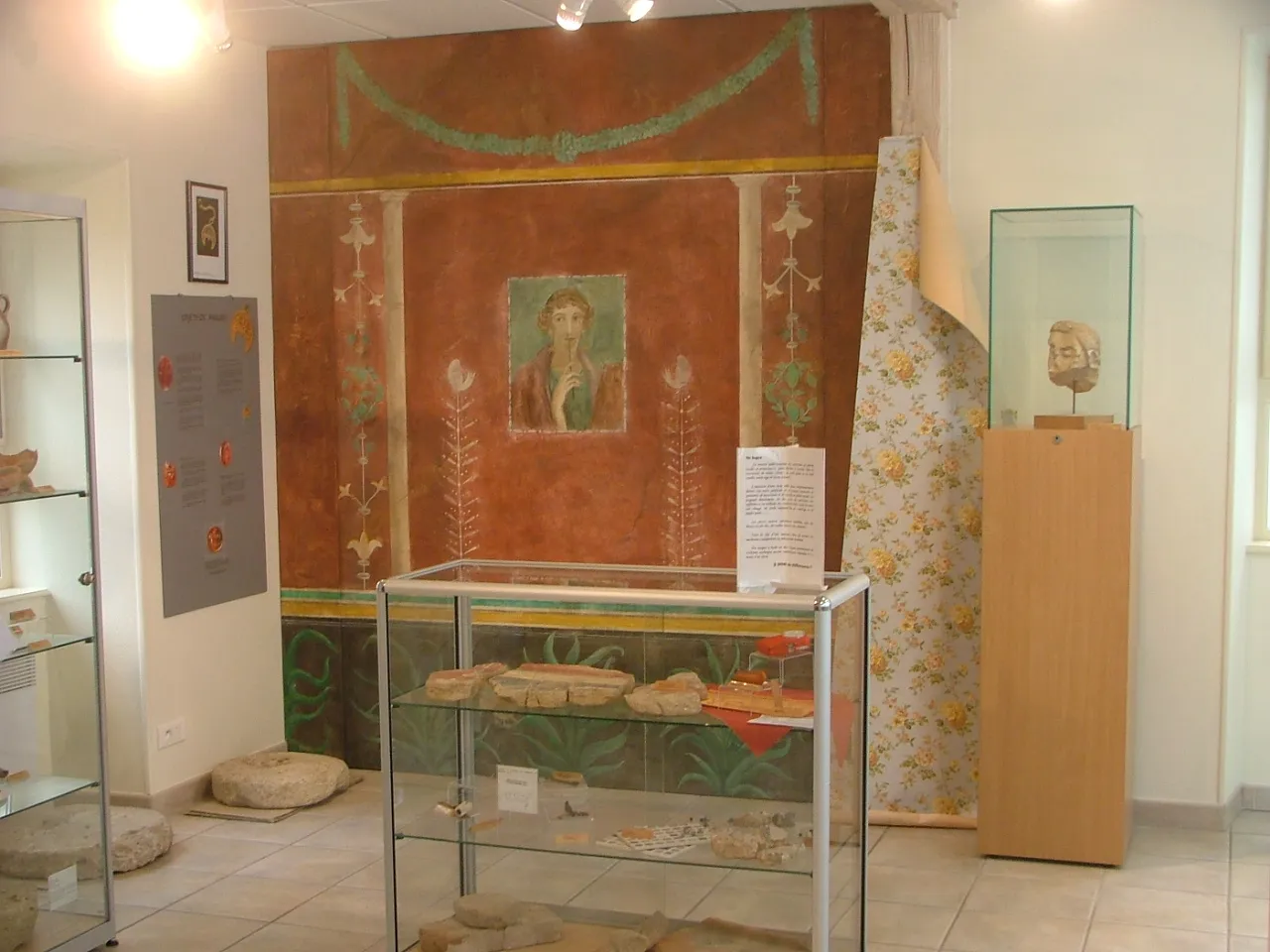
La commune est située dans la petite vallée du Prepson, affluent local de la Dive. Crée à la révolution française, il s’agit d’une commune importante avec ses commerces, services et collège. Cependant, dès l’Antiquité, les lieux sont déjà occupés par une population gallo-romaine. En 1987, des fouilles archéologiques mettent à jour un théâtre, des thermes et autres bâtiments romains. Le résultat de ces fouilles sont présentés au "musée archéologique" de la commune où sont exposés quelques objets. Parmi les trésors trouvés sur le vicus, un bijou en or de grande facture (Musée de Ste-Croix de Poitiers), des fibules, poteries et pièces de monnaies. Les toitures anciennes arborent ici trois matériaux distincts : l'ardoise, la tuile plate et la tuile romaine. Cette dernière étant la véritable couverture traditionnelle du Poitou.
English
The municipality is located in the small valley of Prepson, a local tributary of the Dive. Created during the French revolution, it is an important town with its shops, services and college. However, since antiquity, the place is already occupied by a Gallo-Roman population. In 1987, archaeological excavations uncovered a theatre, baths and other Roman buildings. The results of these excavations are presented in the "archaeological museum" of the city where some objects are exhibited. Among the treasures found on the vicus, a gold jewel of great workmanship (to be seen in Sainte-Croix Museum in Poitiers), fibulas, pottery and coins. The city roofs have here three distinct materials: slate, flat tile and Roman tile. The latter being the true traditional cover of Poitou.
Deutsch
Die Gemeinde liegt im kleinen Tal des Prepson, eines lokalen Nebenflusses der Dive. Sie wurde während der Französischen Revolution gegründet und ist heute eine wichtige Gemeinde mit Geschäften, Dienstleistungen und einem Gymnasium. Bereits in der Antike wurde der Ort jedoch von einer gallorömischen Bevölkerung besiedelt. Im Jahr 1987 wurden bei archäologischen Ausgrabungen ein Theater, Thermen und andere römische Gebäude freigelegt. Die Ergebnisse dieser Ausgrabungen werden im "archäologischen Museum" der Gemeinde präsentiert, wo einige Artefakte ausgestellt sind. Zu den Schätzen, die auf dem Vicus gefunden wurden, gehören ein kunstvolles Goldschmuckstück (Musée de Ste-Croix de Poitiers), Fibeln, Töpferwaren und Münzen. Die alten Dächer bestehen aus drei verschiedenen Materialien: Schiefer, Flachdachziegel und römische Dachziegel. Letztere ist die eigentliche traditionelle Dacheindeckung
Dutch
De gemeente ligt in de kleine vallei van de Prepson, een lokale zijrivier van de Dive. De gemeente is ontstaan tijdens de Franse Revolutie en is een grote gemeente met winkels, diensten en een middelbare school. Het gebied werd echter al in de oudheid bewoond door een Gallo-Romeinse bevolking. In 1987 legden archeologische opgravingen een Romeins theater, baden en andere gebouwen bloot. De resultaten van deze opgravingen zijn te zien in het "archeologisch museum" van de stad, waar een aantal voorwerpen worden tentoongesteld. Onder de schatten die in de vicus zijn gevonden zijn een mooi gouden sieraad (Musée de Ste-Croix de Poitiers), fibulae, aardewerk en munten. De oude daken hebben drie verschillende materialen: leisteen, gewone dakpannen en Romeinse dakpannen. Romeinse dakpannen zijn de traditionele dakbedekking van de regio Poitou.
Español
El municipio está situado en el pequeño valle del Prepson, afluente local del Dive. Creado durante la Revolución Francesa, es un municipio grande con comercios, servicios y un instituto de enseñanza secundaria. Sin embargo, la zona ya estaba ocupada por una población galo-romana en la antigüedad. En 1987, unas excavaciones arqueológicas sacaron a la luz un teatro romano, unas termas y otros edificios. Los resultados de estas excavaciones se exponen en el "museo arqueológico" de la ciudad, donde se exhiben numerosos objetos. Entre los tesoros hallados en el vicus se encuentran una joya de oro (Museo de Ste-Croix de Poitiers), fíbulas, cerámicas y monedas. Los antiguos tejados presentan tres materiales distintos: pizarra, teja lisa y teja romana. La teja romana es el material tradicional de los tejados de la región de Poitou.
Italiano
Il comune è situato nella piccola valle del Prepson, un affluente locale della Dive. Creato durante la Rivoluzione francese, è un grande comune con negozi, servizi e una scuola secondaria. Tuttavia, la zona era già occupata da una popolazione gallo-romana in tempi antichi. Nel 1987, gli scavi archeologici hanno portato alla luce un teatro romano, delle terme e altri edifici. I risultati di questi scavi sono esposti nel "museo archeologico" della città, dove sono esposti numerosi oggetti. Tra i tesori ritrovati nel vicus ci sono un bel gioiello d'oro (Musée de Ste-Croix de Poitiers), fibule, ceramiche e monete. I tetti antichi presentano tre materiali distinti: ardesia, tegole semplici e tegole romane. Le tegole romane sono il materiale di copertura tradizionale della regione del Poitou.