Garlin, bastide du Béarn – Garlin
Description
English
Deutsch
Dutch
Español
Italiano
Description
A l’emplacement de Garlin, se croisaient de longue date une voie de transhumance et une voie romaine. En 1302, la vicomtesse de Béarn renforce la frontière qui la sépare des terres anglaises en y créant une bastide. Celle-ci fut ceinturée par une palissade, un fossé – actuelle promenade des Embarrats – et un remblai ; on y pénétrait par 3 portes.
Au 16e siècle Garlin est un centre protestant actif.
Au 17e, les Capucins (dont l’ancien couvent borde la place), la ramènent au catholicisme.
Quelques maisons témoignent encore de l’architecture rurale du 17e siècle. Des encadrements anciens en grès contrastent avec ceux du 19e réalisés en calcaire.
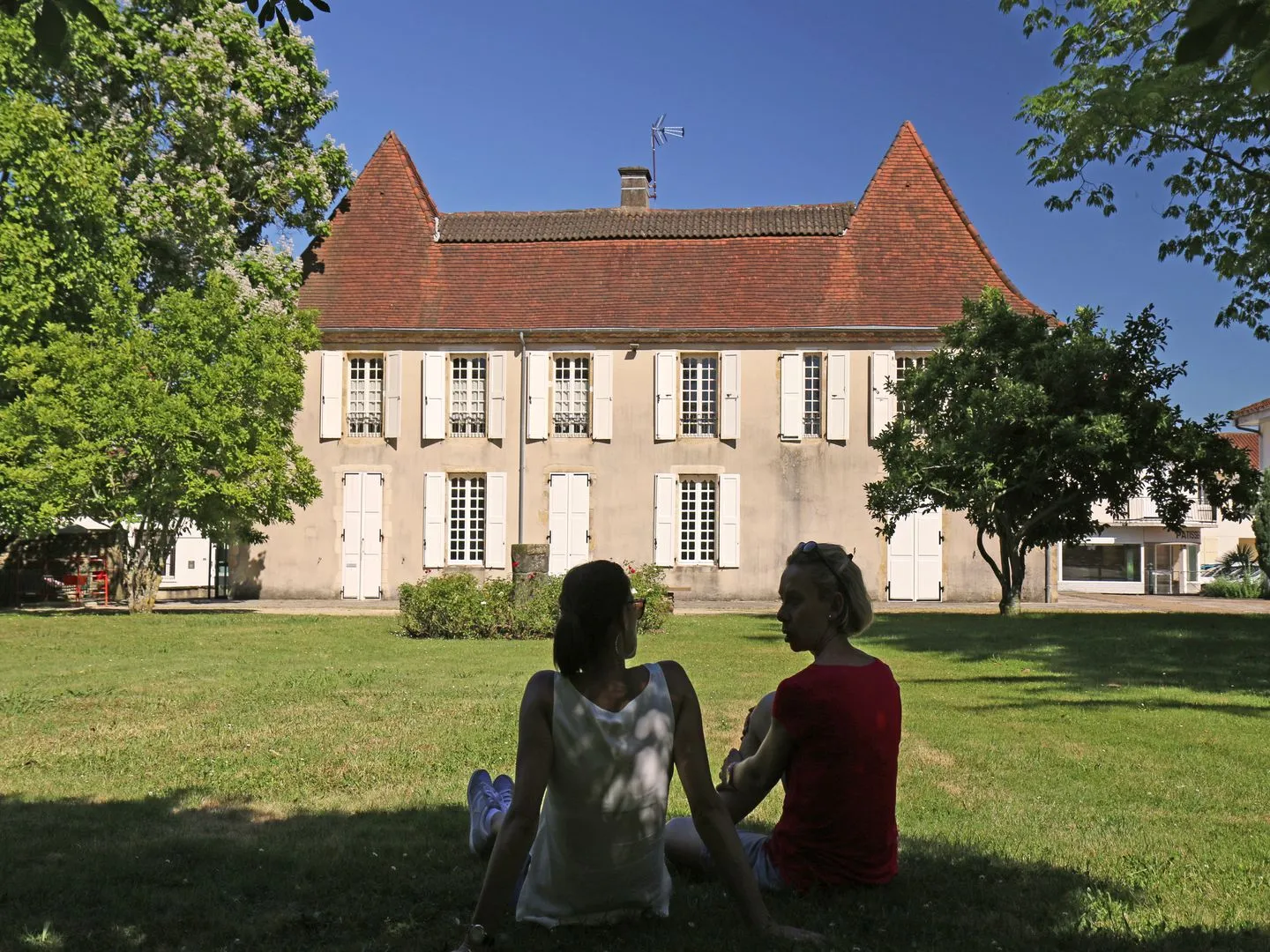
La mairie est actuellement installée dans l'une des demeures du 17e, très bien restaurée, le Château de Hiton ; il tient son de Hiton de Conchez, capitaine huguenot anobli en 1691 par Henri IV.
Brochure détaillée du circuit en mairie.
English
At the site of Garlin, a transhumance route and a Roman route had long crossed each other. In 1302, the Viscountess of Béarn reinforced the border separating her from the English lands by creating a bastide. It was surrounded by a palisade, a ditch – now Promenade des Embarrats – and a embankment; it was entered through 3 doors.
In the 16th century Garlin was an active Protestant centre.
In the 17th century, the Capuchins (whose former convent borders the square) brought it back to Catholicism.
A few houses still bear witness to the rural architecture of the 17th century. Old sandstone frames contrast with those of the 19th century made of limestone.
The town hall is currently located in one of the 17th century residences, the castle of Hiton, which has been very well restored. It was built by Hiton de Conchez, a Huguenot captain knighted in 1691 by Henri IV.
Deutsch
An der Stelle, an der Garlin liegt, kreuzten sich seit langem ein Transhumanzweg und eine römische Straße. Im Jahr 1302 verstärkte die Vicomtesse de Béarn die Grenze zu den englischen Ländereien, indem sie eine Bastide errichtete. Diese wurde von einer Palisade, einem Graben – der heutigen Promenade des Embarrats – und einem Erdwall umgeben; man konnte sie durch drei Tore betreten.
Im 16. Jahrhundert war Garlin ein aktives protestantisches Zentrum.
Im 17. Jahrhundert wurde Garlin von den Kapuzinern (deren ehemaliges Kloster am Platz liegt) zum Katholizismus zurückgeführt.
Einige Häuser zeugen noch von der ländlichen Architektur des 17. Jahrhunderts. Jahrhundert. Die alten Rahmen aus Sandstein kontrastieren mit denen aus Kalkstein aus dem 19.
Das Rathaus befindet sich heute in einem der sehr gut restaurierten Häuser aus dem 17. Jahrhundert, dem Château de Hiton, das nach Hiton de Conc
Dutch
Een transhumance route en een Romeinse weg hebben elkaar lang gekruist op de plaats van Garlin. In 1302 versterkte de burggravin van Bearn de grens die haar scheidde van de Engelse landen door een bastide te creëren. De bastide was omgeven door een palissade, een gracht – de huidige promenade des Embarrats – en een dijk; hij werd betreden door drie poorten.
In de 16e eeuw was Garlin een actief protestants centrum.
In de 17e eeuw brachten de kapucijnen (wier voormalige klooster grenst aan het plein), het terug naar het katholicisme.
Sommige huizen getuigen nog van de landelijke architectuur van de 17e eeuw. De oude zandstenen kozijnen contrasteren met de 19e eeuwse kalkstenen kozijnen.
Het stadhuis is momenteel ondergebracht in een van de zeer goed gerestaureerde 17e-eeuwse residenties, het Château de Hiton, dat zijn naam dankt aan Hiton de Conchez, een hugenotenkapitein die in 1691 d
Español
Una ruta de trashumancia y una calzada romana se han cruzado durante mucho tiempo en el lugar de Garlin. En 1302, la vizcondesa de Bearn reforzó la frontera que la separaba de las tierras inglesas creando una bastida. La bastida estaba rodeada por una empalizada, un foso -el actual paseo des Embarrats- y un terraplén; se entraba por tres puertas.
En el siglo XVI, Garlin era un activo centro protestante.
En el siglo XVII, los capuchinos (cuyo antiguo convento linda con la plaza), la devolvieron al catolicismo.
Algunas casas aún son testigos de la arquitectura rural del siglo XVII. Los antiguos marcos de arenisca contrastan con los de piedra caliza del siglo XIX.
El ayuntamiento se encuentra actualmente en una de las residencias del siglo XVII, muy bien restaurada, el castillo de Hiton, que debe su nombre a Hiton de Conchez, capitán hugonote ennoblecido en 1691 por Enrique IV.
Folleto
Italiano
Una via di transumanza e una strada romana si incrociavano da tempo nel sito di Garlin. Nel 1302, la viscontessa di Béarn rafforzò il confine che la separava dalle terre inglesi creando una città fortificata. La bastide era circondata da una palizzata, da un fossato – l'attuale Promenade des Embarrats – e da un terrapieno, e vi si accedeva attraverso tre porte.
Nel XVI secolo, Garlin era un centro protestante attivo.
Nel XVII secolo, i Cappuccini (il cui ex convento confina con la piazza) riportarono la città al cattolicesimo.
Alcune case testimoniano ancora l'architettura rurale del XVII secolo. Le vecchie cornici in pietra arenaria contrastano con quelle in pietra calcarea del XIX secolo.
Il municipio è attualmente ospitato in una delle residenze del XVII secolo molto ben restaurate, il Castello di Hiton, che prende il nome da Hiton de Conchez, un capitano ugonotto nobilitato nel 1691 da Enrico IV.
La brochure dettagliata della visita è disponibile presso il Municipio.