Opéra de Marseille – Marseille 1er Arrondissement
Description
English
Deutsch
Dutch
Español
Italiano
Description
Inauguré en 1787, l'Opéra de Marseille est parmi les salles actuelles, le deuxième Grand théâtre construit en province après celui de Bordeaux.
Cependant, l'incendie du 13 novembre 1919 n'a épargné que les structures extérieures : les murs, la colonnade et le péristyle. Tout le reste est l'oeuvre d'un collectif d'architectes et d'artistes qui ont réalisé pour sa reconstruction, entre 1919 et 1924, la plus importante salle d'architecture typiquement "art-déco" existant en France.
Marseille est la première ville de province a avoir obtenu le droit de posséder "un théâtre privilégié", du vivant même de Lulli, en 1685. Le privilège s'étendait aux autres villes de Provence et comprenait pour la troupe la possibilité de rayonner jusqu'au Roussillon, au Var et à la région lyonnaise. Depuis plus de trois siècles, la place exceptionnelle que tient l'opéra dans la ville repose en partie sur la position géographique de Marseille qui a très vite été marquée par les influences italiennes, jusqu'à entendre parfois certains ouvrages avant Paris La Norma de Bellini, Le Trouvère de Verdi…
Loin d'être réservé à une élite, l'opéra est très tôt devenu un élément fondamental de la culture populaire des Marseillais. Passionnés de bel canto, ils restent pour les chanteurs une référence nationale et internationale en matière de voix.
English
Inaugurated in 1787, the Marseille Opera House is the second large theater built in the provinces after Bordeaux.
However, the fire of November 13, 1919 only spared the exterior structures: the walls, the colonnade and the peristyle. Everything else was the work of a group of architects and artists who, between 1919 and 1924, created the most important art-deco architectural hall in France for its reconstruction.
Marseille was the first provincial city to have obtained the right to own a "privileged theater", during Lulli's own lifetime, in 1685. The privilege extended to the other cities of Provence and included the possibility for the troupe to reach as far as Roussillon, the Var and the Lyon region. For more than three centuries, the exceptional place held by opera in the city has been partly due to the geographical position of Marseille, which was very quickly marked by Italian influences, to the point of sometimes hearing certain works before Paris : Bellini's Norma, Verdi's Le Trouvère…
Far from being reserved for an elite, opera very early on became a fundamental element of the popular culture of the Marseillais. Passionate about bel canto, they remain a national and international reference for singers in terms of voice.
Deutsch
Die 1787 eingeweihte Oper von Marseille ist unter den heutigen Opernhäusern das zweite große Theater, das nach dem von Bordeaux in der Provinz gebaut wurde.
Das Feuer vom 13. November 1919 verschonte jedoch nur die äußeren Strukturen: die Mauern, die Kolonnade und das Peristyl. Alles andere war das Werk eines Kollektivs von Architekten und Künstlern, die für seinen Wiederaufbau zwischen 1919 und 1924 den bedeutendsten Saal mit typischer "Art-déco"-Architektur schufen, der in Frankreich existiert.
Marseille war die erste Provinzstadt, die das Recht erhielt, "ein privilegiertes Theater" zu besitzen, und zwar noch zu Lebzeiten Lullis im Jahr 1685. Das Privileg erstreckte sich auch auf die anderen Städte der Provence und beinhaltete für die Truppe die Möglichkeit, bis ins Roussillon, ins Var und in die Region Lyon auszustrahlen. Seit mehr als drei Jahrhunderten beruht die außergewöhnliche Stellung der Oper in der Stadt zum Teil auf der geografischen Lage Marseilles, die sehr schnell von italienischen Einflüssen geprägt wurde, bis hin zu Werken, die manchmal schon vor Paris zu hören waren: Bellinis La Norma, Verdis Le Trouvère….
Die Oper war keineswegs nur einer Elite vorbehalten, sondern wurde sehr früh zu einem grundlegenden Bestandteil der Volkskultur der Marseiller. Als leidenschaftliche Belcanto-Sänger bleiben sie für die Sänger eine nationale und internationale Referenz für ihre Stimmen.
Dutch
De Opera van Marseille, ingewijd in 1787, is na Bordeaux het grootste theater van de provincie.
De brand van 13 november 1919 spaarde echter alleen de buitenstructuren: de muren, de zuilengalerij en de peristyle. Al het andere was het werk van een groep architecten en kunstenaars die tussen 1919 en 1924 voor de wederopbouw de belangrijkste art-deco-architectuur van Frankrijk creëerden.
Marseille was de eerste provinciestad die nog tijdens Lulli's leven, in 1685, het recht kreeg op een "bevoorrecht theater". Het privilege strekte zich uit tot de andere steden van de Provence en omvatte de mogelijkheid voor het gezelschap om Roussillon, de Var en de regio Lyon te bereiken. De uitzonderlijke plaats die de opera in de stad al meer dan drie eeuwen inneemt, is deels te danken aan de geografische ligging van Marseille, dat al heel snel werd gekenmerkt door Italiaanse invloeden, zodat bepaalde werken soms eerder te horen waren dan in Parijs – de Norma van Bellini, Le Trouvère van Verdi…
Verre van voorbehouden te zijn aan een elite, werd de opera al snel een fundamenteel onderdeel van de volkscultuur van het volk van Marseille. Gepassioneerd door bel canto, blijven zij een nationale en internationale referentie voor zangers op het gebied van zang.
Español
,Inaugurada en 1787, la Ópera de Marsella es el segundo teatro más grande construido en provincias, después del de Burdeos.
Sin embargo, el incendio del 13 de noviembre de 1919 sólo salvó las estructuras externas: los muros, la columnata y el peristilo. Todo lo demás fue obra de un grupo de arquitectos y artistas que, entre 1919 y 1924, crearon el salón arquitectónico art-deco más importante de Francia para su reconstrucción.
Marsella fue la primera ciudad de provincia que obtuvo el derecho a tener un "teatro privilegiado", incluso en vida de Lulli, en 1685. El privilegio se extendía a las demás ciudades de la Provenza e incluía la posibilidad de que la compañía llegara hasta el Rosellón, el Var y la región de Lyon. Desde hace más de tres siglos, el lugar excepcional que ocupa la ópera en la ciudad se debe en parte a la posición geográfica de Marsella, que se vio marcada muy pronto por las influencias italianas, hasta el punto de que a veces se escuchan ciertas obras antes que en París -Norma de Bellini, Le Trouvère de Verdi…
Lejos de estar reservada a una élite, la ópera se convirtió muy pronto en una parte fundamental de la cultura popular de los marselleses. Apasionados del bel canto, siguen siendo una referencia nacional e internacional para los cantantes en cuanto a la voz.
Italiano
Inaugurata nel 1787, l'Opera di Marsiglia è il secondo teatro più grande costruito in provincia dopo Bordeaux.
Tuttavia, l'incendio del 13 novembre 1919 risparmiò solo le strutture esterne: le mura, il colonnato e il peristilio. Tutto il resto fu opera di un gruppo di architetti e artisti che, tra il 1919 e il 1924, crearono la più importante sala architettonica art-deco di Francia per la sua ricostruzione.
Marsiglia è stata la prima città di provincia ad aver ottenuto il diritto di avere un "teatro privilegiato", già durante la vita di Lulli, nel 1685. Il privilegio si estendeva alle altre città della Provenza e prevedeva la possibilità per la troupe di spingersi fino al Roussillon, al Var e alla regione di Lione. Per più di tre secoli, il posto eccezionale occupato dall'opera nella città è stato in parte dovuto alla posizione geografica di Marsiglia, che è stata molto presto segnata dalle influenze italiane, al punto che a volte si sentivano certe opere prima di Parigi – Norma di Bellini, Le Trouvère di Verdi…
Lungi dall'essere riservata a un'élite, l'opera divenne ben presto una parte fondamentale della cultura popolare dei marsigliesi. Appassionati di bel canto, rimangono un riferimento nazionale e internazionale per i cantanti in termini di voce.
2 Place Ernest Reyer, 13001 Marseille 1er Arrondissement
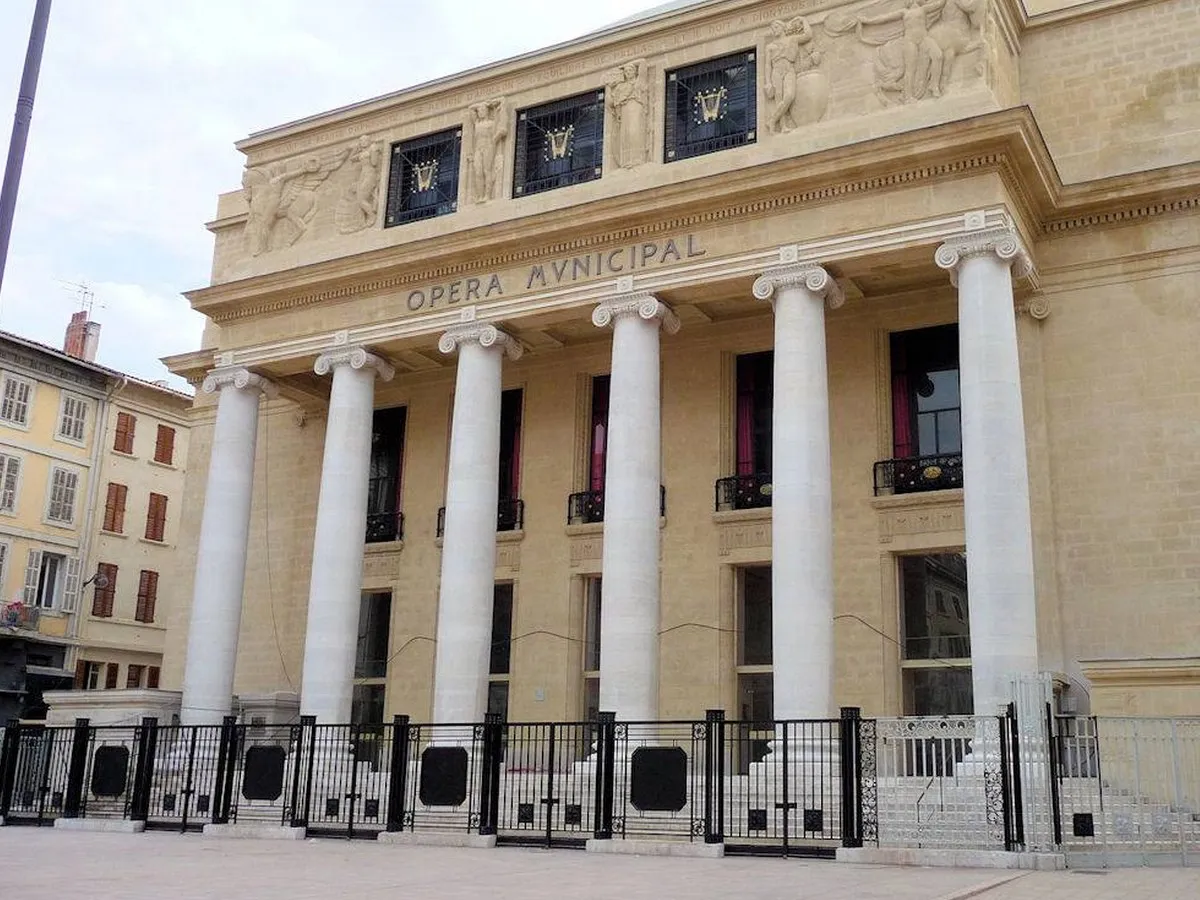
Crédits: Opéra de Marseille - Ville de Marseille