PLATEAU DE L'AUBRAC – Nasbinals
Description
English
Deutsch
Dutch
Español
Italiano
Description
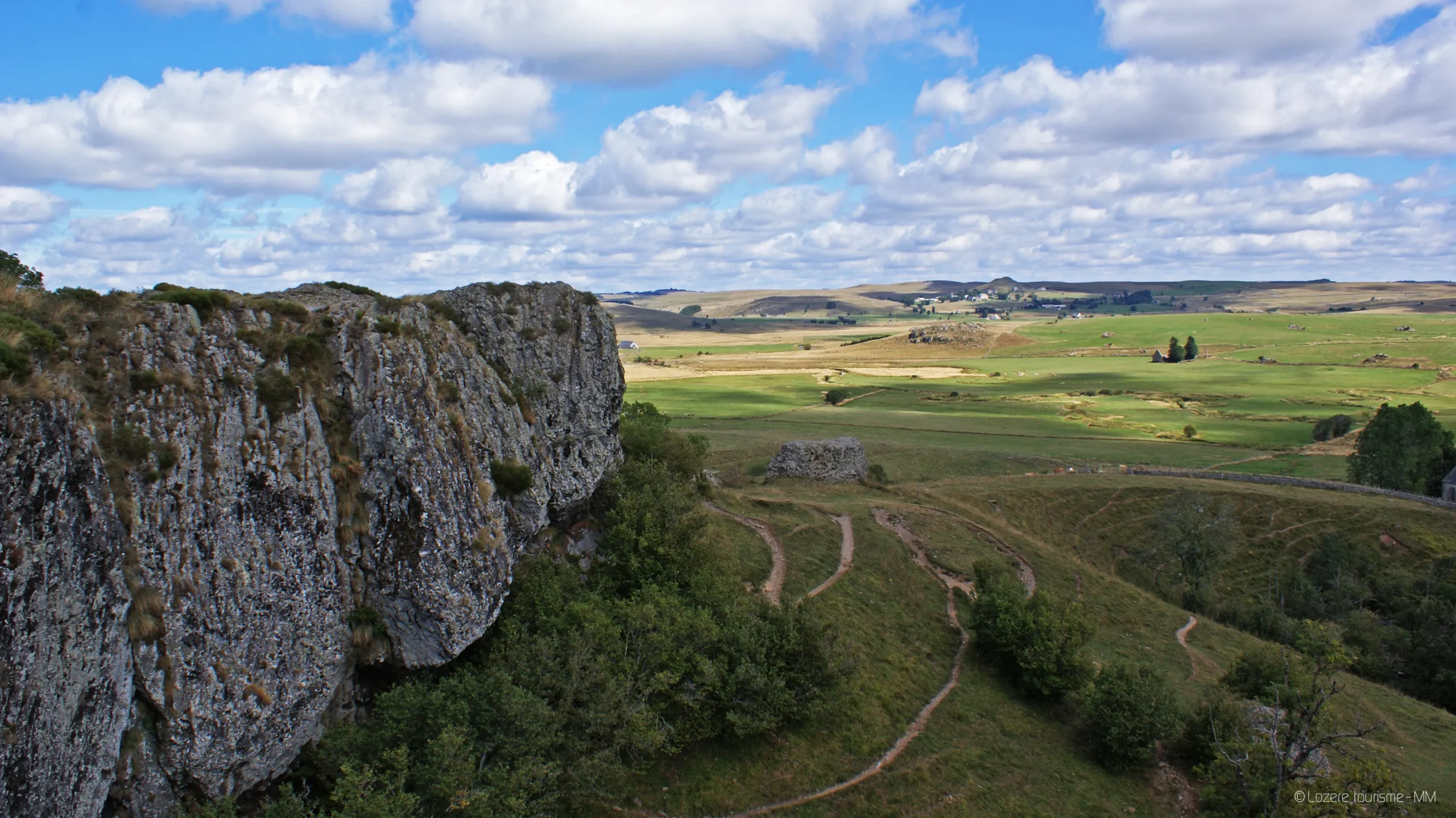
L'Aubrac constitue un vaste plateau granitique et volcanique. Il est soumis à un climat atlantique en limite d'influence continentale
et méditerranéenne. Le maintien d'un ensemble d'habitats naturels remarquables et la présence d'une flore riche et variée sont étroitement liés aux pratiques pastorales traditionnelles.
La partie lozérienne du plateau est reconnu par le réseau Natura 200, pour ses stations les plus significatives des habitats communautaires.
Le site comporte un grand nombre de tourbières abritant une flore très spécialisée : plantes carnivores, linaigrettes, et
certaines espèces relictes des dernières glaciations comme la Ligulaire de Sibérie. On observe sur le plateau de
nombreux lacs d'origine glaciaire.
Source : Muséum National d'Histoire Naturelle, réseau Natura 2000.
English
Aubrac is a vast granite and volcanic plateau. It is subject to an Atlantic climate at the limit of continental influence
and Mediterranean. The maintenance of a set of remarkable natural habitats and the presence of a rich and varied flora are closely linked to traditional pastoral practices.
The Lozerian part of the plateau is recognised by the Natura 200 network for its most significant stations of community habitats.
The site includes a large number of peat bogs sheltering a very specialized flora: carnivorous plants, cottongrass, and
some species relic of the last glaciations like the Siberian Ligular. On the plateau of
numerous lakes of glacial origin.
Source: National Museum of Natural History, Natura 2000 network.
Deutsch
Das Aubrac ist ein großes Granit- und Vulkanplateau. Es herrscht ein atlantisches Klima mit kontinentalem und mediterranem Einfluss
und mediterranem Klima. Die Erhaltung einer Reihe bemerkenswerter natürlicher Lebensräume und das Vorhandensein einer reichen und vielfältigen Flora sind eng mit den traditionellen Weidepraktiken verbunden.
Der lozérianische Teil des Plateaus ist im Rahmen des Natura-200-Netzes für seine bedeutendsten Standorte der gemeinschaftlichen Lebensräume anerkannt.
Das Gebiet umfasst eine große Anzahl von Torfmooren, die eine sehr spezialisierte Flora beherbergen: fleischfressende Pflanzen, Wollgras und
einige Arten, die Relikte der letzten Eiszeiten sind, wie das Sibirische Ligular. Auf dem Plateau gibt es
zahlreiche Seen glazialen Ursprungs.
Quelle: Muséum National d'Histoire Naturelle, Natura 2000-Netzwerk.
Dutch
Aubrac is een uitgestrekt granieten en vulkanisch plateau. Er heerst een Atlantisch klimaat met continentale en mediterrane invloeden
en mediterrane invloed. De instandhouding van een reeks opmerkelijke natuurlijke habitats en de aanwezigheid van een rijke en gevarieerde flora zijn nauw verbonden met de traditionele herderspraktijken.
Het Lozère-gedeelte van het plateau is erkend door het Natura 200-netwerk, vanwege de belangrijkste stations van gemeenschapshabitats.
Het gebied omvat een groot aantal veengebieden met een zeer gespecialiseerde flora: vleesetende planten, linaigrettes en
sommige soorten die overblijfselen zijn van de laatste ijstijden, zoals het Siberisch ligkruid. Op het plateau zijn veel meren van glaciale oorsprong
vele meren van glaciale oorsprong.
Bron: Nationaal Natuurhistorisch Museum, Natura 2000-netwerk.
Español
El Aubrac es una vasta meseta granítica y volcánica. Está sometida a un clima atlántico con influencia continental y mediterránea
y la influencia mediterránea. El mantenimiento de un conjunto de hábitats naturales notables y la presencia de una flora rica y variada están estrechamente vinculados a las prácticas pastorales tradicionales.
La parte de la meseta de Lozère está reconocida por la red Natura 200, por sus estaciones más significativas de hábitats comunitarios.
El sitio incluye un gran número de turberas con una flora muy especializada: plantas carnívoras, linazas
algunas especies que son reliquias de las últimas épocas glaciales, como la ligua siberiana. En la meseta hay muchos lagos de origen glaciar
muchos lagos de origen glaciar.
Fuente: Museo Nacional de Historia Natural, Red Natura 2000.
Italiano
Aubrac è un vasto altopiano granitico e vulcanico. È soggetta a un clima atlantico con influenza continentale e mediterranea
e l'influenza mediterranea. Il mantenimento di un insieme di habitat naturali notevoli e la presenza di una flora ricca e varia sono strettamente legati alle pratiche pastorali tradizionali.
La parte dell'altopiano di Lozère è riconosciuta dalla rete Natura 200, per le sue stazioni più significative di habitat comunitari.
Il sito comprende un gran numero di torbiere con una flora molto specializzata: piante carnivore, linaigrette, e
alcune specie che sono reliquie delle ultime ere glaciali, come la ligustro siberiano. Sull'altopiano si trovano molti laghi di origine glaciale
molti laghi di origine glaciale.
Fonte: Museo Nazionale di Storia Naturale, Rete Natura 2000.
Clientèle: Seniors
, 48260 Nasbinals
Crédits: Comité Départemental du Tourisme de la Lozère


