Village d'Urval – Urval
Description
English
Deutsch
Dutch
Español
Italiano
Description
Le village d’Urval est une étape authentique dans la visite du Périgord. Les maisons restaurées dans un esprit d’authenticité, l’église fortifiée, le four banal font d’Urval un site explicatif de la vie à l’époque médiévale.
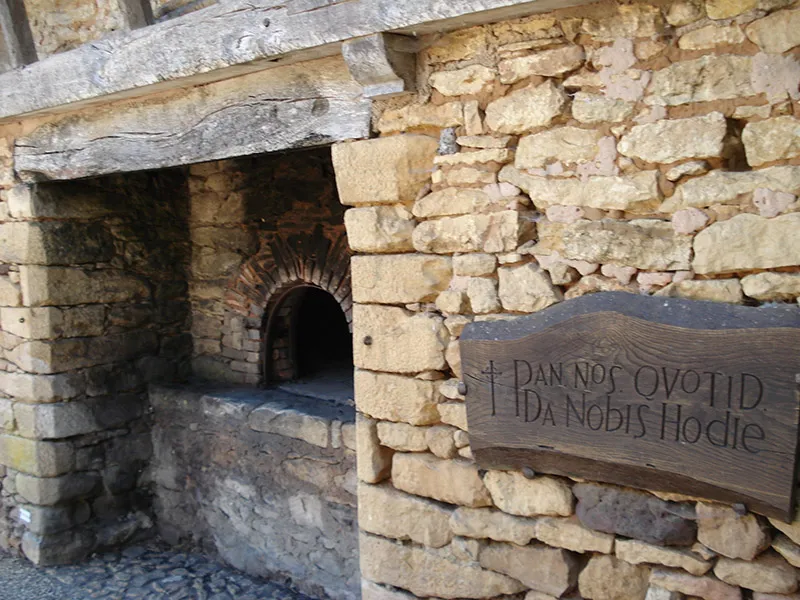
Datant du XIVème siècle, le four banal est un vestige rare de la vie féodale. Les habitants du bourg, placé sous l’autorité et la protection du seigneur ou de la paroisse, devaient l’utiliser, moyennant redevance. Être mis au ban signifiait l’impossibilité d’utiliser le four et puisqu’il n’en existait qu’un, l’impossibilité de faire cuire le pain… Sur le même modèle, il existait aussi un moulin banal.
Si cette redevance seigneuriale a disparu, ce four continue de fonctionner, une fois l'an, pour la fête du village au mois d'août.
English
The village of Urval is an authentic stopover in the visit of the Périgord. The houses restored in a spirit of authenticity, the fortified church, the common oven make Urval an explanatory site of life in medieval times
Dating from the 14th century, the common oven is a rare vestige of feudal life. The inhabitants of the village, placed under the authority and protection of the lord or the parish, had to use it, in return for a fee. To be banned meant the impossibility of using the oven and since there was only one, the impossibility of baking bread… On the same model, there was also a banal mill.
Although this seigniorial charge has disappeared, this oven continues to function, once a year, for the village festival in August.
Deutsch
Das Dorf Urval ist eine authentische Etappe bei einem Besuch des Périgord. Die authentisch restaurierten Häuser, die befestigte Kirche und der Bannofen machen Urval zu einem Ort, an dem das Leben im Mittelalter erklärt wird
Der aus dem 14. Jahrhundert stammende Bannofen ist ein seltenes Relikt des feudalen Lebens. Die Bewohner des Marktfleckens, der unter der Autorität und dem Schutz des Grundherrn oder der Pfarrei stand, mussten ihn gegen eine Gebühr benutzen. Ein Bann bedeutete, dass man den Ofen nicht benutzen durfte, und da es nur einen Ofen gab, durfte man auch kein Brot backen… Nach demselben Muster gab es auch eine Bannmühle.
Auch wenn es diese herrschaftliche Abgabe nicht mehr gibt, wird der Ofen weiterhin betrieben, und zwar einmal im Jahr zum Dorffest im August.
Dutch
Het dorp Urval is een authentieke tussenstop tijdens een bezoek aan de Périgord. De authentiek gerestaureerde huizen, de versterkte kerk en de gemeenschappelijke oven maken van Urval een verklarende site over het leven in de middeleeuwen
De gemeenschappelijke oven dateert uit de 14e eeuw en is een zeldzaam overblijfsel van het feodale leven. De inwoners van het dorp, geplaatst onder het gezag en de bescherming van de heer of de parochie, moesten het tegen betaling gebruiken. Een verbod betekende de onmogelijkheid om de oven te gebruiken en, aangezien er maar één was, de onmogelijkheid om brood te bakken… Op hetzelfde model was er ook een banale molen.
Hoewel deze heerlijkheid is verdwenen, blijft de oven eenmaal per jaar in bedrijf voor het dorpsfeest in augustus.
Español
El pueblo de Urval es una auténtica parada en el Périgord. Las casas restauradas con espíritu de autenticidad, la iglesia fortificada y el horno comunal hacen de Urval un sitio explicativo de la vida en la época medieval
El horno comunal, que data del siglo XIV, es un raro vestigio de la vida feudal. Los habitantes de la aldea, puestos bajo la autoridad y la protección del señor o de la parroquia, debían utilizarla a cambio de una cuota. La prohibición significaba que no podían utilizar el horno y, como sólo había uno, no podían hacer pan También había un molino común en el mismo modelo.
Aunque esta tasa señorial ha desaparecido, el horno sigue funcionando una vez al año para la fiesta del pueblo en agosto.
Italiano
Il villaggio di Urval è un'autentica tappa nel Périgord. Le case restaurate in uno spirito di autenticità, la chiesa fortificata e il forno comunale fanno di Urval un sito esplicativo della vita in epoca medievale
Risalente al XIV secolo, il forno comune è una rara vestigia della vita feudale. Gli abitanti del villaggio, posti sotto l'autorità e la protezione del signore o della parrocchia, dovevano utilizzarla in cambio di un compenso. L'interdizione significava che non potevano usare il forno e, dato che ce n'era uno solo, non potevano cuocere il pane C'era anche un mulino comune sullo stesso modello.
Sebbene questa tassa signorile sia scomparsa, il forno continua a funzionare una volta all'anno per la festa del paese in agosto.