VILLA COUTURIER – Forbach
Description
English
Deutsch
Dutch
Español
Italiano
Description
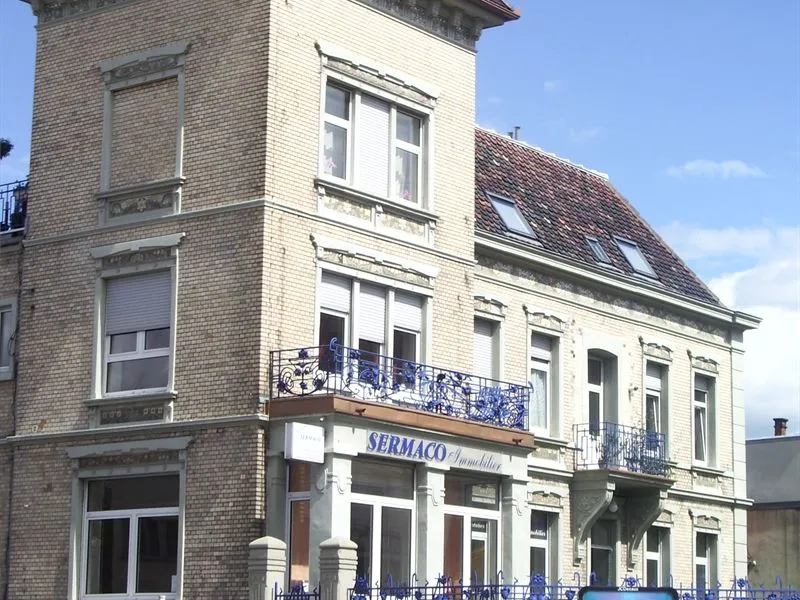
Louis Couturier, riche industriel forbachois, propriétaire d’une entreprise de tuiles, s’est fait construire cet immeuble de style « Art Nouveaux » en 1890. Au cours du XIXème siècle, Forbach connut un important essor économique. Des unités de production sont installées au cœur même de la ville.
La tuilerie fut, après l’annexion, et autour de 1890, la plus importante d’Allemagne.
English
Louis Couturier, a wealthy industrialist from Forbach and owner of a tile company, had this "Art Nouveaux" style building built in 1890. During the 19th century, Forbach experienced an important economic boom. Production units were set up in the very heart of the town
After the annexation, and around 1890, the tile factory was the largest in Germany.
Deutsch
Louis Couturier, ein reicher Forbacher Industrieller und Besitzer eines Dachziegelunternehmens, ließ sich 1890 dieses Gebäude im Stil des Art Nouveau bauen. Im Laufe des 19. Jahrhunderts erlebte Forbach einen bedeutenden wirtschaftlichen Aufschwung. Produktionsstätten wurden im Herzen der Stadt angesiedelt
Die Ziegelei war nach der Annexion und um 1890 die größte in Deutschland.
Dutch
Louis Couturier, een rijke industrieel uit Forbach en eigenaar van een dakpannenbedrijf, liet dit gebouw in Art Nouveau-stijl bouwen in 1890. In de 19e eeuw kende Forbach een belangrijke economische bloei. In het hart van de stad werden productiefaciliteiten opgezet
Na de annexatie was de tegelfabriek rond 1890 de grootste van Duitsland.
Español
Louis Couturier, un rico industrial de Forbach y propietario de una empresa de tejas, mandó construir este edificio de estilo Art Nouveau en 1890. Durante el siglo XIX, Forbach experimentó un importante auge económico. Las instalaciones de producción se instalaron en el centro de la ciudad
Tras la anexión, la fábrica de azulejos fue la mayor de Alemania hacia 1890.
Italiano
Louis Couturier, ricco industriale di Forbach e proprietario di un'azienda di tegole, fece costruire questo edificio in stile Art Nouveau nel 1890. Nel corso del XIX secolo, Forbach conobbe un importante boom economico. Gli impianti di produzione sono stati allestiti nel cuore della città
Dopo l'annessione, la fabbrica di piastrelle era la più grande della Germania intorno al 1890.
Art nouveau ou art déco
Clientèle: Tout public - Groupes
rue de la Gare, 57600 Forbach
Crédits: OT FORBACH