Manoir de Beaumont – Joué-en-Charnie
Description
English
Deutsch
Dutch
Español
Italiano
Description
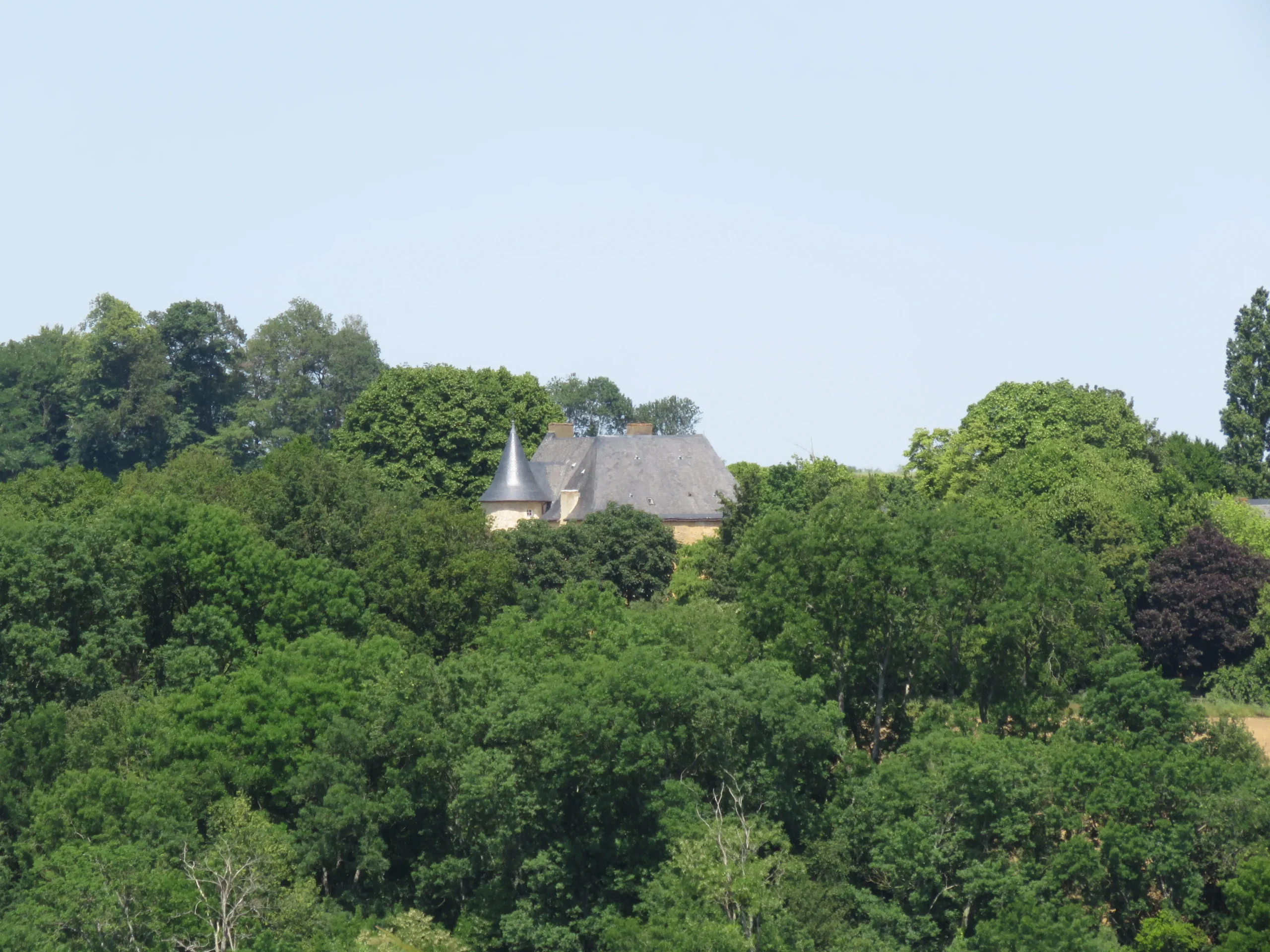
Le corps de logis principal remonte à la fin du XIV ème siècle, comme en témoignent plusieurs éléments architecturaux : jambages des fenêtres, restes des enduits d'origine, chevêtres des cheminées anciennes. Côté jardin, une tourelle du XV ème siècle abrite un bel escalier en chêne. La cour intérieure, bordée de bâtiments d'exploitation et fermée par un ancien pigeonnier du XV ème siècle, garde un aspect, sinon militaire, du moins défensif. Le manoir a été remanié au tout début du XVIII ème siècle : ajout d'un pavillon au Sud et d'une chapelle au Nord, modification des ouvertures dans le goût du jour, transformation des cheminées intérieures dans le style de la Régence. Le manoir a été marqué notamment par l'ascension sociale de la famille Chenon du Boulay à la fin du XVII ème siècle, puis par le bref passage de la célèbre Marthe Richard et de son mari Henri Richer, avant la guerre de 14. La sauvegarde des bâtiments revient au propriétaire précédent, une restauration complète a été engagée par les propriétaires actuels pour rendre au manoir son aspect du siècle des Lumières, tout en préservant les traces de l'époque médiévale. Enfin, les jardins ont été récemment réaménagés, leur visite procure de belles perspectives sur l'architecture du bâtiment et la campagne environnante.
English
The main building dates back to the end of the 14th century, as can be seen from several architectural features: window jambs, remains of the original plasterwork, and old fireplace headers. On the garden side, a 15th century turret houses a beautiful oak staircase. The inner courtyard, bordered by farm buildings and closed off by an old 15th century dovecote, still has an aspect that is, if not military, at least defensive. The manor house was redesigned at the very beginning of the 18th century: addition of a pavilion to the south and a chapel to the north, modification of the openings in the style of the day, transformation of the interior fireplaces in the Regency style. The manor house was notably marked by the social ascension of the Chenon du Boulay family at the end of the 17th century, then by the brief stay of the famous Marthe Richard and her husband Henri Richer, before the First World War. The previous owner was responsible for the preservation of the buildings, and the current owners have undertaken a complete restoration to give the manor house its appearance of the Age of Enlightenment, whilst preserving the traces of the medieval period. Finally, the gardens have recently been redeveloped, and a visit to them provides beautiful views of the architecture of the building and the surrounding countryside.
Deutsch
Das Hauptgebäude stammt aus dem späten 14. Jahrhundert, wie mehrere architektonische Elemente belegen: Fensterbänke, Reste des ursprünglichen Putzes und alte Schornsteinspitzen. Auf der Gartenseite befindet sich in einem Türmchen aus dem 15. Jahrhundert eine schöne Eichentreppe. Der Innenhof, der von Wirtschaftsgebäuden gesäumt und von einem alten Taubenschlag aus dem 15. Jahrhundert abgeschlossen wird, hat noch immer einen militärischen oder zumindest defensiven Aspekt. Das Herrenhaus wurde Anfang des 18. Jahrhunderts umgebaut: ein Pavillon im Süden und eine Kapelle im Norden wurden hinzugefügt, die Öffnungen im Geschmack der Zeit verändert und die Kamine im Inneren im Stil der Régence umgebaut. Das Herrenhaus wurde insbesondere durch den sozialen Aufstieg der Familie Chenon du Boulay am Ende des 17. Jahrhunderts und durch den kurzen Aufenthalt der berühmten Marthe Richard und ihres Mannes Henri Richer vor dem Ersten Weltkrieg geprägt. Der Erhalt der Gebäude geht auf den vorherigen Besitzer zurück. Eine umfassende Restaurierung wurde von den jetzigen Besitzern eingeleitet, um dem Herrenhaus sein Aussehen aus dem Zeitalter der Aufklärung zurückzugeben und gleichzeitig die Spuren des Mittelalters zu bewahren. Die Gärten schließlich wurden vor kurzem neu angelegt. Ihr Besuch bietet schöne Perspektiven auf die Architektur des Gebäudes und die umliegende Landschaft.
Dutch
Het hoofdgebouw dateert uit het einde van de 14e eeuw, zoals blijkt uit verschillende architectonische kenmerken: raamstijlen, resten van het oorspronkelijke pleisterwerk en de koppen van de oude open haarden. Aan de tuinkant herbergt een 15e eeuws torentje een prachtige eikenhouten trap. De binnenplaats, omzoomd door boerderijgebouwen en omsloten door een oude duiventil uit de 15e eeuw, heeft een aspect dat zo niet militair, dan toch defensief is. Het herenhuis werd helemaal aan het begin van de 18e eeuw verbouwd: toevoeging van een paviljoen aan de zuidkant en een kapel aan de noordkant, wijziging van de openingen in de stijl van die tijd, omvorming van de binnenhaarden in Regency-stijl. Het landhuis werd met name gekenmerkt door de sociale opgang van de familie Chenon du Boulay aan het einde van de 17e eeuw, vervolgens door het korte verblijf van de beroemde Marthe Richard en haar man Henri Richer, vóór de Eerste Wereldoorlog. De vorige eigenaar was verantwoordelijk voor het behoud van de gebouwen, en de huidige eigenaars hebben een volledige restauratie ondernomen om het landhuis de uitstraling van het tijdperk van de Verlichting te geven, met behoud van de sporen van de middeleeuwse periode. Ten slotte zijn de tuinen onlangs heringericht, en een bezoek eraan biedt een prachtig uitzicht op de architectuur van het gebouw en het omringende landschap.
Español
El edificio principal data de finales del siglo XIV, como demuestran varios elementos arquitectónicos: las jambas de las ventanas, los restos de las yeserías originales y las cabeceras de las antiguas chimeneas. En el lado del jardín, una torreta del siglo XV alberga una hermosa escalera de roble. El patio interior, delimitado por edificios agrícolas y cerrado por un antiguo palomar del siglo XV, conserva un aspecto, si no militar, al menos defensivo. La casa solariega fue remodelada a principios del siglo XVIII: adición de un pabellón al sur y una capilla al norte, modificación de las aberturas al estilo de la época, transformación de las chimeneas interiores al estilo de la Regencia. La casa solariega estuvo marcada especialmente por el ascenso social de la familia Chenon du Boulay a finales del siglo XVII, y luego por la breve estancia de la famosa Marthe Richard y su marido Henri Richer, antes de la Primera Guerra Mundial. El anterior propietario se encargó de la conservación de los edificios, y los actuales propietarios han emprendido una restauración completa para dar a la casa solariega su aspecto del Siglo de las Luces, conservando al mismo tiempo las huellas del periodo medieval. Por último, los jardines han sido reconstruidos recientemente, y una visita a ellos ofrece una hermosa vista de la arquitectura del edificio y del paisaje circundante.
Italiano
L'edificio principale risale alla fine del XIV secolo, come testimoniano diversi elementi architettonici: gli stipiti delle finestre, i resti dell'intonaco originale e le testate degli antichi camini. Sul lato del giardino, una torretta del XV secolo ospita una bella scala di quercia. Il cortile interno, delimitato da edifici agricoli e chiuso da un'antica colombaia del XV secolo, conserva un aspetto, se non militare, almeno difensivo. La casa padronale fu ristrutturata all'inizio del XVIII secolo: aggiunta di un padiglione a sud e di una cappella a nord, modifica delle aperture secondo lo stile dell'epoca, trasformazione dei camini interni in stile Reggenza. Il maniero è stato segnato in particolare dall'ascesa sociale della famiglia Chenon du Boulay alla fine del XVII secolo, poi dal breve soggiorno della famosa Marthe Richard e di suo marito Henri Richer, prima della Prima Guerra Mondiale. Il precedente proprietario era responsabile della conservazione degli edifici, mentre gli attuali proprietari hanno intrapreso un restauro completo per dare al maniero l'aspetto dell'Età dei Lumi, pur conservando le tracce del periodo medievale. Infine, i giardini sono stati recentemente riqualificati e la loro visita offre una bella visione dell'architettura dell'edificio e della campagna circostante.