Le collège Gilles de Trèves – Bar-le-Duc
Description
English
Deutsch
Dutch
Español
Italiano
Description
Construit par le doyen de la collégiale Saint-Maxe pour instruire les jeunes du Barrois, l’architecture du
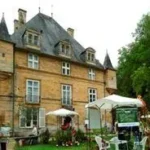
bâtiment est typique du style lorrain du XVIe siècle influencé par l’art et les techniques de la Renaissance. Organisé autour d’une cour délimitée par une galerie, il se caractérise par son volume simple, sa toiture discrète mais haute, la régularité des ouvertures sur de hautes façades ornées dont les principales richesses sont dissimulées dans la cour.
Afin d’offrir un enseignement de qualité aux jeunes du Barrois et de lutter contre les effets de la Réforme protestante, Gilles de Trèves décide de financer la construction d’un collège, à mi pente entre la Ville haute et le Bourg. Le bâtiment est achevé en 1574 mais il n’est ouvert aux écoliers qu’après le décès de son fondateur en 1582. Les Jésuites dirigent l’établissement de 1617 à 1762, date de la dissolution de leur ordre par le Parlement de Paris. Lycée puis école de jeunes filles au XIXe siècle, l’édifice est un lieu d’enseignement jusqu’en 2002.
Bel exemple d’architecture civile de la Renaissance, décrit comme « la plus belle maison de ville qui soit en France » par Montaigne de passage en 1580, les bâtiments s’organisent autour d’une cour intérieure bordée de galeries. Celles-ci sont surmontées de balcons aux curieuses balustrades entrelacées. La toiture est pourvue de fenêtres jumelées aux frontons triangulaires et d’un élégant clocheton. La façade sur rue était à l’origine la plus ornée mais, en très mauvais état, elle fut détruite en 1831. Du mobilier d’origine, il ne reste malheureusement que deux taques de cheminées. Sous la voûte du porche la devise du fondateur rappelle : « que cette demeure reste debout jusqu’à ce que la fourmi ait bu les flots de la mer et que la tortue ait fait le tour de la terre ».
English
Built by the dean of the Saint-Maxe collegiate church to educate the youth of the Barrois, the architecture of the
the building is typical of the Lorraine style of the 16th century influenced by the art and techniques of the Renaissance. Organized around a courtyard bounded by a gallery, it is characterized by its simple volume, its discreet but high roof, the regularity of the openings on high ornamented facades whose main treasures are hidden in the courtyard.
In order to offer quality education to the young people of the Barrois and to fight against the effects of the Protestant Reformation, Gilles de Trèves decided to finance the construction of a college, halfway between the Upper Town and the Bourg. The building was completed in 1574, but it was not open to schoolchildren until after the death of its founder in 1582. The Jesuits ran the establishment from 1617 to 1762, the date of the dissolution of their order by the Parliament of Paris. A secondary school and then a girls' school in the 19th century, the building was a place of education until 2002.
A fine example of Renaissance civil architecture, described as "the most beautiful town house in France" by Montaigne de passage in 1580, the buildings are organized around an inner courtyard lined with galleries. These are surmounted by balconies with curious interlaced balustrades. The roof has twin windows with triangular pediments and an elegant bell tower. The street façade was originally the most ornate, but was destroyed in 1831 due to its very poor condition. Of the original furnishings, only two chimney stacks unfortunately remain. Under the vault of the porch, the founder's motto recalls: "Let this house remain standing until the ant has drunk the waves of the sea and the turtle has circled the earth".
Deutsch
Das vom Dekan der Stiftskirche Saint-Maxe errichtete Gebäude wurde gebaut, um die Jugend des Barrois zu unterrichten
gebäudes ist typisch für den lothringischen Stil des 16. Jahrhunderts, der von der Kunst und den Techniken der Renaissance beeinflusst wurde. Es ist um einen von einer Galerie begrenzten Hof herum angeordnet und zeichnet sich durch sein einfaches Volumen, sein unauffälliges, aber hohes Dach und die Regelmäßigkeit der Öffnungen an den hohen, verzierten Fassaden aus, deren größte Reichtümer im Hof verborgen sind.
Um der Jugend des Barrois eine hochwertige Ausbildung zu bieten und die Auswirkungen der protestantischen Reformation zu bekämpfen, beschloss Gilles de Trèves, den Bau eines Colleges zu finanzieren, das auf halbem Hang zwischen der Oberstadt und dem Bourg errichtet werden sollte. Das Gebäude wurde 1574 fertiggestellt, aber erst nach dem Tod seines Gründers im Jahr 1582 für Schüler geöffnet. Die Jesuiten leiteten die Einrichtung von 1617 bis 1762, als ihr Orden vom Parlament von Paris aufgelöst wurde. Jahrhundert als Gymnasium und dann als Mädchenschule, bis 2002 war das Gebäude ein Ort für den Unterricht.
Die Gebäude sind um einen Innenhof angeordnet, der von Galerien gesäumt wird. Montaigne, der sich 1580 in Paris aufhielt, beschrieb es als "das schönste Stadthaus, das es in Frankreich gibt", und nannte es ein schönes Beispiel für die bürgerliche Architektur der Renaissance. Diese werden von Balkonen mit merkwürdig verschlungenen Balustraden überragt. Das Dach ist mit Zwillingsfenstern mit dreieckigen Giebeln und einem eleganten Glockentürmchen versehen. Die Straßenfassade war ursprünglich am reichsten verziert, wurde aber 1831 wegen ihres schlechten Zustands zerstört. Von der ursprünglichen Einrichtung sind leider nur noch zwei Schornsteinabdeckungen erhalten. Unter dem Gewölbe der Vorhalle erinnert das Motto des Stifters daran: "Dieses Haus soll stehen bleiben, bis die Ameise die Fluten des Meeres getrunken und die Schildkröte die Erde umrundet hat".
Dutch
Gebouwd door de deken van de collegiale kerk van Saint-Maxe om de jongeren van de Barrois te onderwijzen, is de architectuur van het gebouw typisch voor de
de architectuur van het gebouw is typisch voor de Lotharingse stijl van de 16e eeuw, beïnvloed door de kunst en de technieken van de Renaissance. Georganiseerd rond een binnenplaats, begrensd door een galerij, wordt het gekenmerkt door zijn eenvoudige volume, zijn discrete maar hoge dak, de regelmaat van de openingen op hoge sierlijke gevels, waarvan de belangrijkste schatten op de binnenplaats verborgen zijn.
Om de jongeren van de Barrois kwaliteitsonderwijs te bieden en de gevolgen van de protestantse reformatie te bestrijden, besloot Gilles de Trèves de bouw van een college te financieren, halverwege de bovenstad en de Bourg. Het gebouw werd in 1574 voltooid, maar werd pas na de dood van de oprichter in 1582 opengesteld voor studenten. De Jezuïeten beheerden de instelling van 1617 tot 1762, toen het Parlement van Parijs hun orde ophief. Het gebouw werd gebruikt als middelbare school en vervolgens als meisjesschool in de 19e eeuw, en als onderwijsinstelling tot 2002.
Een mooi voorbeeld van burgerlijke Renaissance architectuur, beschreven als "het mooiste stadshuis in Frankrijk" door Montaigne, die op bezoek was in 1580, de gebouwen zijn gerangschikt rond een binnenplaats met galerijen. Deze worden bekroond door balkons met merkwaardige verstrengelde balustrades. Het dak heeft dubbele ramen met driehoekige frontons en een elegante klokkentoren. De straatgevel was oorspronkelijk de meest sierlijke, maar werd in 1831 verwoest vanwege de slechte staat ervan. Van het oorspronkelijke meubilair zijn helaas slechts twee schoorsteenkappen overgebleven. Onder het gewelf van het portaal herinnert het motto van de stichter: "Moge dit huis blijven staan totdat de mier de golven van de zee heeft gedronken en de schildpad de aarde heeft rondgelopen".
Español
Construido por el deán de la colegiata de Saint-Maxe para educar a los jóvenes del Barrois, la arquitectura del edificio es típica del
la arquitectura del edificio es típica del estilo lorenés del siglo XVI, influenciado por el arte y las técnicas del Renacimiento. Organizado en torno a un patio delimitado por una galería, se caracteriza por su volumen sencillo, su tejado discreto pero alto, la regularidad de las aberturas de las altas fachadas ornamentadas, cuyos principales tesoros se esconden en el patio.
Para ofrecer una educación de calidad a los jóvenes del Barrois y luchar contra los efectos de la Reforma Protestante, Gilles de Trèves decidió financiar la construcción de un colegio, a medio camino entre la ciudad alta y el Bourg. El edificio se terminó en 1574, pero no se abrió a los estudiantes hasta después de la muerte de su fundador, en 1582. Los jesuitas dirigieron el establecimiento desde 1617 hasta 1762, cuando el Parlamento de París disolvió su orden. En el siglo XIX, el edificio se convirtió en un instituto y luego en una escuela femenina, y se utilizó como lugar de enseñanza hasta 2002.
Ejemplo de arquitectura civil renacentista, descrita como "la más bella casa de la ciudad en Francia" por Montaigne en 1580, los edificios están dispuestos alrededor de un patio interior bordeado de galerías. Están rematados por balcones con curiosas balaustradas entrelazadas. El tejado tiene ventanas gemelas con frontones triangulares y un elegante campanario. La fachada de la calle era originalmente la más ornamentada, pero fue destruida en 1831 debido a su mal estado. Del mobiliario original, desgraciadamente sólo se conservan dos casquillos de chimenea. Bajo la bóveda del pórtico, el lema del fundador recuerda: "Que esta casa siga en pie hasta que la hormiga haya bebido las olas del mar y la tortuga haya dado la vuelta a la tierra".
Italiano
Costruito dal decano della collegiata di Saint-Maxe per educare i giovani del Barrois, l'architettura dell'edificio è tipica del periodo di costruzione della chiesa
l'architettura dell'edificio è tipica dello stile lorenese del XVI secolo, influenzato dall'arte e dalle tecniche del Rinascimento. Organizzato attorno a un cortile delimitato da una galleria, è caratterizzato da un volume semplice, da un tetto discreto ma alto, dalla regolarità delle aperture sulle alte facciate decorate, i cui principali tesori sono nascosti nel cortile.
Per offrire un'istruzione di qualità ai giovani del Barrois e per combattere gli effetti della Riforma protestante, Gilles de Trèves decise di finanziare la costruzione di un collegio, a metà strada tra la città alta e il Bourg. L'edificio fu completato nel 1574, ma fu aperto agli studenti solo dopo la morte del suo fondatore, nel 1582. I gesuiti gestirono lo stabilimento dal 1617 al 1762, quando il Parlamento di Parigi sciolse il loro ordine. Nel XIX secolo, l'edificio è diventato un liceo e poi una scuola femminile ed è stato utilizzato come luogo di istruzione fino al 2002.
Esempio di architettura civile rinascimentale, definito da Montaigne nel 1580 "la più bella casa di città di Francia", gli edifici sono disposti intorno a un cortile interno fiancheggiato da gallerie. Questi sono sormontati da balconi con curiose balaustre intrecciate. Il tetto presenta finestre binate con frontoni triangolari e un elegante campanile. La facciata su strada era originariamente la più decorata, ma fu distrutta nel 1831 a causa delle sue cattive condizioni. Dell'arredamento originale, purtroppo, rimangono solo due comignoli. Sotto la volta del portico, il motto del fondatore ricorda: "Che questa casa rimanga in piedi finché la formica non avrà bevuto le onde del mare e la tartaruga non avrà girato intorno alla terra".
Renaissance
Classement: Monument Historique
Rue Gilles de Trèves, 55000 Bar-le-Duc

Crédits: Ji-Elle
CC BY-SA 3.0
CC BY-SA 3.0