ENFONVELLE – Enfonvelle
Description
English
Deutsch
Dutch
Español
Italiano
Description
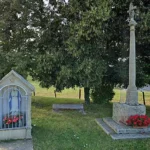
Ici, l’Apance quitte le département pour les Vosges afin d’y rejoindre la Saône à Châtillon. Une borne atteste des confins des trois provinces : Champagne, Franche-Comté et Lorraine.
Le village, qui s’enfonce dans le creux d’une vallée du canton de Bourbonne-les-Bains, était autrefois nommé « Offeni Villa ». Son existence semble remonter au VIIe siècle. Un prieuré fut fondé au Xe siècle par Guillaume, abbé de Saint-Bénigne, à l’emplacement d’un établissement plus ancien. Ce prieuré eut comme bienfaiteurs le comte Burchard, le comte Hugues, puis les seigneurs de Jonvelle et Gilley. Ses habitants sont appelés les « Enfonvillensois ».
English
Here, the Apance leaves the département for the Vosges, where it joins the Saône at Châtillon. A milestone marks the boundary between the three provinces of Champagne, Franche-Comté and Lorraine.
The village, which lies in the hollow of a valley in the canton of Bourbonne-les-Bains, was once called "Offeni Villa". It appears to date back to the 7th century. A priory was founded in the 10th century by Guillaume, abbot of Saint-Bénigne, on the site of an earlier settlement. Benefactors included Count Burchard, Count Hugues, and later the lords of Jonvelle and Gilley. Its inhabitants are known as "Enfonvillensois".
Deutsch
Hier verlässt der Apance das Departement in Richtung Vogesen, um sich bei Châtillon mit der Saône zu vereinen. Ein Grenzstein zeugt von den Grenzen der drei Provinzen Champagne, Franche-Comté und Lothringen.
Das Dorf, das sich in einem Tal im Kanton Bourbonne-les-Bains befindet, wurde früher "Offeni Villa" genannt. Seine Existenz scheint bis ins 7. Jahrhundert zurückzugehen. Jahrhundert von Wilhelm, dem Abt von Saint-Bénigne, an der Stelle einer älteren Siedlung gegründet. Dieses Priorat hatte Graf Burchard, Graf Hugues und später die Herren von Jonvelle und Gilley als Wohltäter. Die Einwohner werden als "Enfonvillensois" bezeichnet.
Dutch
Hier verlaat de Apance het departement voor de Vogezen, waar hij bij Châtillon samenvloeit met de Saône. Een mijlpaal getuigt van de grenzen van drie provincies: Champagne, Franche-Comté en Lotharingen.
Het dorp, dat in de holte van een vallei in het kanton Bourbonne-les-Bains ligt, stond vroeger bekend als Offeni Villa. Het lijkt te dateren uit de 7e eeuw. In de 10e eeuw werd er een priorij gesticht door Guillaume, abt van Saint-Bénigne, op de plek van een eerdere nederzetting. Tot de weldoeners van deze priorij behoorden graaf Burchard, graaf Hugues en later de heren van Jonvelle en Gilley. De inwoners staan bekend als de "Enfonvillensois".
Español
Aquí, el Apance abandona el departamento para dirigirse a los Vosgos, donde se une al Saona en Châtillon. Un hito atestigua los límites de tres provincias: Champaña, Franco Condado y Lorena.
El pueblo, situado en la hondonada de un valle del cantón de Bourbonne-les-Bains, se llamaba antiguamente Villa Offeni. Su origen parece remontarse al siglo VII. En el siglo X, Guillaume, abad de Saint-Bénigne, fundó un priorato en el emplazamiento de un asentamiento anterior. Entre los benefactores de este priorato se encuentran el conde Burchard, el conde Hugues y, más tarde, los señores de Jonvelle y Gilley. Sus habitantes son conocidos como los "Enfonvillensois".
Italiano
Qui l'Apance lascia il dipartimento per raggiungere i Vosgi, dove si unisce alla Saona a Châtillon. Una pietra miliare testimonia i confini di tre province: Champagne, Franca Contea e Lorena.
Il villaggio, che si trova nella conca di una valle nel cantone di Bourbonne-les-Bains, era un tempo conosciuto come Villa Offeni. Sembra che risalga al VII secolo. Un priorato fu fondato nel X secolo da Guillaume, abate di Saint-Bénigne, sul sito di un precedente insediamento. Tra i benefattori di questo priorato vi furono il conte Burchard, il conte Hugues e più tardi i signori di Jonvelle e Gilley. I suoi abitanti sono noti come "Enfonvillensois".
, 52400 Enfonvelle