Église Saint-Romain – Saint-Romain-sous-Gourdon
Description
English
Deutsch
Dutch
Español
Italiano
Description
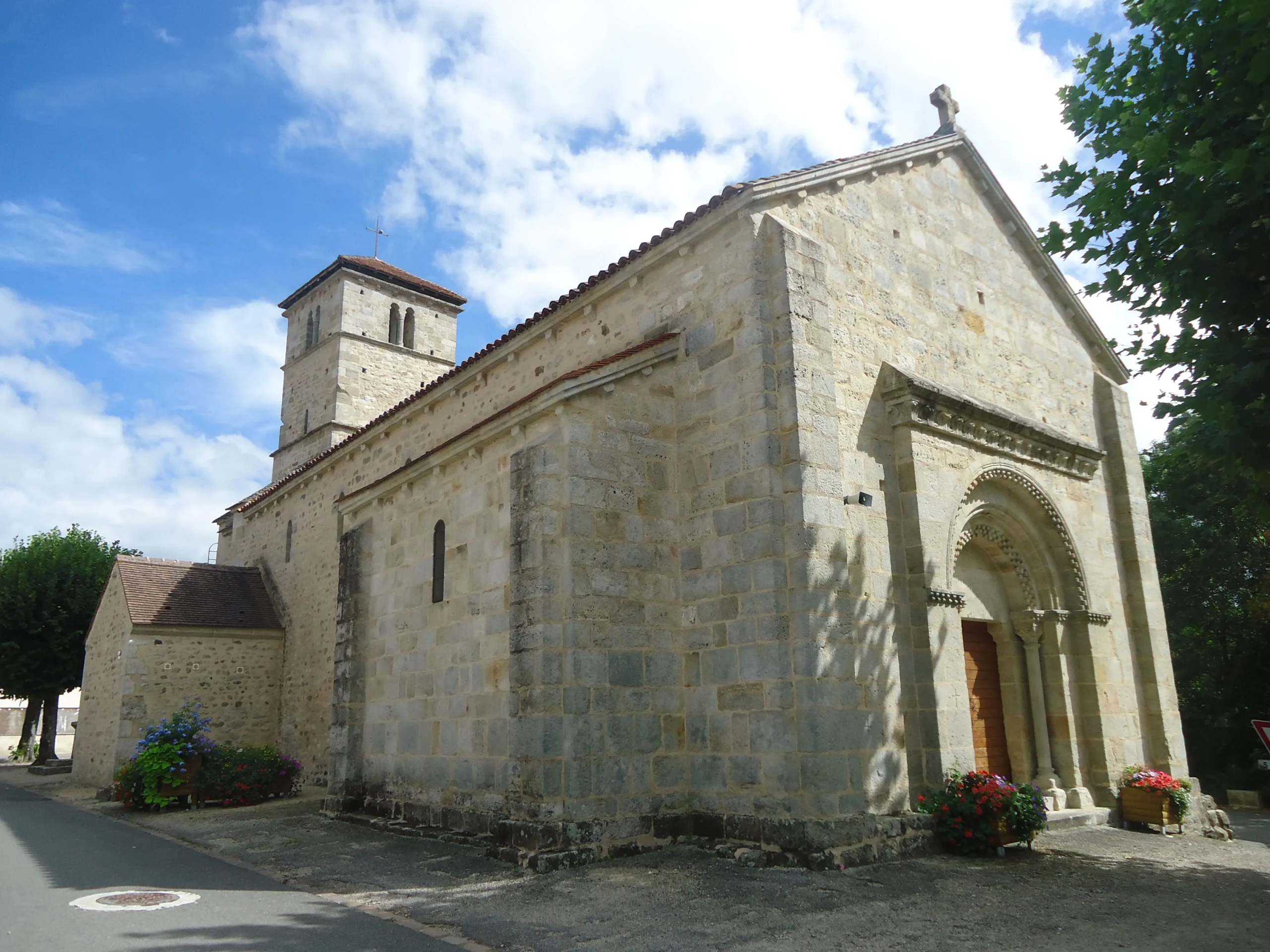
L'église entièrement romane, construite probablement en plusieurs phases entre le XIe (la nef) et la fin du XIIe siècle, a succédé à un lieu de culte très ancien puisque des sarcophages mérovingiens ont été retrouvés sur place. À voir : chapiteaux représentant des travaux et la Nativité, modillons sculptés (animaux, figures humaines, monstres).
English
The entirely Romanesque church, probably built in several phases between the 11th century (the nave) and the end of the 12th century, was the successor to a very ancient place of worship since Merovingian sarcophagi were found on the spot. To be seen: capitals representing works and the Nativity, sculpted modillions (animals, human figures, monsters).
Deutsch
Die vollständig romanische Kirche, die wahrscheinlich in mehreren Phasen zwischen dem 11. (das Kirchenschiff) und dem Ende des 12. Jahrhunderts erbaut wurde, folgte auf eine sehr alte Kultstätte, da an Ort und Stelle merowingische Sarkophage gefunden wurden. Sehenswert: Kapitelle, die Arbeiten und die Geburt Christi darstellen, geschnitzte Modillons (Tiere, menschliche Figuren, Ungeheuer).
Dutch
De volledig romaanse kerk, waarschijnlijk in verschillende fasen gebouwd tussen de 11e (het schip) en het einde van de 12e eeuw, was de opvolger van een zeer oude bedehuis, aangezien ter plaatse Merovingische sarcofagen zijn gevonden. Te zien: kapitelen die het werk en de Geboorte voorstellen, gebeeldhouwde modillions (dieren, menselijke figuren, monsters).
Español
La iglesia, enteramente románica, probablemente construida en varias fases entre el siglo XI (la nave) y finales del XII, fue la sucesora de un lugar de culto muy antiguo, ya que se han encontrado sarcófagos merovingios en el lugar. Se pueden ver: capiteles que representan el trabajo y la Natividad, modillones esculpidos (animales, figuras humanas, monstruos).
Italiano
La chiesa, interamente romanica, probabilmente costruita in più fasi tra l'XI (la navata centrale) e la fine del XII secolo, fu il successore di un luogo di culto molto antico, dato che sul posto sono stati ritrovati sarcofagi merovingi. Da vedere: capitelli che rappresentano il lavoro e la Natività, modiglioni scolpiti (animali, figure umane, mostri).
Roman
Le Bourg, 71230 Saint-Romain-sous-Gourdon
Crédits: Gregofhuest
Licence
Licence