Eglise Saint-Jean-Baptiste de Vaux – Laon
Description
English
Deutsch
Dutch
Español
Italiano
Description
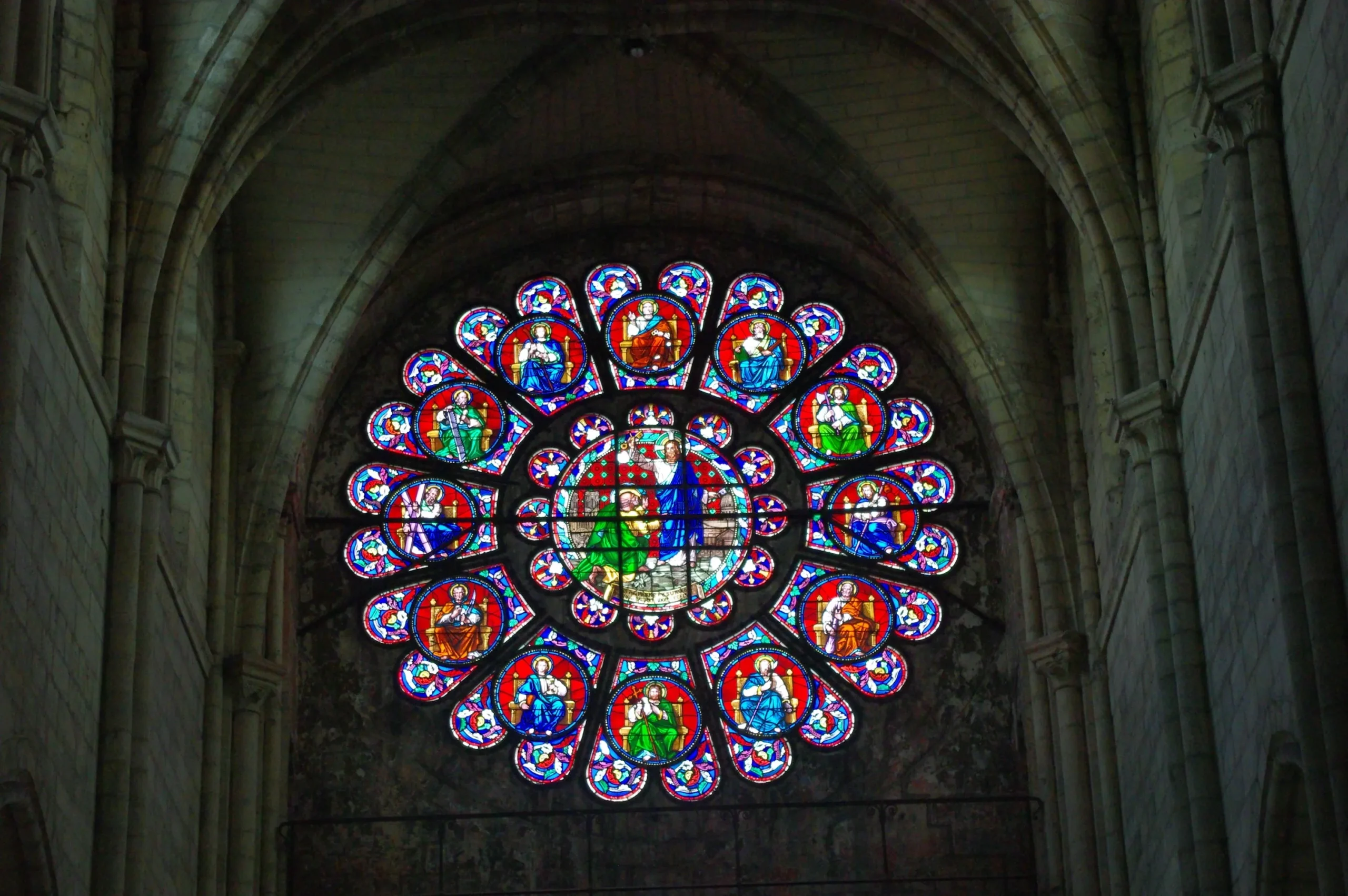
La construction de la nef date du XIe, alors que celle du transept et du chœur sont du XIIe. Situé en ville basse, cet imposant édifice est connu pour l'élévation de son chœur, contemporain de celui de la cathédrale, et pour sa belle rose à douze rayons du XIIIe. A voir à l'intérieur un mobilier liturgique en bois (XVIII-XIXe), et sur sa corniche sud à l'extérieur, des arcs en mitre caractéristiques de la région…
English
The construction of the nave dates from the 11th century, while that of the transept and the choir are from the 12th century. Located in the lower town, this imposing building is known for the elevation of its choir, contemporary with that of the cathedral, and for its beautiful rose with twelve rays from the 13th century. Inside you can see a wooden liturgical furniture (XVIII-XIXth), and on its southern cornice outside, mitre arches characteristic of the region…
Deutsch
Das Kirchenschiff wurde im 11. Jahrhundert errichtet, während das Querschiff und der Chor aus dem 12. Dieses imposante Gebäude in der Unterstadt ist bekannt für seinen hohen Chor, der zeitgleich mit dem der Kathedrale entstand, und für seine schöne zwölfstrahlige Rose aus dem 13. Sehenswert sind die liturgischen Möbel aus Holz (18.-19. Jh.) im Inneren und die für die Region typischen Mitra-Bögen auf dem südlichen Gesims an der Außenseite…
Dutch
Het schip werd gebouwd in de 11e eeuw, terwijl het transept en het koor in de 12e eeuw werden gebouwd. Dit imposante gebouw, gelegen in de benedenstad, staat bekend om de hoogte van zijn koor, dat gelijk is aan dat van de kathedraal, en om zijn prachtige dertiende-eeuwse roos met twaalf stralen. Het interieur is voorzien van houten liturgisch meubilair (18e-19e eeuw), en aan de buitenkant heeft de zuidelijke kroonlijst typische mijterbogen…
Español
La nave data del siglo XI, mientras que el crucero y el coro son del siglo XII. Situado en la parte baja de la ciudad, este imponente edificio es conocido por la altura de su coro, contemporáneo del de la catedral, y por su hermosa rosa de doce rayos del siglo XIII. El interior cuenta con mobiliario litúrgico de madera (siglos XVIII-XIX), y en el exterior, la cornisa sur presenta arcos de mitra típicos de la región…
Italiano
La navata risale all'XI secolo, mentre il transetto e il coro risalgono al XII secolo. Situato nella città bassa, questo imponente edificio è noto per l'altezza del suo coro, contemporaneo a quello della cattedrale, e per la sua bellissima rosa a dodici raggi del XIII secolo. L'interno è caratterizzato da arredi liturgici in legno (XVIII-XIX secolo), mentre all'esterno il cornicione meridionale presenta archi a mitria tipici della regione…
Rue Fernand Thuillart, 02000 Laon
Crédits: OT du Pays de Laon



