Église Saint-Hilaire et presbytère – Nalliers
Description
English
Deutsch
Dutch
Español
Italiano
Description
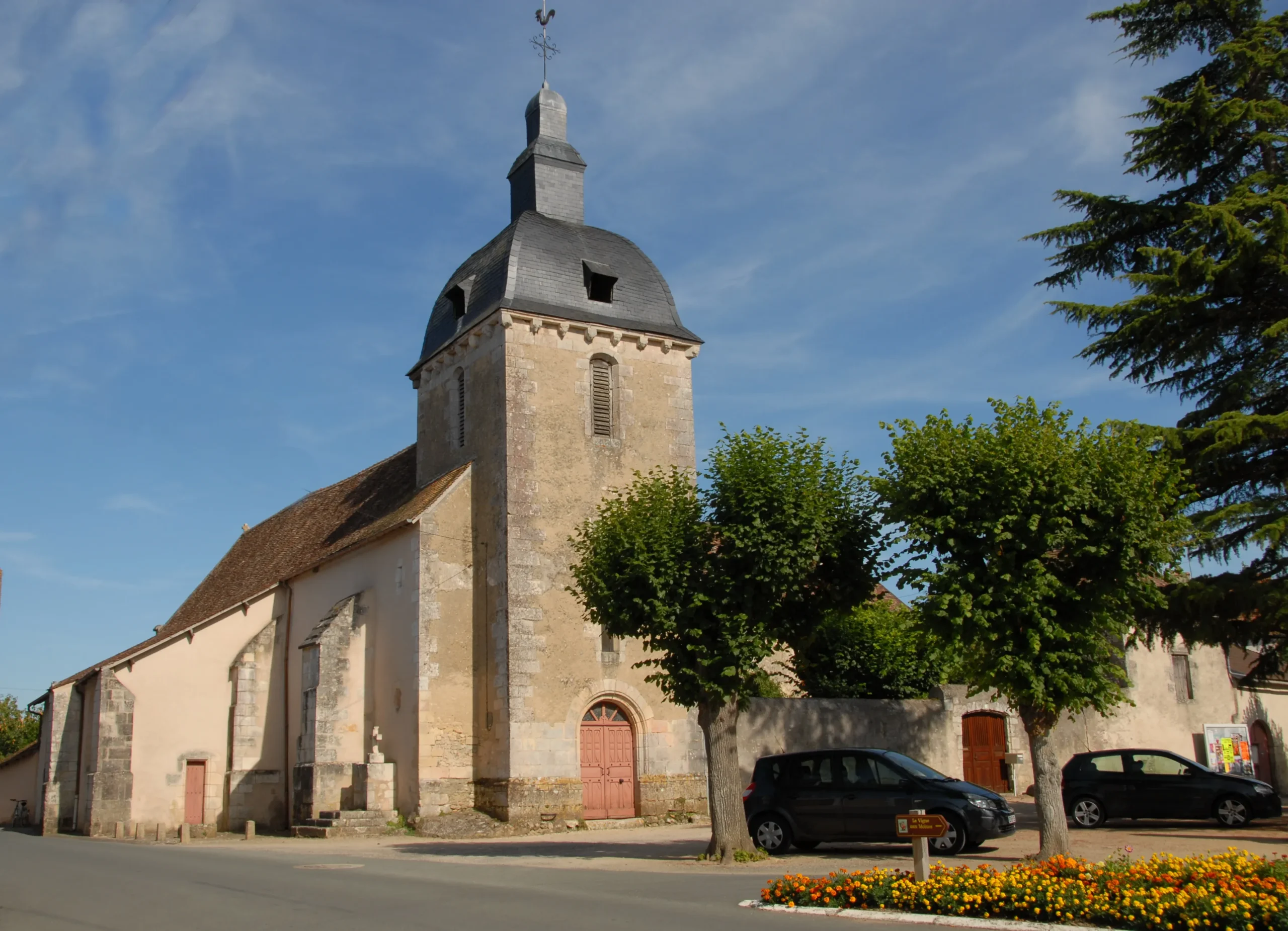
L’église est mentionnée pour la première fois en 1093 et relève de l’abbaye de Saint-Savin. Elle en dépend jusqu’à la Révolution française. L’église romane est reconstruite en très grande partie au 15ème siècle. Au 18ème siècle, le presbytère vient s’accoler au mur sud de l’église, formant un ensemble indissociable. Le clocher-porche est plaqué contre l’ancienne façade romane et au 18ème siècle, on le coiffe d’un dôme d’ardoise à double lanternon, dit « à l’impériale », assez exceptionnel dans la région. L’église conserve un mobilier riche et diversifié : vitrail du 16ème siècle, cloche de 1601, retable et tabernacles du 18ème siècle.
Inscrits aux Monuments Historiques en 1993 (Église et presbytère). Un pupitre patrimonial installé à l’entrée vous délivrera des informations sur ce monument.
Les clefs de l’église et du presbytère sont disponibles à la mairie de Nalliers.
English
The church was first mentioned in 1093 and came under the authority of the Saint-Savin abbey. It remained under its control until the French Revolution. The Romanesque church was largely rebuilt in the 15th century. In the 18th century, the presbytery was added to the south wall of the church, forming an indissociable whole. In the 18th century, the church was topped with a double-lanterned slate dome, known as the "imperial dome", which is quite exceptional in the region. The church is richly furnished with 16th-century stained glass, a 1601 bell and 18th-century altarpieces and tabernacles.
Listed as a Historic Monument in 1993 (church and presbytery). A heritage desk at the entrance provides information about the monument.
Keys to the church and presbytery are available from Nalliers town hall.
Deutsch
Die Kirche wurde erstmals 1093 erwähnt und unterstand der Abtei von Saint-Savin. Sie war bis zur Französischen Revolution von dieser abhängig. Die romanische Kirche wurde im 15. Jahrhundert größtenteils umgebaut. Im 18. Jahrhundert wurde das Pfarrhaus an die Südmauer der Kirche angebaut und bildete so ein untrennbares Ganzes. Der Glockenturm wurde an die alte romanische Fassade angelehnt und im 18. Jahrhundert mit einer Schieferkuppel mit doppelter Laterne versehen, der sogenannten "kaiserlichen" Kuppel, die in der Region ziemlich außergewöhnlich ist. Die Kirche besitzt ein reiches und vielfältiges Mobiliar: Glasfenster aus dem 16. Jahrhundert, eine Glocke aus dem Jahr 1601, einen Altaraufsatz und Tabernakel aus dem 18.
Jahrhundert. 1993 wurden die Kirche und das Pfarrhaus in die Liste der historischen Monumente aufgenommen. Am Eingang befindet sich ein Pult, an dem Sie Informationen
Dutch
De kerk werd voor het eerst vermeld in 1093 en kwam onder de controle van de abdij van Saint-Savin. Ze bleef onder haar controle tot de Franse Revolutie. De Romaanse kerk werd grotendeels herbouwd in de 15e eeuw. In de 18e eeuw werd het priesterkoor toegevoegd aan de zuidelijke muur van de kerk, waardoor het een onlosmakelijk geheel vormde. De klokkentoren werd tegen de oude romaanse gevel geplaatst en werd in de 18e eeuw bekroond met een leistenen koepel met een dubbele lantaarn, bekend als de "keizerlijke koepel", die vrij uitzonderlijk is in de regio. De kerk heeft een rijke en gevarieerde collectie meubels, waaronder 16e-eeuws glas-in-lood, een klok uit 1601 en 18e-eeuwse altaarstukken en tabernakels.
De kerk en pastorie werden in 1993 op de monumentenlijst geplaatst. Een erfgoedinformatiebalie bij de ingang geeft informatie over het monument.
Sleutels voor de kerk en pastorie z
Español
La iglesia se menciona por primera vez en 1093 y pasó a depender de la abadía de Saint-Savin. Permaneció bajo su control hasta la Revolución Francesa. La iglesia románica fue reconstruida en gran parte en el siglo XV. En el siglo XVIII, se añadió el presbiterio al muro sur de la iglesia, formando un conjunto inseparable. El campanario se adosó a la antigua fachada románica y, en el siglo XVIII, se remató con una cúpula de pizarra con doble linterna, conocida como "cúpula imperial", bastante excepcional en la región. La iglesia posee un mobiliario rico y variado, que incluye vidrieras del siglo XVI, una campana de 1601 y retablos y sagrarios del siglo XVIII.
La iglesia y el presbiterio fueron declarados Monumentos Históricos en 1993. Un mostrador de información patrimonial situado en la entrada ofrece información sobre el monumento.
Las llaves de la iglesia y el presbiterio están dis
Italiano
La chiesa fu menzionata per la prima volta nel 1093 e passò sotto il controllo dell'Abbazia di Saint-Savin. Rimase sotto il suo controllo fino alla Rivoluzione francese. La chiesa romanica fu ampiamente ricostruita nel XV secolo. Nel XVIII secolo, il presbiterio fu aggiunto alla parete sud della chiesa, formando un insieme inscindibile. Il campanile è stato addossato all'antica facciata romanica e, nel XVIII secolo, è stato sormontato da una cupola in ardesia con doppia lanterna, nota come "cupola imperiale", del tutto eccezionale nella regione. La chiesa possiede una ricca e variegata collezione di arredi, tra cui vetrate del XVI secolo, una campana del 1601 e pale d'altare e tabernacoli del XVIII secolo.
La chiesa e il presbiterio sono stati classificati come monumenti storici nel 1993. Un banco di informazioni sul patrimonio all'ingresso fornisce informazioni sul monumento.
Le chiavi della chiesa e del presbiterio sono disponibili presso il municipio di Nalliers.
Mairie de Nalliers, 86310 Nalliers
Crédits: Non communiqué
Licence
Licence