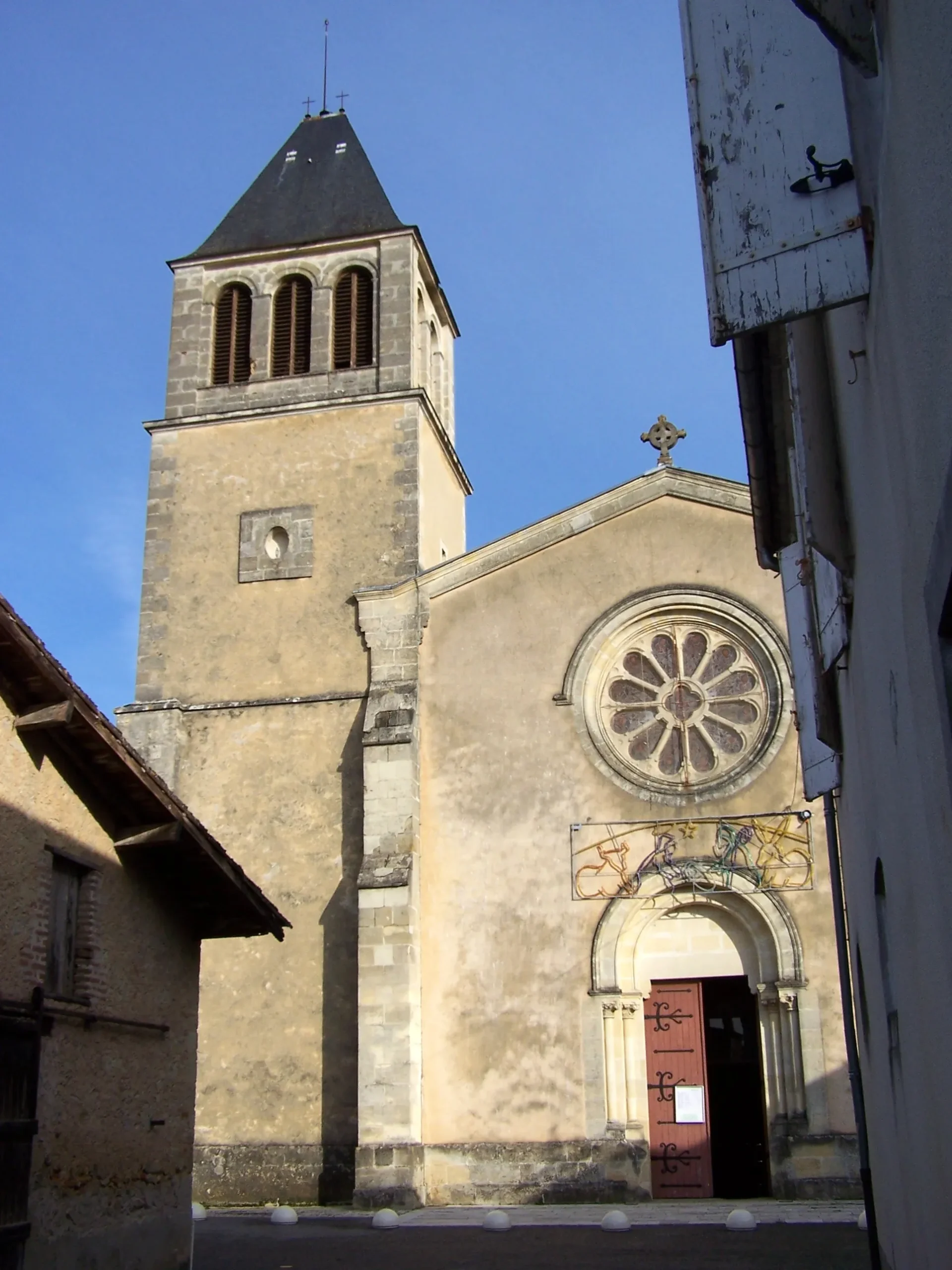
Eglise Saint-Christophe – Caudrot
Description
English
Deutsch
Dutch
Español
Italiano
Description
Le chevet présente extérieurement d'importants vestiges préromans, notamment un grand arc en plein cintre composé de claveaux de petit gabarit et une base d'abside constituée sur un plan polygonal (vestiges renvoyant à l'origine de la création du bourg). L'hypothèse peut être avancée de l'existence primitive de deux églises juxtaposées dites "églises cloisonnées". Le choeur est orné d'une superbe peinture murale du milieu du XIXème siècle (classée Monument Historique). Le peintre Vincent l'a traité en trompe l'oeil dans une composition néo-baroque inspirée par le modèle de l'église Saint-Bruno à Bordeaux : l'oeuvre pousse l'artifice jusqu'à simuler le statuaire. Chapiteau historié du XIème.
English
The chevet has important pre-Romanesque remains on the outside, notably a large semicircular arch with small keystones and a polygonal apsidal base (vestiges referring to the origin of the creation of the village). The hypothesis can be put forward of the primitive existence of two juxtaposed churches called "cloisonné churches". The choir is adorned with a superb mural painting from the middle of the 19th century (listed as a Historic Monument). The painter Vincent treated it in trompe l'oeil in a neo-baroque composition inspired by the model of the Saint-Bruno church in Bordeaux: the work pushes the artifice to the point of simulating the statuary. Historic capital from the 11th century.
Deutsch
Der Kopfbau weist außen bedeutende vorromanische Überreste auf, insbesondere einen großen Rundbogen mit kleinen Keilsteinen und eine polygonale Apsisbasis (Überreste, die auf die ursprüngliche Gründung des Dorfes hinweisen). Man kann davon ausgehen, dass es ursprünglich zwei nebeneinander liegende Kirchen gab, die als "Cloisonné-Kirchen" bezeichnet werden. Der Chor ist mit einem wunderschönen Wandgemälde aus der Mitte des 19. Jahrhunderts geschmückt (als historisches Monument klassifiziert). Der Maler Vincent behandelte es als Trompe l'oeil in einer neobarocken Komposition, die von dem Modell der Kirche Saint-Bruno in Bordeaux inspiriert wurde: Das Werk treibt die Künstlichkeit so weit, dass es Statuenhaftigkeit simuliert. Historisiertes Kapitell aus dem 11.
Dutch
De buitenkant van de chevet vertoont belangrijke pre-Romaanse overblijfselen, met name een grote halfronde boog bestaande uit kleine sluitstenen en een apsisbasis gebouwd op een veelhoekig plan (overblijfselen die verwijzen naar de oorsprong van het ontstaan van het dorp). De hypothese kan worden gesteld dat er in het verleden twee naast elkaar gelegen kerken bestonden die bekend staan als "cloisonné-kerken". Het koor is versierd met een prachtige muurschildering uit het midden van de 19e eeuw (geklasseerd als historisch monument). De schilder Vincent behandelde het in trompe l'oeil in een neo-barokke compositie geïnspireerd op het model van de kerk van Saint-Bruno in Bordeaux: het werk drijft de kunstzinnigheid op tot het simuleren van het beeldhouwwerk. Historische hoofdstad uit de 11e eeuw.
Español
El exterior del chevet presenta importantes restos prerrománicos, en particular un gran arco de medio punto compuesto por pequeñas dovelas y una base de ábside de planta poligonal (vestigios que remiten al origen de la creación del pueblo). Se puede plantear la hipótesis de la existencia primitiva de dos iglesias yuxtapuestas conocidas como "iglesias de cloisonné". El coro está adornado con una magnífica pintura mural de mediados del siglo XIX (catalogada como monumento histórico). El pintor Vincent lo trató en trompe l'oeil en una composición neobarroca inspirada en el modelo de la iglesia de Saint-Bruno de Burdeos: la obra lleva el artificio hasta el punto de simular la estatuaria. Capital histórica del siglo XI.
Italiano
L'esterno del chevet presenta importanti vestigia preromaniche, in particolare un grande arco semicircolare composto da piccole chiavi di volta e una base absidale costruita su pianta poligonale (vestigia che rimandano all'origine della creazione del villaggio). Si può avanzare l'ipotesi dell'esistenza primitiva di due chiese giustapposte, note come "chiese cloisonné". Il coro è ornato da un superbo dipinto murale della metà del XIX secolo (classificato come monumento storico). Il pittore Vincent la trattò in trompe l'oeil in una composizione neobarocca ispirata al modello della chiesa di Saint-Bruno a Bordeaux: l'opera spinge l'artificio fino a simulare la statuaria. Capitale storica dell'XI secolo.