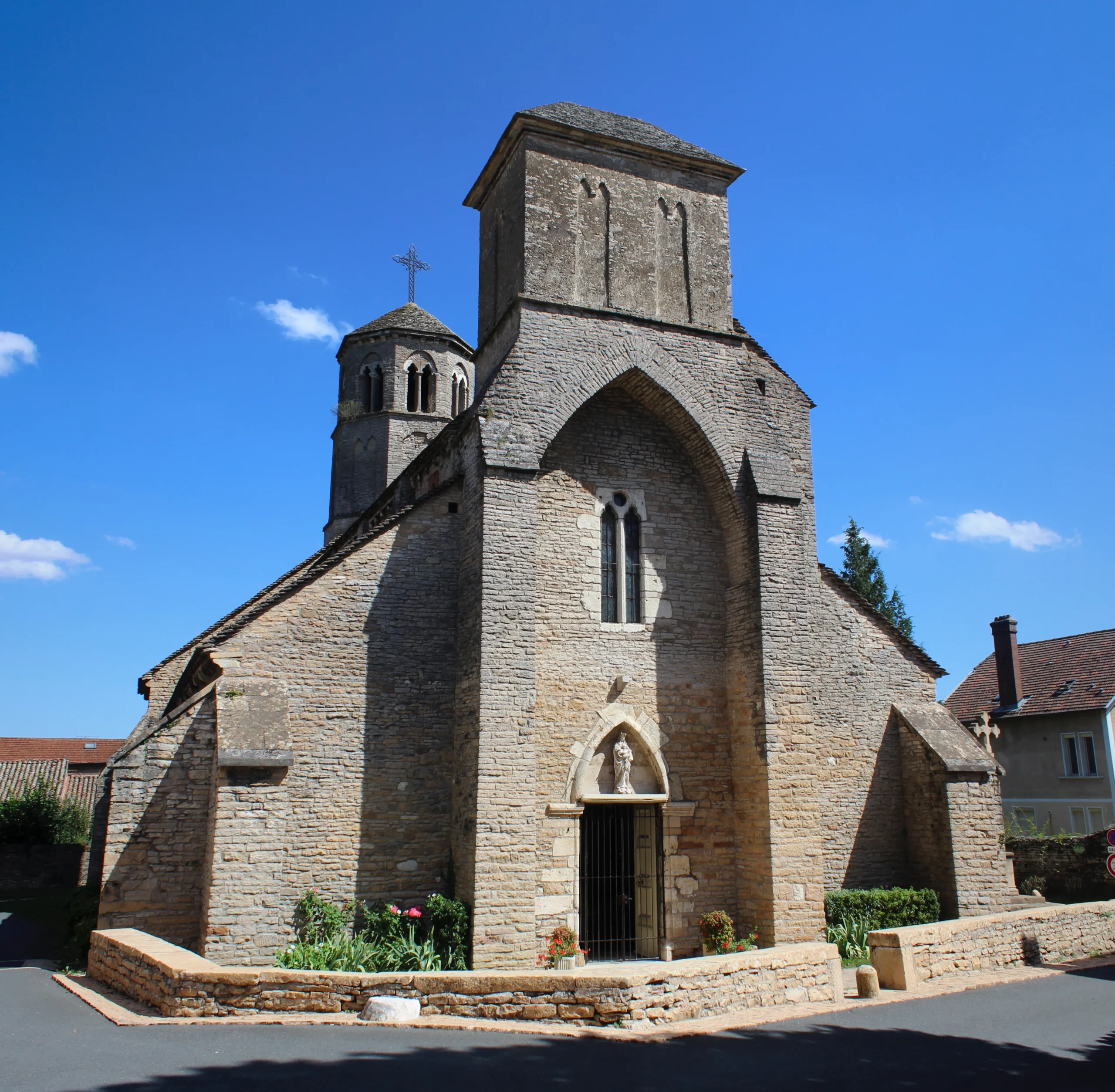
Eglise Saint-Albain – Saint-Albain
Description
English
Deutsch
Dutch
Español
Italiano
Description
L'église de Saint-Albain comprend un clocher et un chevet de style roman à bandes lombardes (comme le petit clocher du massif porche), mais l'édifice n'est pourtant pas antérieur au XIIIe siècle et son chœur, comme les croisillons, est voûté d'ogives sur culots, formes gothiques. Il s'agit donc d'un bâtiment qui marque la transition entre les deux styles.
English
The church of Saint Alban has a bell tower and a chevet in the Romanesque style with Lombardy bands (like the small bell tower of the massive porch), but the building does not predate the 13th century and its choir, like the crosspieces, is vaulted with ogives on culottes, which are Gothic forms. It is therefore a building that marks the transition between the two styles.
Deutsch
Die Kirche Saint-Albain hat einen Glockenturm und ein Kopfende im romanischen Stil mit lombardischen Bändern (wie der kleine Glockenturm der massiven Vorhalle), aber das Gebäude ist dennoch nicht älter als das 13. Jahrhundert, und sein Chor ist wie die Kreuzgänge mit Kreuzrippengewölben auf Sockeln gewölbt, gotische Formen. Es handelt sich also um ein Gebäude, das den Übergang zwischen den beiden Stilen markiert.
Dutch
De kerk van Sint Alban heeft een klokkentoren en een chevet in romaanse stijl met Lombardische banden (evenals de kleine klokkentoren van het massieve portaal), maar het gebouw is niet ouder dan de 13e eeuw en het koor is, net als het transept, gewelfd met ogives op culottes, wat gotische vormen zijn. Het is dus een gebouw dat de overgang tussen beide stijlen markeert.
Español
La iglesia de San Albano tiene un campanario y una cabecera de estilo románico con bandas lombardas (al igual que el pequeño campanario del macizo porche), pero el edificio no es anterior al siglo XIII y su coro, al igual que los cruceros, está abovedado con ojivas sobre culotes, que son formas góticas. Es, por tanto, un edificio que marca la transición entre ambos estilos.
Italiano
La chiesa di Sant'Albano ha un campanile e un chevet in stile romanico con fasce lombarde (come il piccolo campanile del massiccio portico), ma l'edificio non è anteriore al XIII secolo e il suo coro, come le traverse, è voltato a ogive su culotte, che sono forme gotiche. Si tratta quindi di un edificio che segna la transizione tra i due stili.
Gothique - Roman
, 71260 Saint-Albain