Église romane Saint-Pierre et Saint-Paul – Montceaux-l'Étoile
Description
English
Deutsch
Dutch
Español
Italiano
Description
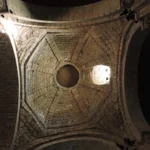
Édifiée au début du XIIème siècle, cette église a perdu son abside romane, remplacée au XVIIIème siècle par une belle chapelle funéraire aux influences baroques. Le tympan du portail occidental, représentant le Christ en majesté, et son linteau, orné des douze apôtres, sont considérés comme un chef-d’œuvre de la sculpture romane, par leur réalisme et leur mouvement.
English
Built at the beginning of the 12th century, this church lost its Romanesque apse, replaced in the 18th century by a beautiful funeral chapel with Baroque influences. The tympanum of the western portal, representing Christ in majesty, and its lintel, decorated with the twelve apostles, are considered a masterpiece of Romanesque sculpture, for their realism and movement.
Deutsch
Die Kirche wurde Anfang des 12. Jahrhunderts errichtet und verlor ihre romanische Apsis, die im 18. Jahrhundert durch eine schöne Grabkapelle mit barocken Einflüssen ersetzt wurde. Das Tympanon des Westportals, das Christus in Majestät darstellt, und sein Sturz, der mit den zwölf Aposteln geschmückt ist, gelten aufgrund ihres Realismus und ihrer Bewegung als ein Meisterwerk der romanischen Bildhauerei.
Dutch
Deze kerk, gebouwd aan het begin van de 12e eeuw, verloor haar romaanse apsis, die in de 18e eeuw werd vervangen door een prachtige grafkapel met barokke invloeden. Het timpaan van het westelijke portaal, dat Christus in majesteit voorstelt, en de bovendorpel, versierd met de twaalf apostelen, worden beschouwd als een meesterwerk van de Romaanse beeldhouwkunst, vanwege hun realisme en beweging.
Español
Construida a principios del siglo XII, esta iglesia perdió su ábside románico, que fue sustituido en el siglo XVIII por una hermosa capilla funeraria con influencias barrocas. El tímpano del portal occidental, que representa a Cristo en majestad, y su dintel, decorado con los doce apóstoles, están considerados como una obra maestra de la escultura románica, por su realismo y movimiento.
Italiano
Costruita all'inizio del XII secolo, questa chiesa ha perso l'abside romanica, sostituita nel XVIII secolo da una bella cappella funeraria con influenze barocche. Il timpano del portale occidentale, che rappresenta Cristo in maestà, e il suo architrave, decorato con i dodici apostoli, sono considerati un capolavoro della scultura romanica, per il loro realismo e movimento.
Roman
Equipements: Aire de pique-nique
Le Bourg, 71110 Montceaux-l'Étoile