ÉGLISE DES ANGLES
Description
English
Deutsch
Dutch
Español
Italiano
Description
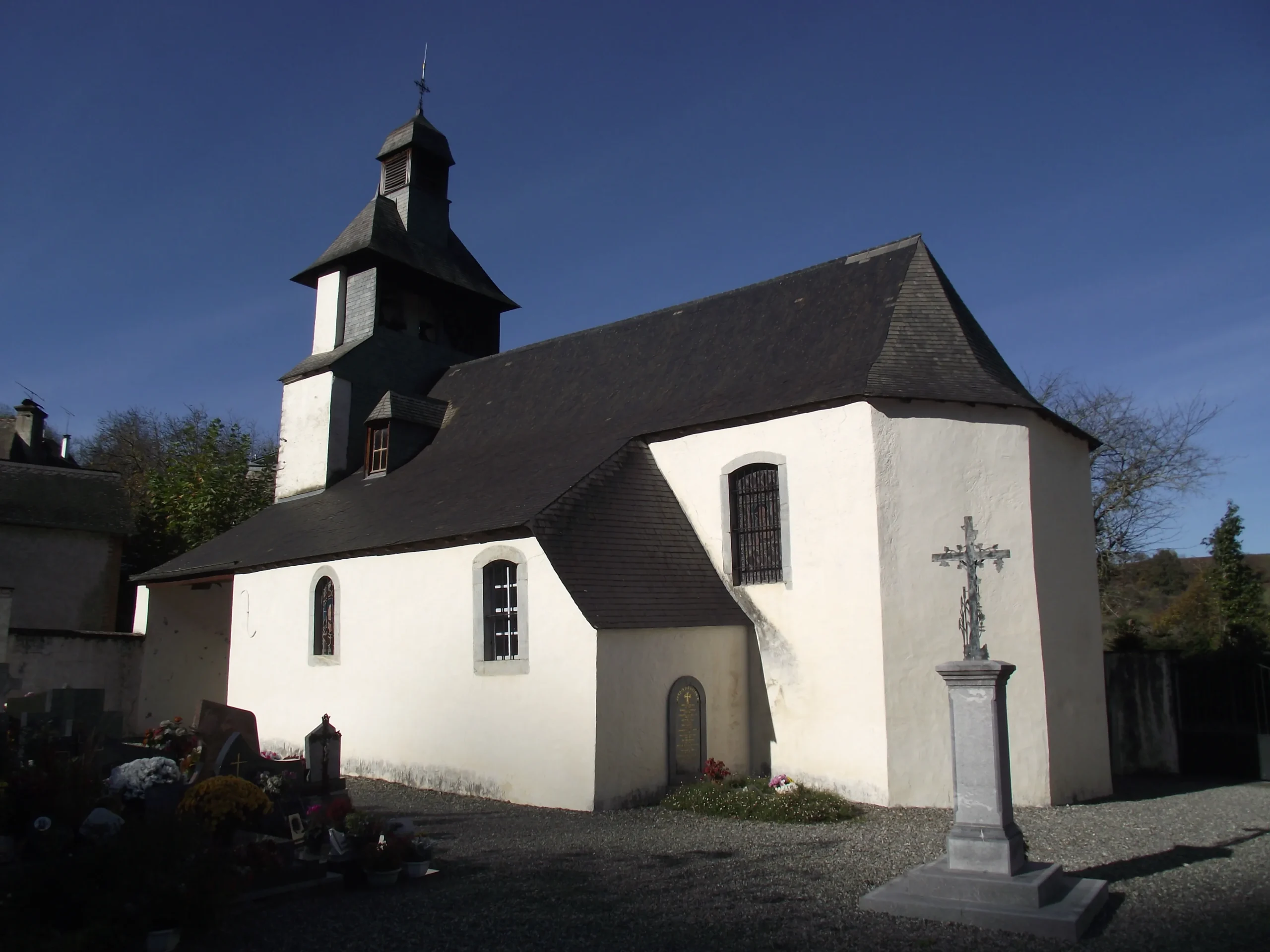
L’église Saint-Étienne, avec son clocher-mur, est inscrite à l’Inventaire supplémentaire des Monuments historiques. Chrisme en réemploi en chaînage d’angle. Escalier à l’arrière du clocher pour accéder aux cloches. Chevet à pans coupés. Vitraux contemporains.
À l’intérieur, a été classé à l’inventaire supplémentaire des Monuments historiques, en décembre 2002, l’ensemble du mobilier du XVIIIe siècle, dont le retable en 3 panneaux encadrés de colonnes torses et le tabernacle. Le panneau de droite représente la Lapidation et celui de gauche le Jugement de Saint-Étienne. Le tabernacle évoque La Fuite en Egypte et la Nativité.
English
The church of Saint-Etienne, with its bell tower-wall, is listed in the Inventaire supplémentaire des Monuments historiques. Chrism in reemployment in the corner chain. Stairs at the back of the bell tower to access the bells. Chevet with cut sides. Contemporary stained glass windows.
Inside, the whole of the 18th century furniture, including the altarpiece in 3 panels framed by torso columns and the tabernacle, was listed in the supplementary inventory of historical monuments in December 2002. The panel on the right represents the Stoning and the one on the left the Judgement of Saint Stephen. The tabernacle evokes the Flight into Egypt and the Nativity.
Deutsch
Die Kirche Saint-Étienne mit ihrem Glockenturm mit Mauer ist im Zusatzinventar der historischen Monumente aufgeführt. Wiederverwendeter Chrysma als Eckverkettung. Treppe an der Rückseite des Glockenturms, um zu den Glocken zu gelangen. Dachreiter mit abgeschrägten Kanten. Zeitgenössische Buntglasfenster.
Im Dezember 2002 wurde das gesamte Mobiliar aus dem 18. Jahrhundert, darunter das Altarbild mit drei von gedrehten Säulen eingerahmten Tafeln und der Tabernakel, in die Liste der historischen Monumente aufgenommen. Die rechte Tafel zeigt die Steinigung und die linke Tafel das Urteil des Heiligen Stephanus. Der Tabernakel erinnert an Die Flucht nach Ägypten und die Geburt Christi.
Dutch
De kerk van St. Stephen, met zijn klokkentoren, is opgenomen in de aanvullende inventaris van historische monumenten. Hergebruikte doop in de hoekkanten. Trap aan de achterkant van de klokkentoren om bij de klokken te komen. Chevet met schuine kanten. Hedendaagse gebrandschilderde ramen.
Binnen is het gehele 18e-eeuwse meubilair, waaronder het altaarstuk in 3 panelen omlijst door rompzuilen en het tabernakel, in december 2002 geclassificeerd in de aanvullende inventaris van historische monumenten. Het rechter paneel stelt de Steniging voor en het linker het Oordeel van Sint Stefanus. Het tabernakel verbeeldt de Vlucht naar Egypte en de Geboorte.
Español
La iglesia de San Esteban, con su campanario, está inscrita en el Inventario Complementario de Monumentos Históricos. Bautizo reutilizado en las esquinas. Escaleras en la parte trasera del campanario para acceder a las campanas. Chevet con lados inclinados. Vidrieras contemporáneas.
En el interior, todo el mobiliario del siglo XVIII, incluido el retablo en 3 paneles enmarcado por columnas torales y el tabernáculo, fue incluido en el inventario suplementario de monumentos históricos en diciembre de 2002. El panel de la derecha representa la Lapidación y el de la izquierda el Juicio de San Esteban. El tabernáculo representa la Huida a Egipto y la Natividad.
Italiano
La chiesa di Santo Stefano, con il suo campanile, è inserita nell'Inventario supplementare dei monumenti storici. Battesimo riutilizzato nei listelli d'angolo. Scale sul retro del campanile per accedere alle campane. Chevet con lati inclinati. Vetrate contemporanee.
All'interno, l'intero arredamento del XVIII secolo, tra cui la pala d'altare in 3 pannelli incorniciata da colonne a torso e il tabernacolo, è stato inserito nell'inventario supplementare dei monumenti storici nel dicembre 2002. Il pannello a destra rappresenta la Lapidazione e quello a sinistra il Giudizio di Santo Stefano. Il tabernacolo raffigura la Fuga in Egitto e la Natività.
, 65100 Les Angles
Crédits: Florent Pécassou