Eglise de la Nativité de la Vierge – Toutenant
Description
English
Deutsch
Dutch
Español
Italiano
Description
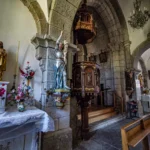
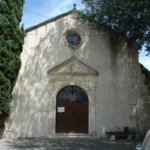
Cet édifice est à la fois néo-romane et néogothique, style éclectique mis en vogue par Viollet-le-Duc et qui s'inspire du style architectural des XIIe et XIIIe siècles. L'église a été bâtie sur les plans de l'architecte chalonnais Narjoux qui avait d'ailleurs travaillé avec Viollet-le-Duc pendant de nombreuses années.
English
This building is both neo-Romanesque and neo-Gothic, an eclectic style brought into fashion by Viollet-le-Duc and inspired by the architectural style of the 12th and 13th centuries. The church was built on the plans of the Chalonnais architect Narjoux who had worked with Viollet-le-Duc for many years.
Deutsch
Dieses Gebäude ist sowohl neoromanisch als auch neogotisch, ein eklektischer Stil, der von Viollet-le-Duc in Mode gebracht wurde und sich am Baustil des 12. und 13. Jahrhunderts orientiert. Die Kirche wurde nach den Plänen des Architekten Narjoux aus Chalon gebaut, der übrigens viele Jahre lang mit Viollet-le-Duc zusammengearbeitet hatte.
Dutch
Dit gebouw is zowel neoromaans als neogotisch, een eclectische stijl die in zwang werd gebracht door Viollet-le-Duc en geïnspireerd is op de bouwstijl van de 12e en 13e eeuw. De kerk werd gebouwd naar de plannen van de Chalonnese architect Narjoux, die jarenlang met Viollet-le-Duc had samengewerkt.
Español
Este edificio es a la vez neorrománico y neogótico, un estilo ecléctico puesto de moda por Viollet-le-Duc e inspirado en el estilo arquitectónico de los siglos XII y XIII. La iglesia se construyó según los planos del arquitecto calonés Narjoux, que había trabajado con Viollet-le-Duc durante muchos años.
Italiano
Questo edificio è sia neoromanico che neogotico, uno stile eclettico portato in auge da Viollet-le-Duc e ispirato allo stile architettonico del XII e XIII secolo. La chiesa fu costruita su progetto dell'architetto calonese Narjoux, che aveva lavorato per molti anni con Viollet-le-Duc.
Gothique - Roman
Equipements: Parking
Impasse de l'Église, 71350 Toutenant