Croix cerclée – Brousse
Description
English
Deutsch
Dutch
Español
Italiano
Description
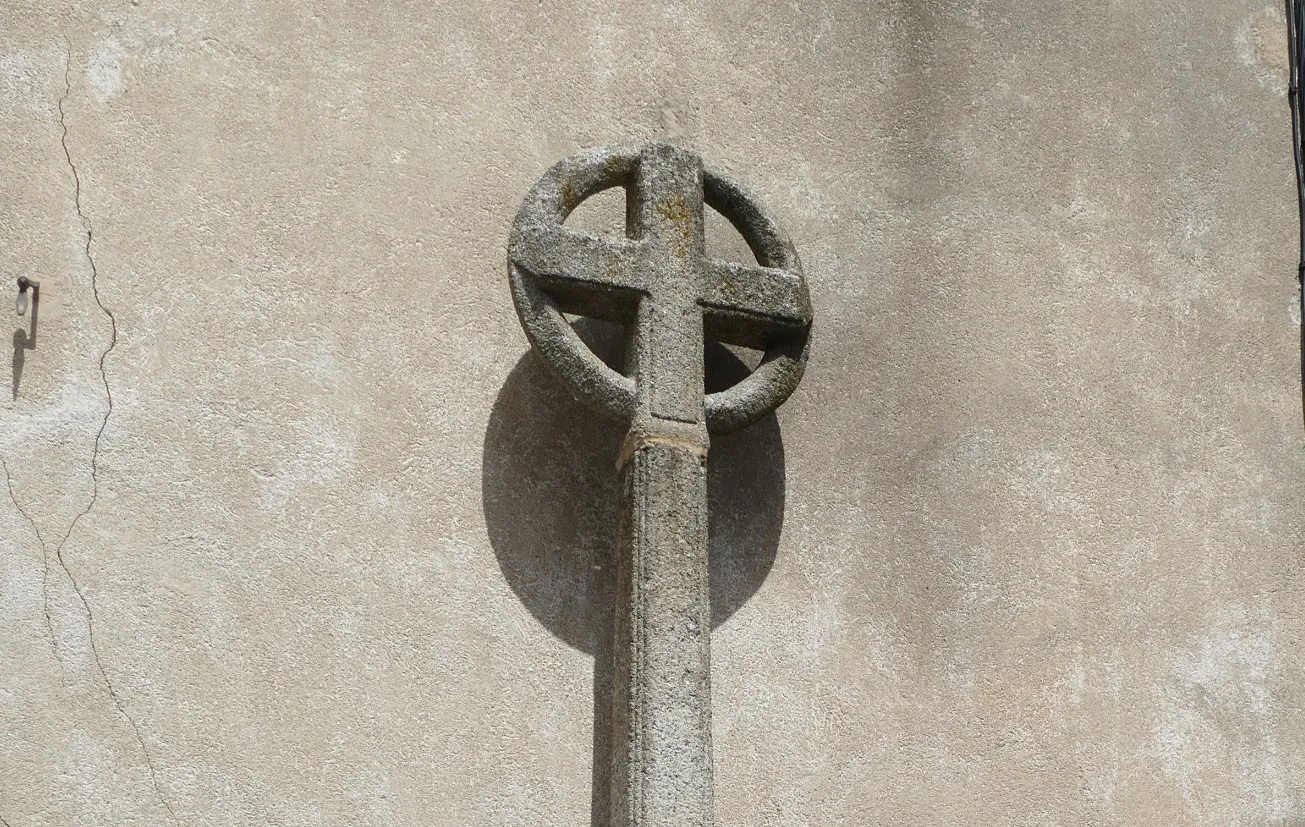
Le nom de croix cerclée, nimbée ou parfois celtique est appliqué au dessin symbolique composé d’un cercle et d’une croix. Il est probable que l’utilisation du cercle semblait initialement destinée à consolider les branches de la croix, avant de devenir un motif décoratif en lui-même. Elle est très répandue en Irlande et plus localement en Auvergne et en Limousin.
English
The name hooped, nimbed or sometimes Celtic cross is applied to the symbolic design composed of a circle and a cross. It's likely that the circle was originally used to strengthen the branches of the cross, before becoming a decorative motif in its own right. It is widespread in Ireland and more locally in Auvergne and Limousin.
Deutsch
Die Bezeichnung Ringkreuz, Nimbuskreuz oder manchmal auch keltisches Kreuz wird auf das symbolische Muster angewendet, das aus einem Kreis und einem Kreuz besteht. Es ist wahrscheinlich, dass die Verwendung des Kreises ursprünglich dazu diente, die Arme des Kreuzes zu befestigen, bevor er selbst zu einem dekorativen Motiv wurde. In Irland ist sie weit verbreitet, in der Auvergne und im Limousin eher lokal.
Dutch
De naam hoepel, nimbed of soms Keltisch kruis wordt toegepast op het symbolische ontwerp dat bestaat uit een cirkel en een kruis. Waarschijnlijk werd de cirkel aanvankelijk gebruikt om de takken van het kruis te verstevigen, voordat het op zichzelf een decoratief motief werd. Het is wijdverspreid in Ierland en meer lokaal in Auvergne en Limousin.
Español
El nombre de cruz con aro, nimbada o a veces celta se aplica al diseño simbólico formado por un círculo y una cruz. Es probable que el círculo se utilizara inicialmente para reforzar las ramas de la cruz, antes de convertirse en un motivo decorativo por derecho propio. Está muy extendido en Irlanda y, más localmente, en Auvernia y Lemosín.
Italiano
Il nome croce a cerchio, croce nimbata o talvolta croce celtica si applica al disegno simbolico composto da un cerchio e da una croce. È probabile che il cerchio sia stato inizialmente utilizzato per rafforzare i rami della croce, prima di diventare un motivo decorativo a sé stante. È diffuso in Irlanda e, più localmente, in Alvernia e nel Limosino.