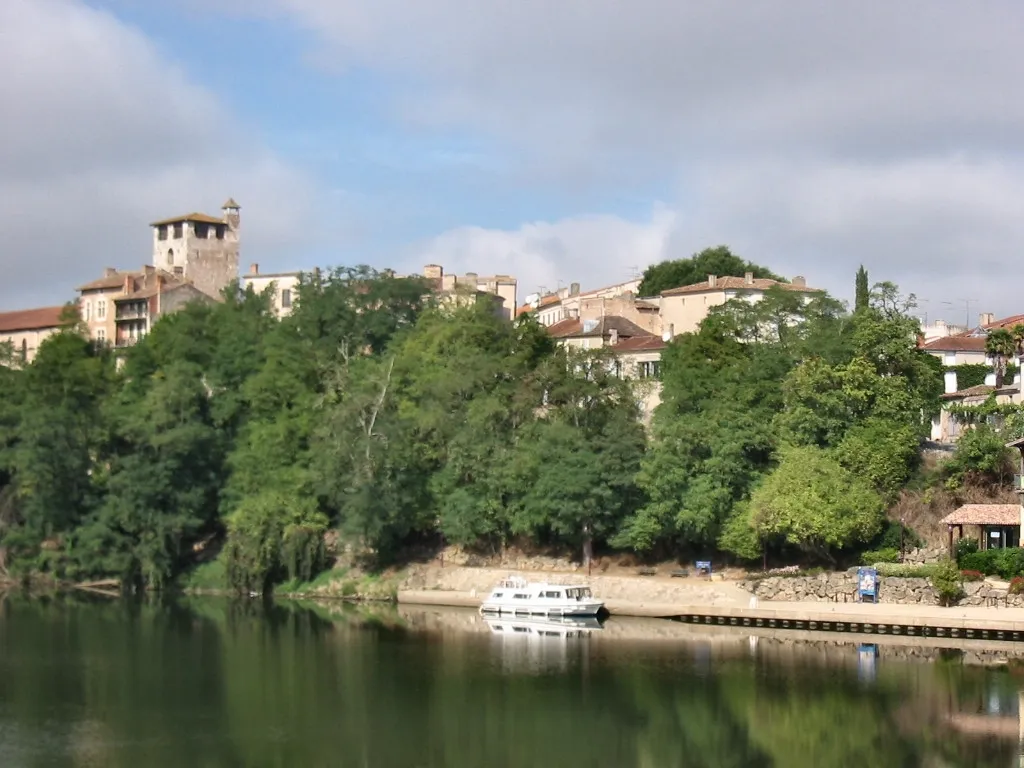
Clairac – Clairac
Description
English
Deutsch
Dutch
Español
Italiano
Description
L'histoire de Clairac est indissociable de celle de son abbaye bénédictine, dont la renommée était internationale au Moyen Âge. L’abbaye, ainsi que le bourg qui s’était constitué autour de ses murs, connurent leur apogée aux XIIème et XIIIème siècles. On comptait alors 120 moines qui travaillaient aussi bien aux champs que comme copistes de manuscrits. L’abbé de Clairac était aussi le seigneur du village et commandait deux bastides, cinq prieurés et une cinquantaine de paroisses. Les moines possédaient aussi deux moulins sur le Lot. Les revenus dégagés par l’abbaye étaient alors considérables.
Mais l'héritage le plus important est inattendu : le prunier de Damas, ramené des croisades, a en effet été " enté ", c'est-à-dire greffé, par eux pour la 1ère fois. Ils ont aussi découvert le procédé de séchage au soleil, inventant d'un seul coup la prune d'ente et le pruneau d'Agen !
English
The history of Clairac is inseparable from that of its Benedictine abbey, which was internationally renowned in the Middle Ages. The abbey, as well as the village that was built around its walls, reached its peak in the 12th and 13th centuries. At that time there were 120 monks who worked in the fields as well as copying manuscripts. The abbot of Clairac was also the lord of the village and commanded two bastides, five priories and about fifty parishes. The monks also owned two mills on the Lot. The income generated by the abbey was considerable at the time.
But the most important inheritance was unexpected: the plum tree from Damascus, brought back from the Crusades, was in fact "entered", i.e. grafted, by them for the first time. They also discovered the process of sun-drying, inventing at once the "ente" plum and the Agen plum!
Deutsch
Die Geschichte von Clairac ist untrennbar mit der Geschichte seiner Benediktinerabtei verbunden, die im Mittelalter international bekannt war. Die Abtei und das um ihre Mauern herum entstandene Dorf erlebten ihre Blütezeit im 12. und 13. Jahrhundert. Jahrhundert. Damals gab es 120 Mönche, die sowohl auf dem Feld als auch als Kopisten von Manuskripten arbeiteten. Der Abt von Clairac war auch der Herr des Dorfes und befehligte zwei Bastiden, fünf Priorate und etwa 50 Pfarreien. Die Mönche besaßen außerdem zwei Mühlen am Lot. Die von der Abtei erwirtschafteten Einkünfte waren damals beträchtlich.
Das wichtigste Erbe war jedoch unerwartet: Die von den Kreuzzügen mitgebrachte Damaszener-Pflaume wurde von ihnen zum ersten Mal "enté", d. h. veredelt. Sie entdeckten auch das Verfahren des Sonnentrocknens und erfanden damit auf einen Schlag die Ente-Pflaume und die Pflaume von Agen!
Dutch
De geschiedenis van Clairac is onlosmakelijk verbonden met die van zijn benedictijnenabdij, die in de middeleeuwen internationale bekendheid genoot. De abdij en de stad die rond haar muren ontstond, bereikten hun hoogtepunt in de 12e en 13e eeuw. In die tijd werkten er 120 monniken op het land en als kopiisten van manuscripten. De abt van Clairac was ook de heer van het dorp en bezat twee bastides, vijf priorijen en een vijftigtal parochies. De monniken bezaten ook twee molens op het perceel. De inkomsten van de abdij waren aanzienlijk.
Maar de belangrijkste erfenis was onverwacht: de Damascuspruimenboom, teruggebracht van de kruistochten, werd in feite voor het eerst door hen "geënt". Zij ontdekten ook het proces van drogen in de zon en vonden in één klap de ente pruim en de Agen pruim uit!
Español
La historia de Clairac es inseparable de la de su abadía benedictina, que tuvo fama internacional en la Edad Media. La abadía, así como la ciudad que creció en torno a sus muros, alcanzó su máximo esplendor en los siglos XII y XIII. En aquella época, había 120 monjes trabajando en el campo y como copiadores de manuscritos. El abad de Clairac era también el señor de la villa y mandaba dos bastidas, cinco prioratos y unas cincuenta parroquias. Los monjes también poseían dos molinos en el Lote. Los ingresos generados por la abadía eran considerables.
Pero la herencia más importante fue inesperada: el ciruelo de Damasco, traído de las cruzadas, fue de hecho "injertado" por ellos por primera vez. También descubrieron el proceso de secado al sol, e inventaron de un plumazo la ciruela de ente y la ciruela de Agen
Italiano
La storia di Clairac è inscindibile da quella della sua abbazia benedettina, che nel Medioevo aveva fama internazionale. L'abbazia, così come il villaggio sorto intorno alle sue mura, raggiunse il suo massimo splendore nel XII e XIII secolo. A quel tempo, c'erano 120 monaci che lavoravano nei campi e come copiatori di manoscritti. L'abate di Clairac era anche il signore del villaggio e comandava due bastidi, cinque priorati e circa cinquanta parrocchie. I monaci possedevano anche due mulini sul lotto. Il reddito generato dall'abbazia era considerevole.
Ma l'eredità più importante è stata inaspettata: il susino di Damasco, riportato dalle crociate, è stato infatti "innestato" da loro per la prima volta. Hanno anche scoperto il processo di essiccazione al sole, inventando in un colpo solo la prugna ente e la prugna d'Agen!