Château de Monteton – Monteton
Description
English
Deutsch
Dutch
Español
Italiano
Description
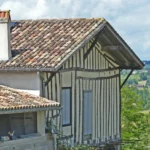
Edifice bâti sur une éminence selon un plan en U. Un corps de logis formé d'un corps central à vocation de passage vers la cour intérieure, est cantonné de deux ailes d'habitation. L'ensemble est bâti sur un niveau de soubassement accueillant cuisine, boulangerie et réserves. Des communs sont adossés à un mur d'enceinte au nord. Ce château du XVIIème siècle a été abandonné au cours du XXème siècle, et l'aile Est utilisée comme carrière de pierres. Le corps central conserve des traces de pont-levis à flèches et des meurtrières, marques de noblesse et nécessité défensive pour des catholiques de façade restés protestants après 1685. Aujourd'hui, auberge et hébergement, c'est un site privé.
English
Edifice built on an eminence according to a U-shaped plan. A main building consisting of a central body with a passage to the inner courtyard is flanked by two residential wings. The building is built on a basement level with a kitchen, bakery and storerooms. The outbuildings are built against a surrounding wall to the north. This 17th century castle was abandoned during the 20th century, and the east wing was used as a stone quarry. The central body retains traces of drawbridges and arrow loopholes, marks of nobility and defensive necessity for Catholics who remained Protestant after 1685. Today it is a privately owned hostel and accommodation.
Deutsch
Das Gebäude wurde auf einer Anhöhe mit einem U-förmigen Grundriss errichtet. Das Hauptgebäude besteht aus einem Mittelteil, der als Durchgang zum Innenhof dient und von zwei Wohnflügeln eingerahmt wird. Das Ganze ist auf einem Sockelgeschoss errichtet, das Küche, Bäckerei und Vorratsräume beherbergt. Die Wirtschaftsgebäude sind an eine Umfassungsmauer im Norden angebaut. Das Schloss aus dem 17. Jahrhundert wurde im Laufe des 20. Jahrhunderts aufgegeben und der Ostflügel als Steinbruch genutzt. Im Mittelteil sind noch Spuren einer Zugbrücke mit Pfeilen und Schießscharten zu sehen, Adelszeichen und Verteidigungsnotwendigkeit für die Katholiken in der Fassade, die nach 1685 protestantisch geblieben waren. Heute Herberge und Unterkunft, ist es eine private Anlage.
Dutch
Het gebouw is gebouwd op een verhoging in een U-vorm. Het hoofdgebouw bestaat uit een centraal gebouw dat dient als doorgang naar de binnenplaats, geflankeerd door twee woonvleugels. Het geheel is gebouwd op een kelderniveau waar de keuken, bakkerij en opslagruimtes zijn ondergebracht. De bijgebouwen staan tegen een muur aan de noordkant. Dit 17e eeuwse kasteel werd in de 20e eeuw verlaten en de oostelijke vleugel werd gebruikt als steengroeve. In het middengedeelte zijn nog sporen te zien van een ophaalbrug met pijlen en schietgaten, tekens van adel en defensieve noodzaak voor de katholieken die na 1685 protestant bleven. Tegenwoordig is het een privé-terrein en een herberg.
Español
El edificio se construyó en una elevación en forma de U. El edificio principal está formado por un edificio central que sirve de paso al patio interior, flanqueado por dos alas residenciales. El conjunto está construido en un sótano que alberga la cocina, la panadería y los almacenes. Las dependencias están adosadas a un muro circundante al norte. Este castillo del siglo XVII fue abandonado durante el siglo XX, y el ala este se utilizó como cantera de piedra. El cuerpo central conserva restos de un puente levadizo con flechas y aspilleras, marcas de nobleza y necesidad defensiva para los católicos que siguieron siendo protestantes después de 1685. Hoy en día, es una posada y alojamiento de propiedad privada.
Italiano
L'edificio è stato costruito su un prospetto a U. L'edificio principale è costituito da un corpo centrale utilizzato come passaggio per il cortile interno, affiancato da due ali residenziali. L'insieme è costruito su un piano interrato che ospita la cucina, la panetteria e i magazzini. Gli annessi sono addossati a un muro di cinta a nord. Questo castello del XVII secolo è stato abbandonato nel corso del XX secolo e l'ala est è stata utilizzata come cava di pietra. Il corpo centrale conserva tracce di un ponte levatoio con frecce e feritoie, segni di nobiltà e necessità difensiva per i cattolici rimasti protestanti dopo il 1685. Oggi è un sito privato e una locanda.