Château de Marnay – Marnay
Description
English
Deutsch
Dutch
Español
Italiano
Description
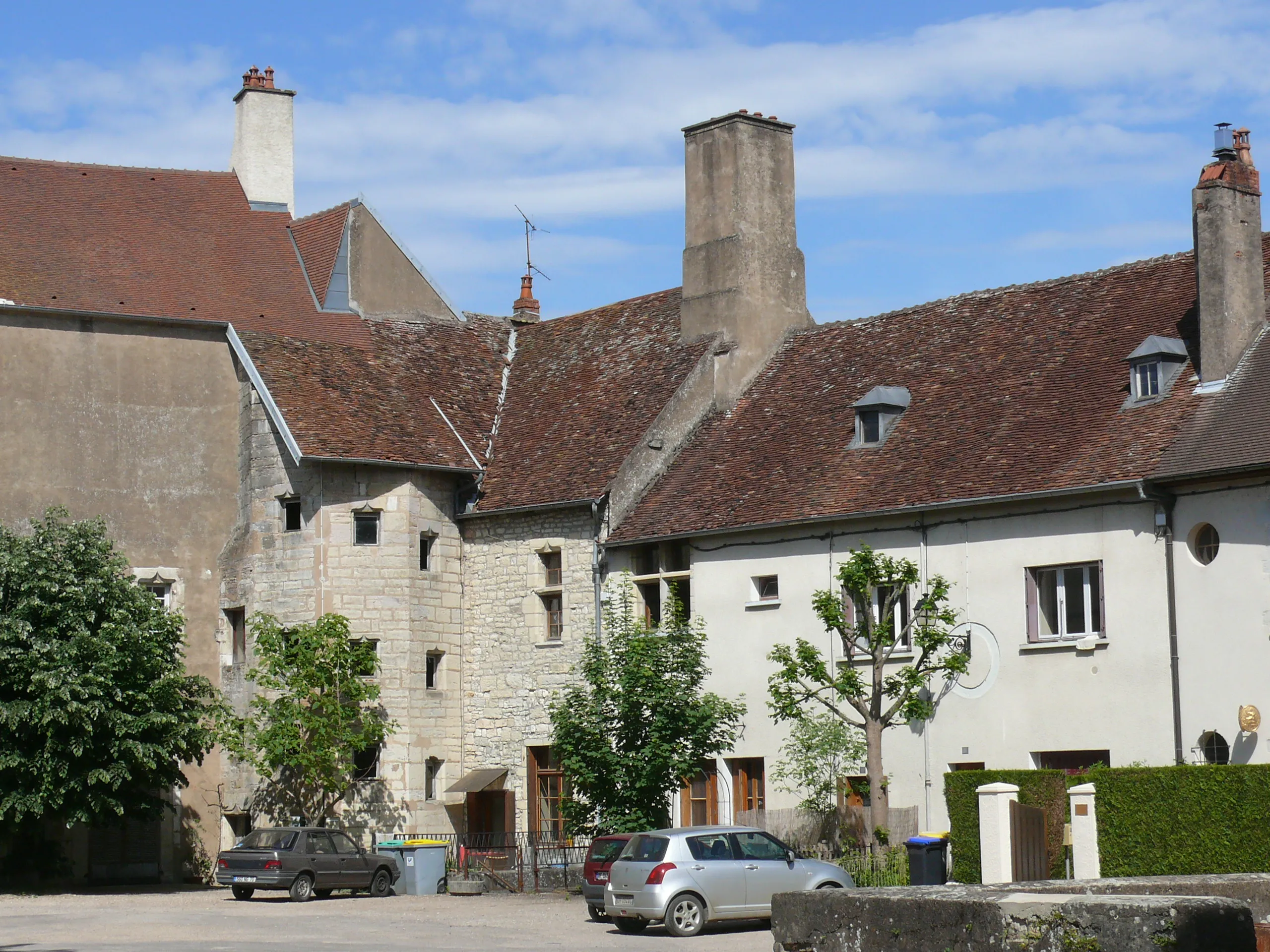
Le château primitif, édifié pour surveiller le passage de l'Ognon et servir de refuge aux habitants en cas de péril, est dû à la famille de Chalon, branche cadette des Comtes de Bourgogne. Les familles nobles qui se sont succédées à Marnay sont les Joiville, Montbéliard, Neufchâtel, Gorrevod et Bauffremont. En 1794, le château est vendu par lots et sa cour transformée en place publique. Vestiges à découvrir : la porte d'entrée, le logis seigneuriale, la tour polygonale, le pavillon des archives. Visite uniquement des extérieurs du château. Aujourd'hui, un atelier de lithographie se trouve dans l'ancien logis seigneuriale. Visite possible sur rendez-vous au 06 87 64 93 02.
English
The original castle, built to monitor the passage of the Ognon and serve as a refuge for the inhabitants in case of danger, is due to the family of Chalon, younger branch of the Counts of Burgundy. The noble families who succeeded one another in Marnay are the Joiville, Montbéliard, Neufchâtel, Gorrevod and Bauffremont. In 1794, the castle was sold in lots and its courtyard transformed into a public square. Remains to discover: the front door, the stately home, the polygonal tower, the archives pavilion. Visit of the exterior of the castle only. Today, a lithography workshop is located in the old stately home. Visit possible by appointment on 06 87 64 93 02.
Deutsch
Die ursprüngliche Burg, die errichtet wurde, um den Übergang des Ognon zu überwachen und den Einwohnern bei Gefahr als Zufluchtsort zu dienen, geht auf die Familie de Chalon, einen jüngeren Zweig der Grafen von Burgund, zurück. Die Adelsfamilien, die in Marnay aufeinander folgten, waren die Joiville, Montbéliard, Neufchâtel, Gorrevod und Bauffremont. Im Jahr 1794 wurde das Schloss in Losen verkauft und sein Hof in einen öffentlichen Platz umgewandelt. Zu entdeckende Überreste: das Eingangstor, das herrschaftliche Wohnhaus, der polygonale Turm, der Pavillon des Archivs. Besichtigung nur der Außenanlagen des Schlosses. Heute befindet sich im ehemaligen herrschaftlichen Wohnhaus eine Lithografiewerkstatt. Besichtigung nach vorheriger Anmeldung unter 06 87 64 93 02 möglich.
Dutch
Het primitieve kasteel, gebouwd om de doorgang van de Ognon te bewaken en als schuilplaats voor de inwoners te dienen in geval van gevaar, werd gebouwd door de familie Chalon, een jongere tak van de graven van Bourgondië. De adellijke families die elkaar in Marnay opvolgden waren de families Joiville, Montbéliard, Neufchâtel, Gorrevod en Bauffremont. In 1794 werd het kasteel per lot verkocht en werd de binnenplaats omgevormd tot een openbaar plein. Te ontdekken: de toegangspoort, de herenwoning, de veelhoekige toren, het archiefpaviljoen Bezoek alleen de buitenkant van het kasteel. Tegenwoordig is in de voormalige herenwoning een lithografisch atelier gevestigd. Bezoek mogelijk op afspraak op 06 87 64 93 02.
Español
El primitivo castillo, construido para vigilar el paso del Ognon y servir de refugio a los habitantes en caso de peligro, fue construido por la familia Chalon, rama más joven de los condes de Borgoña. Las familias nobles que se sucedieron en Marnay fueron las de Joiville, Montbéliard, Neufchâtel, Gorrevod y Bauffremont. En 1794, el castillo se vendió por lotes y su patio se transformó en una plaza pública. Restos por descubrir: la puerta de entrada, la vivienda señorial, la torre poligonal, el pabellón del archivo Visita sólo el exterior del castillo. Hoy en día, en la antigua vivienda señorial se encuentra un taller de litografía. Visita posible con cita previa en el 06 87 64 93 02.
Italiano
Il castello primitivo, costruito per sorvegliare il passaggio dell'Ognon e per servire da rifugio agli abitanti in caso di pericolo, fu edificato dalla famiglia Chalon, un ramo più giovane dei conti di Borgogna. Le famiglie nobili che si succedettero a Marnay furono quelle di Joiville, Montbéliard, Neufchâtel, Gorrevod e Bauffremont. Nel 1794, il castello fu venduto a lotti e il suo cortile fu trasformato in una piazza pubblica. Resti da scoprire: la porta d'ingresso, la dimora signorile, la torre poligonale, il padiglione dell'archivio Visitate solo l'esterno del castello. Oggi, nell'antica dimora signorile si trova un laboratorio di litografia. Possibilità di visita su appuntamento al numero 06 87 64 93 02.
Equipements: Parking
6 Place Jean de Joinville, 70150 Marnay
Crédits: Ginette Mathis
CC BY-SA 3.0
CC BY-SA 3.0