Château de Larnagol – Larnagol
Description
English
Deutsch
Dutch
Español
Italiano
Description
Visite Château et jardins
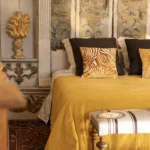
Place forte militaire au XIIème siècle, propriété des Cardaillac, le fief passe successivement aux BARASC et aux Vicomtes de CALVIGNAC. En 1638, acheté par les barons de LAPORTE, il est transformé au début XVIII ème siècle, en demeure de villégiature richement ornée de décors de gypseries, toiles peintes, boiseries, parquets marquetés.
Sont alors créés d’étonnants jardins à l’italienne, surplombés par des bassins.
Raymond SUBES, ferronnier de renom y vécut 50 ans et l'a embelli d’une grille exceptionnelle.
Racheté en 2011, le château a fait l’objet d’un important programme de restauration. Il est meublé et habité par ses propriétaires qui assurent les visites.
English
A military stronghold in the 12th C., property of the Cardaillacs, co- lords of Saint Cirq La Popie, the fief passed to the BARASC family then to the Viscounts of CALVIGNAC. Bought in 1638 by the Barons of LAPORTE, in the early 18th C. it was transformed into a country house richly decorated with plasterwork motifs, canvases, woodcarvings, and parquet flooring. At this period, Italianate gardens were created, with ponds above them. Raymond SUBES, a renowned wrought-iron craftsman, lived here for 50 years and embellished it with an exceptionally fine gate. Bought in 2011, the château is still undergoing a major restoration programme. It has been furnished and is lived in by the owners.
Deutsch
Besichtigung des Schlosses und der Gärten
Jahrhundert im Besitz der Cardaillac, ging das Lehen nacheinander an die BARASC und die Vicomtes de CALVIGNAC über. Im Jahr 1638 wurde es von den Baronen de Laporte gekauft und Anfang des 18. Jahrhunderts in ein Feriendomizil umgewandelt, das reich mit Gipsereien, bemalten Leinwänden, Holzverkleidungen und Intarsienparkett verziert ist.
Es wurden erstaunliche Gärten im italienischen Stil angelegt, die von Teichen überragt wurden.
Raymond SUBES, ein bekannter Schmied, lebte hier 50 Jahre lang und verschönerte es mit einem außergewöhnlichen Gitter.
Das Schloss wurde 2011 zurückgekauft und einem umfangreichen Restaurierungsprogramm unterzogen. Es wird von seinen Besitzern bewohnt und möbliert, die auch Besichtigungen anbieten.
Dutch
Bezoek het kasteel en de tuinen
Het kasteel was in de 12e eeuw een militair bolwerk dat eigendom was van de familie Cardaillac. Het leengoed ging achtereenvolgens over naar de familie BARASC en de burggraven van CALVIGNAC. In 1638 werd het gekocht door de Baronnen van LAPORTE, en in het begin van de 18e eeuw werd het omgetoverd tot een vakantiehuis dat rijkelijk versierd is met gipsen, beschilderde doeken, houten lambriseringen en ingelegde parketvloeren.
Er werden ook prachtige tuinen in Italiaanse stijl aangelegd met uitzicht op vijvers.
Raymond SUBES, een gerenommeerd ambachtsman van smeedijzer, woonde hier 50 jaar en verfraaide het met een uitzonderlijke poort.
Het kasteel werd in 2011 teruggekocht en heeft een groot restauratieprogramma ondergaan. Het is nu ingericht en bewoond door de eigenaars, die rondleidingen geven.
Español
Plaza fuerte militar en el siglo XII, propiedad de los Cardaillac coseñores de Saint Cirq La Popie, el feudo pasó sucesivamente a los BARASC y luego a los Vizcondes de CALVIGNAC. En 1638, fue comprado por los barones de LAPORTE y transformado a principios del siglo XVIII, en residencia de veraneo ricamente decorada con yeserías, lienzos, entarimados de marquetería. Se crearon entonces unos asombrosos jardines a la italiana, dominados por estanques. Raymond SUBES, herrero de renombre vivió aquí 50 años y lo embelleció con una reja excepcional. Comprado en 2011, el castillo fue objeto de un importante programa de restauración todavía sin terminar. Está amueblado y habitado por sus propietarios
Italiano
Visita al castello e ai giardini
Roccaforte militare nel XII secolo, di proprietà della famiglia Cardaillac, il feudo passò successivamente alla famiglia BARASC e ai Visconti di CALVIGNAC. Nel 1638 fu acquistata dai baroni di LAPORTE e all'inizio del XVIII secolo fu trasformata in una casa di villeggiatura riccamente decorata con gessi, tele dipinte, rivestimenti in legno e parquet intarsiato.
Furono creati anche splendidi giardini all'italiana su cui si affacciano laghetti.
Raymond SUBES, rinomato artigiano del ferro battuto, ha vissuto qui per 50 anni e l'ha abbellita con un cancello eccezionale.
Riacquistato nel 2011, il castello è stato sottoposto a un importante programma di restauro. Oggi è arredato e abitato dai proprietari, che offrono visite guidate.
Langues: English - Español
Moyens de paiement: Espèce - Chèque - Virements
Le Bourg, 46160 Larnagol

Crédits: © Martin TABURET