Château de Lantis – Dégagnac
Description
English
Deutsch
Dutch
Español
Italiano
Description
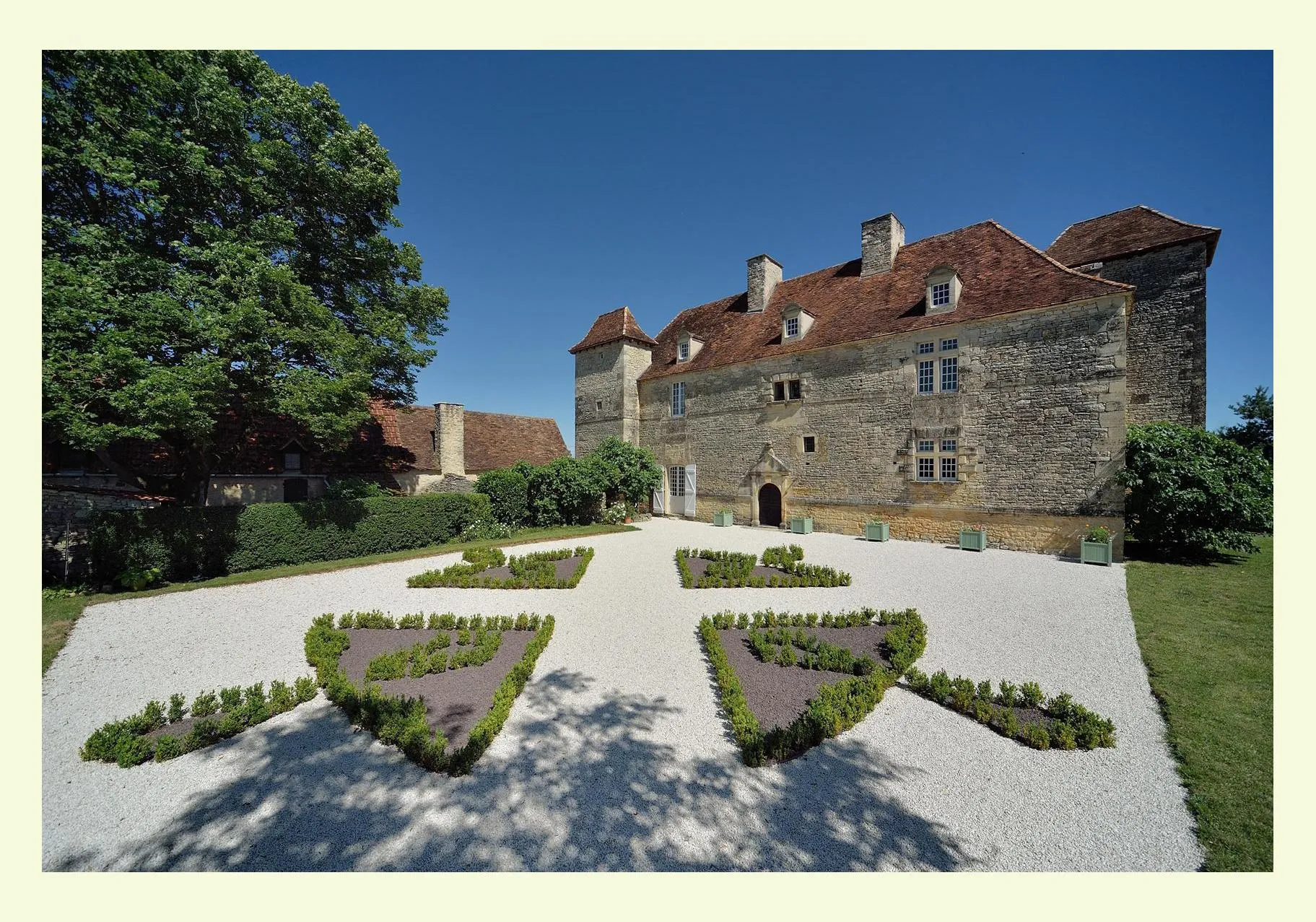
Mentionné dans les archives du Lot dès le 15e siècle, le château de Lantis apparait comme maison forte. Remanié au 18e siècle, puis abandonné à la Révolution, il a retrouvé toute sa splendeur après des années de restauration et dévoile ses éléments architecturaux d'exception comme sa porte Renaissance, parfaitement conservée, ainsi que son dallage en escarboucle unique. Des expositions thématiques et animations sont organisées régulièrement. Locations de salles pour séminaires ou mariages. Jardin Renaissance – 4 parterres de buis en forme de pointe de diamant magnifient la façade du château.
Plantation d'un arboretum participatif dans le parc autour du château ouvert à la visite.
English
Mentioned in Lot archives as early as the 15th century, Château de Lantis appears as a fortified house. Remodeled in the 18th century, then abandoned during the French Revolution, it has been restored to its former glory over the years, revealing exceptional architectural features such as its perfectly preserved Renaissance doorway and unique carbuncle paving. Themed exhibitions and events are organized on a regular basis. Rooms available for seminars and weddings. Renaissance garden – 4 diamond-shaped parterres of boxwood magnify the château's façade.
Planting of a participatory arboretum in the park around the château, open to visitors.
Deutsch
Das Schloss Lantis wurde bereits im 15. Jahrhundert in den Archiven des Departements Lot erwähnt und galt als befestigtes Haus. Jahrhundert umgebaut und während der Revolution verlassen, erstrahlte es nach jahrelanger Restaurierung wieder in vollem Glanz und enthüllt seine außergewöhnlichen architektonischen Elemente wie das perfekt erhaltene Renaissance-Tor und den einzigartigen Karfunkelstein-Fußboden. Es werden regelmäßig thematische Ausstellungen und Animationen veranstaltet. Vermietung von Räumen für Seminare oder Hochzeiten. Renaissancegarten – 4 Buchsbaumbeete in Form einer Diamantspitze schmücken die Fassade des Schlosses.
Anpflanzung eines partizipativen Arboretums im Park rund um das Schloss, das für Besucher geöffnet ist.
Dutch
Château de Lantis wordt al in de 15e eeuw vermeld in de archieven van Lot en is een versterkt huis. Het werd verbouwd in de 18e eeuw en vervolgens verlaten tijdens de Revolutie. In de loop der jaren is het in zijn oude glorie hersteld, waarbij bijzondere architectonische kenmerken te zien zijn, zoals de perfect bewaard gebleven renaissance deur en het unieke karbonkelplaveisel. Er worden regelmatig thematentoonstellingen en evenementen georganiseerd. Zalen kunnen worden gehuurd voor seminars of bruiloften. Renaissancetuin – 4 parterres van buxus in de vorm van een ruit vergroten de gevel van het kasteel.
In het park rond het kasteel is een arboretum aangelegd dat toegankelijk is voor bezoekers.
Español
Mencionado en los archivos de Lot ya en el siglo XV, el castillo de Lantis aparece como una casa fortificada. Remodelado en el siglo XVIII y abandonado durante la Revolución, ha recuperado su esplendor a lo largo de los años, revelando elementos arquitectónicos excepcionales como su portada renacentista perfectamente conservada y su pavimento de carbunclo único. Se organizan regularmente exposiciones y eventos temáticos. Alquiler de salas para seminarios o bodas. Jardín renacentista – 4 parterres de boj en forma de punta de diamante magnifican la fachada del castillo.
En el parque que rodea el castillo se ha plantado un arboreto participativo abierto a los visitantes.
Italiano
Menzionato negli archivi del Lot già nel XV secolo, il castello di Lantis appare come una casa fortificata. Rimaneggiato nel XVIII secolo, poi abbandonato durante la Rivoluzione, è stato riportato al suo antico splendore nel corso degli anni, rivelando caratteristiche architettoniche eccezionali come il portale rinascimentale perfettamente conservato e la pavimentazione in carboni unici. Vengono organizzate regolarmente mostre ed eventi a tema. Sale disponibili per seminari o matrimoni. Giardino rinascimentale – 4 parterre di bosso a forma di punta di diamante ingrandiscono la facciata del castello.
Nel parco intorno al castello è stato piantato un arboreto partecipativo aperto ai visitatori.
Moyens de paiement: Espèce - Chèque
château de Lantis, 46340 Dégagnac
Crédits: Madame Barbier


