Chapelle Ste Thérèse – Labenne
Description
English
Deutsch
Dutch
Español
Italiano
Description
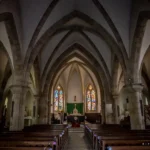
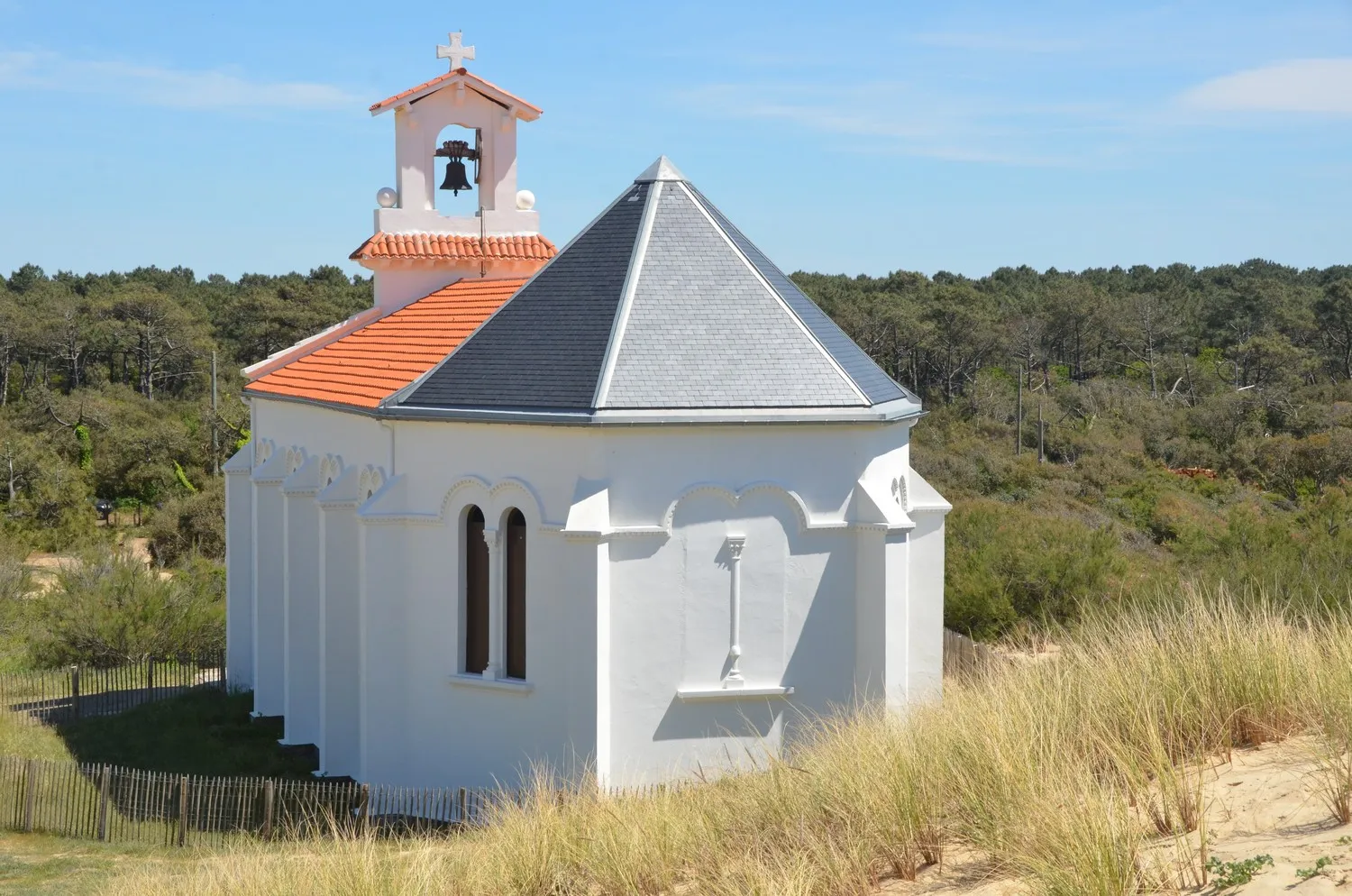
La chapelle est édifiée en 1932 sur les dunes à Labenne Océan. De style architectural classique, elle est composée d'un sanctuaire et d'une nef unique. L'intérieur de la chapelle est orné d’un chemin de croix peint par une élève des Beaux-arts, Suzanne Labatut. Les Allemands, qui occupent la chapelle pendant la Seconde guerre mondiale, s’enfuient en emportant la cloche. Elle est remplacée après l’occupation. Au fil des ans, la chapelle subit aléas climatiques et vandalisme, elle est très dégradée. Du fait de son caractère patrimonial et de son emplacement sur la dune, Le Conservatoire du Littoral met en oeuvre sa restauration à l’automne 2018. La cloche est restaurée et remise en place dans son clocheton pour l’inauguration de la chapelle en juin 2019. La chapelle n’est pas ouverte au public, sauf manifestation exceptionnelle, mais il est possible de l’admirer de l’extérieur.
English
The chapel was built in 1932 on the dunes at Labenne Océan. Of classical architectural style, it is composed of a sanctuary and a single nave. The interior of the chapel is decorated with a Way of the Cross painted by a student of Fine Arts, Suzanne Labatut. The Germans, who occupied the chapel during the Second World War, fled with the bell. It was replaced after the occupation. Over the years, the chapel has suffered climatic hazards and vandalism, it is very degraded. Because of its heritage character and its location on the dune, the Conservatoire du Littoral is implementing its restoration in the fall of 2018. The bell is restored and put back in its bell tower for the inauguration of the chapel in June 2019. The chapel is not open to the public, except for exceptional events, but it is possible to admire it from the outside.
Deutsch
Die Kapelle wurde 1932 auf den Dünen in Labenne Océan errichtet. Sie ist im klassischen Architekturstil erbaut und besteht aus einem Sanktuarium und einem einzigen Kirchenschiff. Das Innere der Kapelle ist mit einem Kreuzweg geschmückt, der von der Kunstschülerin Suzanne Labatut gemalt wurde. Die Deutschen, die die Kapelle während des Zweiten Weltkriegs besetzten, flohen und nahmen die Glocke mit. Sie wird nach der Besetzung ersetzt. Im Laufe der Jahre wird die Kapelle durch Wettereinflüsse und Vandalismus stark in Mitleidenschaft gezogen. Aufgrund ihres patrimonialen Charakters und ihrer Lage auf der Düne beginnt das Conservatoire du Littoral im Herbst 2018 mit ihrer Restaurierung. Die Glocke wird restauriert und wieder in ihrem Glockenturm angebracht, damit die Kapelle im Juni 2019 eingeweiht werden kann. Die Kapelle ist außer bei außergewöhnlichen Veranstaltungen nicht für die Öffentl
Dutch
De kapel werd in 1932 gebouwd op de duinen van Labenne Océan. Het heeft een klassieke bouwstijl en bestaat uit een heiligdom en een enkel schip. Het interieur van de kapel is versierd met een kruisweg geschilderd door een studente van de Beaux-arts, Suzanne Labatut. De Duitsers, die de kapel tijdens de Tweede Wereldoorlog bezetten, vluchtten met de klok. Het werd vervangen na de bezetting. In de loop der jaren heeft de kapel geleden onder klimatologische risico's en vandalisme, en is zeer vervallen. Vanwege het erfgoedkarakter en de ligging op het duin heeft het Conservatoire du Littoral (Agentschap voor de kustbescherming) de restauratie ervan in het najaar van 2018 ter hand genomen. De klok wordt gerestaureerd en teruggeplaatst in de klokkentoren voor de inhuldiging van de kapel in juni 2019. De kapel is niet toegankelijk voor het publiek, behalve bij uitzonderlijke gebeurtenissen, maa
Español
La capilla fue construida en 1932 en las dunas de Labenne Océan. Tiene un estilo arquitectónico clásico y consta de un santuario y una sola nave. El interior de la capilla está decorado con un Vía Crucis pintado por una estudiante de Bellas Artes, Suzanne Labatut. Los alemanes, que ocuparon la capilla durante la Segunda Guerra Mundial, huyeron con la campana. Fue reemplazado después de la ocupación. A lo largo de los años, la capilla ha sufrido los riesgos climáticos y el vandalismo, y ha quedado muy deteriorada. Por su carácter patrimonial y su ubicación en la duna, el Conservatorio del Litoral emprendió su restauración en otoño de 2018. La campana es restaurada y colocada de nuevo en su campanario para la inauguración de la capilla en junio de 2019. La capilla no está abierta al público, salvo en eventos excepcionales, pero es posible admirarla desde el exterior.
Italiano
La cappella è stata costruita nel 1932 sulle dune di Labenne Océan. Ha uno stile architettonico classico e si compone di un santuario e di un'unica navata. L'interno della cappella è decorato con una Via Crucis dipinta da una studentessa delle Belle Arti, Suzanne Labatut. I tedeschi, che occuparono la cappella durante la Seconda guerra mondiale, fuggirono con la campana. È stata sostituita dopo l'occupazione. Nel corso degli anni, la cappella ha sofferto a causa dei rischi climatici e degli atti di vandalismo ed è diventata molto fatiscente. A causa del suo carattere patrimoniale e della sua posizione sulla duna, il Conservatoire du Littoral (Agenzia per la protezione delle coste) ne ha intrapreso il restauro nell'autunno 2018. La campana viene restaurata e rimessa nel suo campanile per l'inaugurazione della cappella nel giugno 2019. La cappella non è aperta al pubblico, salvo eventi eccezionali, ma è possibile ammirarla dall'esterno.
Allée de l'Hélio Marin, 40530 Labenne
Crédits: ©mairie-labenne
Licence
Licence