CHAPELLE SAINT JULIEN – Saléchan
Description
English
Deutsch
Dutch
Español
Italiano
Description
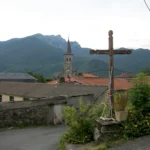
Construite au XIIe siècle, probablement à l'emplacement d'un site plus ancien, la chapelle a servi d’église paroissiale de Saléchan jusqu'à la fin du XVIIIe siècle où elle est supplantée par une nouvelle église construite sur un promontoire au centre du village.
Faites le tour de la chapelle pour découvrir les nombreux remplois antiques utilisés dans les murs. Lors du transfert de l’ancien cimetière qui se trouvait autour de la chapelle, deux sarcophages du haut Moyen Âge ont été mis au jour (actuellement devant la chapelle). Petit édifice à nef unique et à abside, la chapelle s’ouvre par un portail en marbre du XVIe siècle. Infos pratiques : édifice fermé au public sauf lors d’évènements. Consultez l’agenda pour plus d’infos.
English
Built in the 12th century, probably on the site of an earlier site, the chapel served as Saléchan's parish church until the late 18th century, when it was supplanted by a new church built on a promontory in the center of the village.
Take a tour of the chapel to discover the many ancient fillings used in the walls. When the old cemetery around the chapel was moved, two early medieval sarcophagi were unearthed (now in front of the chapel). A small building with a single nave and apse, the chapel opens with a 16th-century marble portal. Practical info: the building is closed to the public except for special events. See the calendar for further details.
Deutsch
Die Kapelle wurde im 12. Jahrhundert wahrscheinlich an der Stelle einer älteren Stätte erbaut und diente bis zum Ende des 18. Jahrhunderts als Pfarrkirche von Salechan, als sie von einer neuen Kirche verdrängt wurde, die auf einem Vorsprung im Zentrum des Dorfes errichtet wurde.
Machen Sie einen Rundgang durch die Kapelle, um die vielen antiken Füllungen zu entdecken, die in den Mauern verwendet wurden. Bei der Verlegung des alten Friedhofs, der sich um die Kapelle herum befand, wurden zwei Sarkophage aus dem frühen Mittelalter freigelegt (heute vor der Kapelle). Die Kapelle ist ein kleines, einschiffiges Gebäude mit Apsis und einem Marmorportal aus dem 16. Praktische Informationen: Das Gebäude ist für die Öffentlichkeit geschlossen, außer bei Veranstaltungen. Weitere Informationen finden Sie im Terminkalender.
Dutch
De kapel werd in de 12e eeuw gebouwd, waarschijnlijk op de plek van een eerdere plek. Ze diende als parochiekerk van Saléchan tot het einde van de 18e eeuw, toen ze werd vervangen door een nieuwe kerk die op een voorgebergte in het centrum van het dorp werd gebouwd.
Maak een rondleiding door de kapel en ontdek de vele oude vullingen die in de muren zijn verwerkt. Toen het oude kerkhof rond de kapel werd verplaatst, werden er twee vroegmiddeleeuwse sarcofagen opgegraven (nu voor de kapel). De kapel is een klein gebouw met een enkel schip en een apsis en opent met een 16e-eeuws marmeren portaal. Praktische informatie: het gebouw is gesloten voor publiek behalve tijdens speciale evenementen. Raadpleeg de kalender voor meer informatie.
Español
Construida en el siglo XII, probablemente sobre un emplazamiento anterior, la capilla fue la iglesia parroquial de Saléchan hasta finales del siglo XVIII, cuando fue suplantada por una nueva iglesia construida sobre un promontorio en el centro del pueblo.
Recorra la capilla para descubrir los numerosos rellenos antiguos utilizados en los muros. Cuando se trasladó el antiguo cementerio que rodeaba la capilla, se desenterraron dos sarcófagos altomedievales (ahora frente a la capilla). Pequeño edificio de una sola nave con ábside, la capilla se abre con un portal de mármol del siglo XVI. Información práctica: el edificio está cerrado al público, excepto durante acontecimientos especiales. Para más información, consulte el calendario.
Italiano
Costruita nel XII secolo, probabilmente sul luogo di un sito precedente, la cappella è stata la chiesa parrocchiale di Saléchan fino alla fine del XVIII secolo, quando è stata sostituita da una nuova chiesa costruita su un promontorio nel centro del villaggio.
La visita della cappella permette di scoprire le numerose e antiche stuccature utilizzate nelle pareti. Quando il vecchio cimitero intorno alla cappella fu spostato, vennero alla luce due sarcofagi altomedievali (ora di fronte alla cappella). Piccolo edificio a navata unica e abside, la cappella si apre con un portale in marmo del XVI secolo. Informazioni pratiche: l'edificio è chiuso al pubblico tranne in occasione di eventi speciali. Per ulteriori informazioni, consultare il calendario.