Chapelle Notre Dame du Château
Description
English
Deutsch
Dutch
Español
Italiano
Description
Une antique madone, sculptée dans le tronc d'une souche fut apportée de Briançon, vers 1350, par un ermite nommé Imbert et déposée dans une chapelle attenante alors au château. A cette époque, la rue du château était aussi le quartier des juifs. Ceux ci ennuyés d'être sans cesse en contact avec les populations chrétiennes qui allaient vénérer la Vierge de Briançon, proposèrent à la ville d'élever à leurs frais une chapelle à Notre Dame dans un autre quartier.
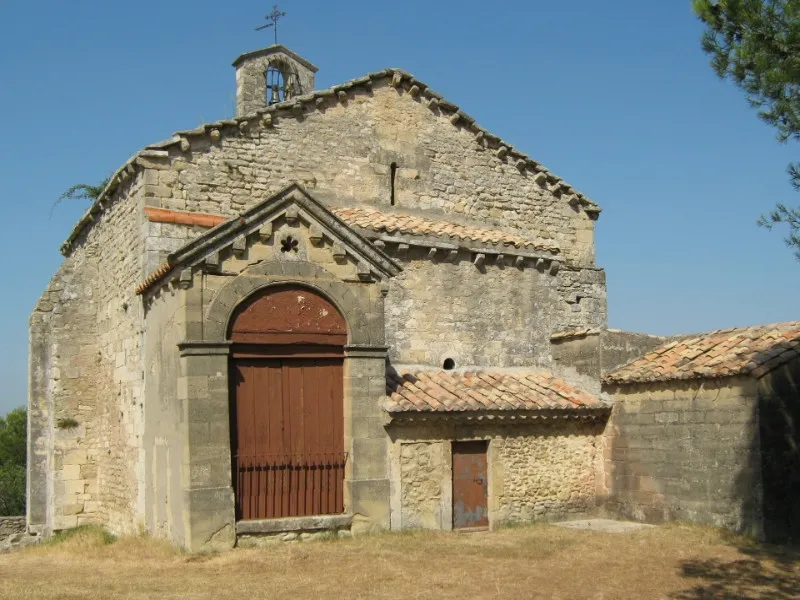
Les chrétiens acceptèrent et on éleva donc une chapelle dans les Alpilles, entre Tarascon et Saint-Remy.
Depuis 1420, Notre Dame précède l'Ascension, les Tarasconnais s'en vont quérir la sainte dans sa vieille chapelle et l'amènent dans la magnifique collégiale Sainte Marthe où durant quarante jours, elle est l'objet d'un culte tout particulier de la part des Tarasconnais et des populations voisines. Le quarantième jour, elle est ramenée au sanctuaire des Alpilles.
English
An ancient Madonna, sculpted from the trunk of a tree stump, was brought from Briançon, around 1350, by a hermit named Imbert and placed in a chapel adjoining the castle. At that time, the rue du château was also the district of the Jews. The Jews, annoyed at being in constant contact with the Christian population who were going to venerate the Virgin of Briançon, proposed to the town to build a chapel to Our Lady in another district at their own expense.
The Christians agreed and a chapel was built in the Alpilles, between Tarascon and Saint-Remy.
Since 1420, Our Lady precedes the Ascension, the people of Tarascon go to fetch the saint from her old chapel and bring her to the magnificent collegiate church of Sainte Marthe, where for forty days she is the object of a very special cult on the part of the people of Tarascon and the neighbouring populations. On the fortieth day, she was brought back to the sanctuary of the Alpilles.
Deutsch
Eine antike, aus einem Baumstumpf geschnitzte Madonna wurde um 1350 von einem Einsiedler namens Imbert aus Briançon mitgebracht und in einer Kapelle aufbewahrt, die damals an das Schloss angrenzte. Zu dieser Zeit war die Rue du Château auch das Viertel der Juden. Diese ärgerten sich über den ständigen Kontakt mit der christlichen Bevölkerung, die die Jungfrau von Briançon verehren wollte, und schlugen der Stadt vor, auf ihre Kosten in einem anderen Viertel eine Kapelle für Notre Dame zu errichten.
Die Christen stimmten zu und so wurde eine Kapelle in den Alpilles, zwischen Tarascon und Saint-Remy, errichtet.
Seit 1420 findet Notre Dame vor Christi Himmelfahrt statt. Die Einwohner von Tarascone holen die Heilige aus ihrer alten Kapelle und bringen sie in die wunderschöne Stiftskirche Sainte Marthe, wo sie vierzig Tage lang von den Einwohnern von Tarascone und der umliegenden Bevölkerung ganz besonders verehrt wird. Am vierzigsten Tag wird sie zum Heiligtum in den Alpilles zurückgebracht.
Dutch
Een oude Madonna, gebeeldhouwd uit de stam van een boomstronk, werd rond 1350 uit Briançon meegenomen door kluizenaar Imbert en in een kapel naast het kasteel geplaatst. In die tijd was de rue du château ook de wijk van de Joden. De Joden, die het vervelend vonden om voortdurend in contact te zijn met de christelijke bevolking die de Maagd van Briançon ging vereren, stelden de stad voor om op eigen kosten een kapel voor Onze Lieve Vrouw te bouwen in een andere wijk.
De christenen gingen akkoord en er werd een kapel gebouwd in de Alpilles, tussen Tarascon en Saint-Remy.
Sinds 1420, als Onze Lieve Vrouw voor Hemelvaart komt, halen de Tarasconnais de heilige uit haar oude kapel en brengen haar naar de prachtige collegiale kerk van Sainte Marthe, waar zij veertig dagen lang het voorwerp is van een heel bijzondere cultus van de Tarasconnais en de naburige bevolking. Op de veertigste dag werd ze teruggebracht naar het heiligdom van de Alpilles.
Español
Una antigua Virgen, esculpida en el tronco de un árbol, fue traída desde Briançon, hacia 1350, por un ermitaño llamado Imbert y colocada en una capilla contigua al castillo. En aquella época, la rue du château era también el barrio de los judíos. Los judíos, molestos por estar en constante contacto con la población cristiana que iba a venerar a la Virgen de Briançon, propusieron a la ciudad construir una capilla a la Virgen en otro barrio a su costa.
Los cristianos están de acuerdo y se construye una capilla en los Alpilles, entre Tarascón y Saint-Remy.
Desde 1420, cuando la Virgen precede a la Ascensión, los tarasconenses van a buscar a la santa a su antigua capilla y la llevan a la magnífica colegiata de Sainte Marthe, donde durante cuarenta días es objeto de un culto muy especial por parte de los tarasconenses y de las poblaciones vecinas. Al cuadragésimo día, fue llevada de vuelta al santuario de los Alpilles.
Italiano
Un'antica Madonna, scolpita nel tronco di un ceppo d'albero, fu portata da Briançon, intorno al 1350, da un eremita di nome Imbert e collocata in una cappella adiacente al castello. All'epoca, la rue du château era anche il quartiere degli ebrei. Gli ebrei, infastiditi dal fatto di essere costantemente a contatto con la popolazione cristiana che andava a venerare la Vergine di Briançon, proposero alla città di costruire a loro spese una cappella alla Madonna in un altro quartiere.
I cristiani accettarono e fu costruita una cappella nelle Alpilles, tra Tarascon e Saint-Remy.
Dal 1420, quando la Madonna precede l'Ascensione, gli abitanti di Tarascon vanno a prelevare la santa dalla sua vecchia cappella e la portano nella magnifica collegiata di Sainte Marthe, dove per quaranta giorni è oggetto di un culto molto speciale da parte dei tarasconi e delle popolazioni vicine. Il quarantesimo giorno fu riportata al santuario delle Alpilles.
A la campagne - Roman
Equipements: Parking à proximité
Chemin Notre Dame du Château, 13150 Tarascon