Chapelle de Kérégal
Description
English
Deutsch
Dutch
Español
Italiano
Description
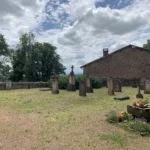
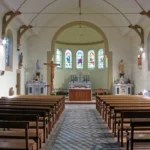
Chapelle construite en 1775 sur la commune de Plouha (porte la date) pour Jean-Baptiste Chrestien de Tréveneuc et son épouse Julie Charpentier de Lenvos. Vendue comme bien national sous la Révolution, elle devint propriété de la fabrique en 1815. Elle est de plan rectangulaire, à vaisseau unique, construite en moellons de granite et schiste. Elle est terminé par un chevet aveugle à trois pans. Le pignon ouest est couronné d'un clocher en charpente. La date de construction de l'édifice est gravée sur une pierre placée au-dessus de la porte de l'élévation sud.
English
Chapel built in 1775 in the commune of Plouha (bears the date) for Jean-Baptiste Chrestien de Tréveneuc and his wife Julie Charpentier de Lenvos. Sold as a national asset during the Revolution, it became the property of the factory in 1815. It has a rectangular plan, with a single vessel, built in granite and schist rubble. It is finished by a three-sided blind bedside table. The west gable is crowned by a roofed bell tower. The date of construction of the building is engraved on a stone above the door on the south elevation.
Deutsch
Kapelle, die 1775 in der Gemeinde Plouha (trägt das Datum) für Jean-Baptiste Chrestien de Tréveneuc und seine Frau Julie Charpentier de Lenvos errichtet wurde. Während der Revolution wurde sie als Nationalgut verkauft und ging 1815 in den Besitz der Fabrik über. Die Kirche hat einen rechteckigen, einschiffigen Grundriss und wurde aus Granit- und Schieferbruchsteinen errichtet. Sie endet mit einem blinden, dreigeteilten Kopfende. Der westliche Giebel wird von einem Glockenturm aus Fachwerk gekrönt. Das Baudatum des Gebäudes ist auf einem Stein über der Tür des Südflügels eingemeißelt.
Dutch
Cultureel erfgoed
Español
Capilla construida en 1775 en el municipio de Plouha (lleva la fecha) para Jean-Baptiste Chrestien de Tréveneuc y su esposa Julie Charpentier de Lenvos. Vendida como propiedad nacional durante la Revolución, pasó a ser propiedad de la iglesia en 1815. Es de planta rectangular, con una sola nave, construida con granito y escombros de esquisto. Está rematado con un chevet ciego de tres lados. El hastial oeste está coronado por un campanario de marco. La fecha de construcción del edificio está grabada en una piedra situada sobre la puerta del alzado sur.
Italiano
Cappella costruita nel 1775 nel comune di Plouha (porta la data) per Jean-Baptiste Chrestien de Tréveneuc e sua moglie Julie Charpentier de Lenvos. Venduto come bene nazionale durante la Rivoluzione, divenne proprietà della chiesa nel 1815. È a pianta rettangolare, a navata unica, costruita in granito e scisto. È rifinito con un chevet cieco su tre lati. Il timpano occidentale è coronato da un campanile a vela. La data di costruzione dell'edificio è incisa su una pietra posta sopra la porta del prospetto sud.
Keregal, 22580 Plouha