Ancienne polierie camion – Vivier-au-Court
Description
English
Deutsch
Dutch
Español
Italiano
Description
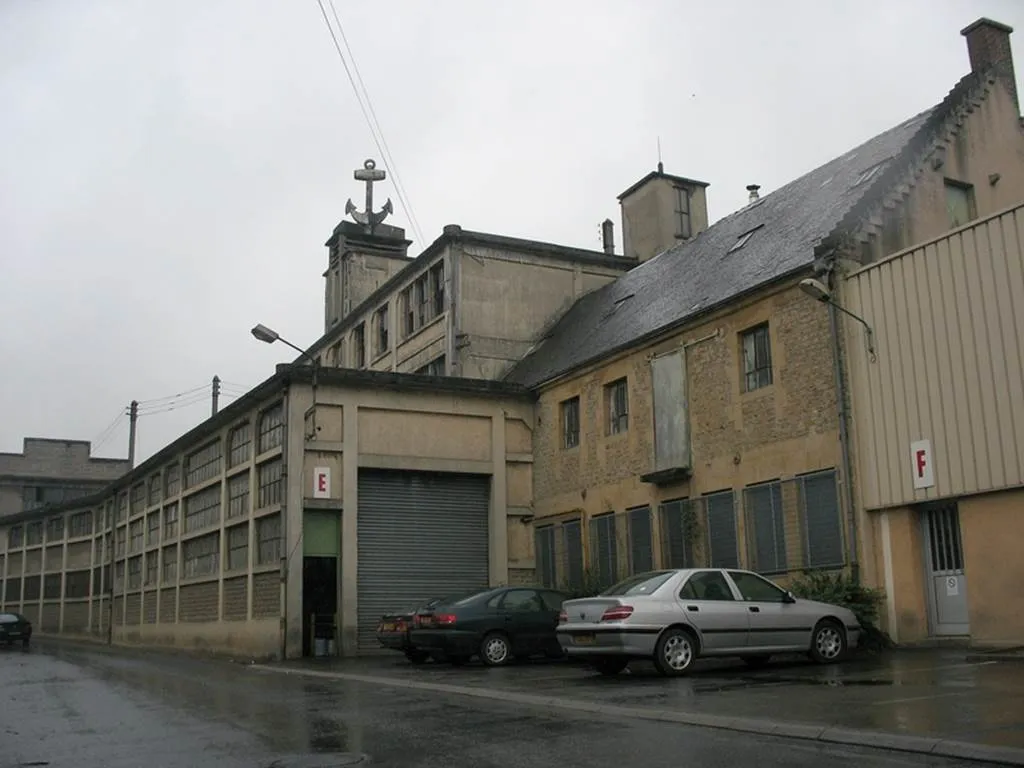
En 1820, Pierre Louis Camion-Richard transforme le moulin de Moraimont en polierie, donnant naissance à l’usine Camion. Rapidement agrandi, le site devient un important complexe de quincaillerie, avec des extensions successives et l’ajout d’une "Grande Boutique" en 1850.Le château Camion, construit en 1879, domine l’ensemble. L’usine atteint son apogée au début du 20ᵉ siècle, produisant des milliers d’articles et employant jusqu’à 580 personnes. Après la Première Guerre mondiale, elle modernise ses équipements et poursuit son activité jusqu’en 1979.Aujourd’hui, une partie des bâtiments, construits en moellon calcaire, sheds métalliques et béton armé, est occupée par une fonderie. Parmi les vestiges, on trouve la polierie, la maison patronale et des structures industrielles emblématiques.
English
In 1820, Pierre Louis Camion-Richard transformed the Moraimont mill into a polishing plant, giving rise to the Camion factory. The site was soon expanded to become a major hardware complex, with successive extensions and the addition of a "Grande Boutique" in 1850, dominated by the Château Camion, built in 1879. The factory reached its peak in the early 20th century, producing thousands of items and employing up to 580 people. After the First World War, the plant modernized its equipment and remained in operation until 1979. Today, part of the buildings, built of limestone rubble, metal sheds and reinforced concrete, is occupied by a foundry. Remains include the polery, the employer's house and emblematic industrial structures.
Deutsch
1820 wandelte Pierre Louis Camion-Richard die Mühle von Moraimont in eine Poliermaschine um, wodurch die Camion-Fabrik entstand. Die Fabrik wurde schnell zu einem bedeutenden Eisenwarenkomplex ausgebaut und 1850 um eine "Grande Boutique" erweitert. 1879 wurde das Château Camion erbaut, das die Anlage überragt. Jahrhunderts erreichte die Fabrik ihren Höhepunkt, als sie Tausende von Artikeln herstellte und bis zu 580 Menschen beschäftigte. Nach dem Ersten Weltkrieg wurde die Fabrik modernisiert und blieb bis 1979 in Betrieb. Heute befindet sich in einem Teil der Gebäude, die aus Kalkstein, Metallsheds und Stahlbeton errichtet wurden, eine Gießerei. Zu den Überbleibseln gehören die Polierei, das Arbeitgeberhaus und symbolträchtige industrielle Strukturen.
Dutch
In 1820 veranderde Pierre Louis Camion-Richard de molen van Moraimont in een polijstfabriek, waaruit de fabriek Camion ontstond. De site groeide al snel uit tot een groot ijzerwarencomplex, met opeenvolgende uitbreidingen en de toevoeging van een "Grande Boutique" in 1850, gedomineerd door het Château Camion, gebouwd in 1879. De fabriek bereikte haar hoogtepunt aan het begin van de 20e eeuw, produceerde duizenden artikelen en had tot 580 mensen in dienst. Na de Eerste Wereldoorlog moderniseerde de fabriek haar uitrusting en bleef tot 1979 in bedrijf. Tegenwoordig wordt een deel van de gebouwen, gemaakt van kalksteenpuin, metalen loodsen en gewapend beton, gebruikt door een gieterij. Tot de overblijfselen behoren de slijperij, het huis van de werkgever en emblematische industriële structuren.
Español
En 1820, Pierre Louis Camion-Richard transformó el molino de Moraimont en una fábrica de pulido, dando origen a la fábrica Camion. El lugar se convirtió rápidamente en un gran complejo de ferretería, con sucesivas ampliaciones y la adición de una "Grande Boutique" en 1850, dominada por el Château Camion, construido en 1879. La fábrica alcanzó su apogeo a principios del siglo XX, produciendo miles de artículos y empleando hasta 580 personas. Tras la Primera Guerra Mundial, modernizó su equipamiento y siguió funcionando hasta 1979. Hoy en día, parte de los edificios, construidos con escombros de piedra caliza, cobertizos metálicos y hormigón armado, están ocupados por una fundición. Entre los restos se encuentran los talleres de pulido, la casa patronal y estructuras industriales emblemáticas.
Italiano
Nel 1820, Pierre Louis Camion-Richard trasformò il mulino di Moraimont in un impianto di lucidatura, dando origine alla fabbrica Camion. Il sito si trasformò rapidamente in un grande complesso di ferramenta, con successivi ampliamenti e l'aggiunta di una "Grande Boutique" nel 1850, dominata dallo Château Camion, costruito nel 1879. La fabbrica raggiunse il suo apice all'inizio del XX secolo, producendo migliaia di articoli e impiegando fino a 580 persone. Dopo la Prima guerra mondiale, modernizzò le sue attrezzature e continuò a operare fino al 1979. Oggi, parte degli edifici, costituiti da macerie calcaree, capannoni metallici e cemento armato, è occupata da una fonderia. Tra i resti ci sono le officine di lucidatura, la casa del datore di lavoro e strutture industriali emblematiche.
Equipements: Installations pour handicapés - Parking
Rue Jules Fuzelier, 08440 Vivier-au-Court