Opéra – Carmen. – 04-05-2027 – Thaon-les-Vosges
Description
English
Deutsch
Dutch
Español
Italiano
Description
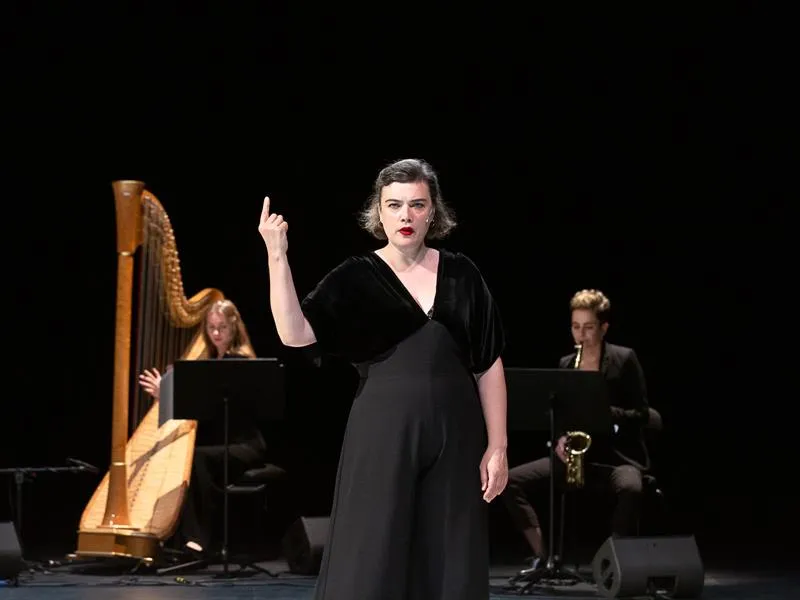
Après Phèdre ! et Giselle…, François Gremaud clôt sa trilogie consacrée aux grandes héroïnes tragiques avec Carmen. Portée par l’éblouissante Rosemary Standley et cinq musiciennes, cette relecture libre et réjouissante célèbre une figure qui, aujourd’hui encore, défie les codes.
Tout est dans le point. Ce point final ajouté au titre, à la fois provocateur et affirmatif, ouvre une nouvelle façon d’aborder l’un des opéras les plus célèbres du répertoire. François Gremaud ne cherche pas simplement à raconter l’œuvre de Bizet : il en explore les passions, les audaces et la puissance toujours actuelle.
Seule comédienne au plateau, Rosemary Standley passe avec virtuosité de la parole au chant, accompagnée d’un quintette féminin réunissant accordéon, harpe, flûte, violon et saxophone. Entre théâtre et musique, le spectacle joue avec l’œuvre originale, la raconte, la détourne et la fait résonner autrement.
Une déclaration d’amour au spectacle vivant et à une héroïne insoumise qui choisit sa liberté jusqu’au bout.
English
Following *Phèdre!* and *Giselle*, François Gremaud concludes his trilogy dedicated to the great tragic heroines with *Carmen*. Led by the dazzling Rosemary Standley and five female musicians, this free-spirited and joyful reinterpretation celebrates a figure who, even today, defies convention.
It’s all about the period. This final period added to the title—both provocative and assertive—opens up a new way of approaching one of the most famous operas in the repertoire. François Gremaud does not simply seek to retell Bizet’s work: he explores its passions, its boldness, and its enduring power.
As the sole actress on stage, Rosemary Standley moves with virtuosity from speech to song, accompanied by an all-female quintet featuring accordion, harp, flute, violin, and saxophone. Blurring the lines between theater and music, the production plays with the original work, retells it, reinterprets it, and gives it new resonance.
A declaration of love for the performing arts and for a rebellious heroine who chooses her freedom to the very end.
Deutsch
Nach „Phèdre!“ und „Giselle?“ schließt François Gremaud mit „Carmen“ seine Trilogie ab, die den großen tragischen Heldinnen gewidmet ist. Getragen von der umwerfenden Rosemary Standley und fünf Musikerinnen feiert diese freie und mitreißende Neuinterpretation eine Figur, die auch heute noch die Konventionen herausfordert.
Es kommt ganz auf den Punkt an. Dieser dem Titel hinzugefügte Schlusspunkt, der zugleich provokativ und bekräftigend ist, eröffnet eine neue Herangehensweise an eine der berühmtesten Opern des Repertoires. François Gremaud will nicht einfach nur Bizets Werk erzählen: Er erkundet dessen Leidenschaften, seine Kühnheit und seine bis heute ungebrochene Kraft.
Als einzige Darstellerin auf der Bühne wechselt Rosemary Standley virtuos zwischen Sprechen und Gesang, begleitet von einem Frauenquintett, das Akkordeon, Harfe, Flöte, Violine und Saxophon vereint. Zwischen Theater und Musik spielt die Inszenierung mit dem Originalwerk, erzählt es nach, interpretiert es neu und lässt es in einem anderen Licht erstrahlen.
Eine Liebeserklärung an die darstellende Kunst und an eine rebellische Heldin, die sich bis zum Schluss für ihre Freiheit entscheidet.
Dutch
Na *Phèdre!* en *Giselle* sluit François Gremaud zijn trilogie over de grote tragische heldinnen af met *Carmen*. Gedragen door de schitterende Rosemary Standley en vijf muzikantes, is deze vrije en vrolijke herinterpretatie een eerbetoon aan een figuur die ook vandaag de dag nog de conventies trotseert.
Het draait allemaal om de punt. Die punt aan het einde van de titel, die zowel provocerend als bevestigend is, opent een nieuwe manier om een van de beroemdste opera’s uit het repertoire te benaderen. François Gremaud wil niet alleen het werk van Bizet vertellen: hij verkent de passies, de durf en de nog steeds actuele kracht ervan.
Rosemary Standley, de enige actrice op het podium, schakelt met virtuositeit over van spreken naar zingen, begeleid door een vrouwelijk kwintet bestaande uit accordeon, harp, fluit, viool en saxofoon. Tussen theater en muziek speelt de voorstelling met het originele werk, vertelt het, geeft er een eigen draai aan en laat het op een andere manier weerklinken.
Een liefdesverklaring aan de podiumkunsten en aan een opstandige heldin die tot het einde toe voor haar vrijheid kiest.
Español
Tras «¡Fedra!» y «Giselle», François Gremaud cierra su trilogía dedicada a las grandes heroínas trágicas con «Carmen». Protagonizada por la deslumbrante Rosemary Standley y cinco músicas, esta libre y alegre reinterpretación rinde homenaje a una figura que, aún hoy, desafía los códigos.
Todo está en el punto. Ese punto final añadido al título, a la vez provocador y afirmativo, abre una nueva forma de abordar una de las óperas más famosas del repertorio. François Gremaud no se limita a narrar la obra de Bizet: explora sus pasiones, su audacia y su fuerza, que sigue vigente hoy en día.
Rosemary Standley, única actriz en el escenario, pasa con virtuosismo de la palabra al canto, acompañada por un quinteto femenino que reúne acordeón, arpa, flauta, violín y saxofón. A caballo entre el teatro y la música, el espectáculo juega con la obra original, la narra, la reinterpreta y le da un nuevo sentido.
Una declaración de amor al arte escénico y a una heroína rebelde que elige su libertad hasta el final.
Italiano
Dopo *Fedra!* e *Giselle*, François Gremaud conclude la sua trilogia dedicata alle grandi eroine tragiche con *Carmen*. Interpretata dalla splendida Rosemary Standley e da cinque musiciste, questa rivisitazione libera e gioiosa celebra una figura che, ancora oggi, sfida i codici.
Tutto sta nel punto. Quel punto finale aggiunto al titolo, al tempo stesso provocatorio e affermativo, apre un nuovo modo di affrontare una delle opere più celebri del repertorio. François Gremaud non si limita a raccontare l’opera di Bizet: ne esplora le passioni, l’audacia e la forza sempre attuale.
Unica attrice in scena, Rosemary Standley passa con virtuosismo dalla parola al canto, accompagnata da un quintetto femminile che riunisce fisarmonica, arpa, flauto, violino e sassofono. A metà strada tra teatro e musica, lo spettacolo gioca con l’opera originale, la racconta, la stravolge e le conferisce una nuova risonanza.
Una dichiarazione d’amore per lo spettacolo dal vivo e per un’eroina ribelle che sceglie la propria libertà fino in fondo.
Rue Pierre de Coubertin, 88150 Thaon-les-Vosges
Crédits: Dorothee Thebert Filliger