Lire le ciel Sous les étoiles en Méditerranée – 09-07-2025 – Marseille 2e Arrondissement
My Tourisme > Evénements > Evénements Culturels > Lire le ciel Sous les étoiles en Méditerranée – 09-07-2025 – Marseille 2e Arrondissement
Description
English
Deutsch
Dutch
Español
Italiano
Description
De la Lune à l’étoile du berger, de la constellation de la Grande Ourse aux anneaux de Saturne, la voûte céleste et les astres qui l’habitent font l’objet d’une immense fascination. L’exposition « Lire le ciel » porte sur l’appréhension du ciel nocturne en Méditerranée. Des premiers relevés du ciel mésopotamien antique à la vogue de l’astrologie contemporaine, en passant par l’astronomie arabe médiévale et la révolution galiléenne, les sociétés du bassin méditerranéen se sont référées aux astres pour se situer dans le cosmos et s’organiser sur terre. Savoirs et croyances ont circulé entre les rives, fondant une culture commune du ciel qui nourrit toujours notre approche contemporaine des astres. À travers ce dialogue entre les arts et les sciences, l’exposition vise à questionner notre lien actuel au ciel étoilé. Depuis l’Antiquité, l’observation de la régularité des astres permet d’organiser la vie quotidienne, par exemple de se repérer pour les déplacements ou d’établir un calendrier. Les phénomènes célestes sont également interprétés comme des signes ayant une influence sur la vie quotidienne: phases de la lune, passages de comètes, mouvements des planètes devant les constellations, etc. Ce lien entre le macrocosme et le microcosme a eu un rôle dans la gestion des États et des gouvernements ou dans l’étude des comportements individuels, astronomie et astrologie ayant longtemps fonctionné de concert. Si l’astronomie a participé à remettre en question nombre de ces croyances, la culture populaire continue de tisser un lien intime avec les étoiles, envisageant le ciel comme un support de projection de ses questionnements profonds. Aujourd’hui, alors que les étoiles s’effacent sous la pollution lumineuse des villes, nous continuons à chercher des yeux les constellations, à contempler la beauté du ciel étoilé et à penser avec lui notre rapport à l’environnement. Le parti pris de l’exposition est de toujours considérer le ciel vu depuis la terre. L’exposition présente des objets exceptionnels témoins de cette histoire, mis en regard avec des oeuvres d’art contemporain qui leur répondent. Dans une approche transdisciplinaire, « Lire le ciel » mêle objets archéologiques, scientifiques et ethnographiques avec des oeuvres d’art, des manuscrits et du patrimoine oral. Elle présente plus de cent oeuvres des collections du Mucem et bénéficie de plus de deux cents prêts issus de collections nationales, territoriales ou internationales.
Commissaires :
Juliette Bessette, historienne de l’art, Université de Lausanne
Enguerrand Lascols, conservateur du patrimoine, Pôle Vie domestique, Mucem Mécénat Bertin Winlight Technologies
à des collections publiques et privées canariennes, marocaines et françaises, ainsi qu’à des artistes.
Commissariat :
Salima Naji, architecte DPLG et docteure en anthropologie
Alexis Sornin, directeur des musées Yves Saint Laurent Marrakech et Pierre Bergé des arts berbères
Exposition conçue en partenariat avec la Fondation Jardin Majorelle, musée Pierre Bergé des arts berbères à Marrakech.
English
From the Moon to the Shepherd Star, from the Big Dipper constellation to the rings of Saturn, the celestial vault and the stars that inhabit it are the object of immense fascination. The "Reading the Sky" exhibition focuses on the understanding of the night sky in the Mediterranean. From the first surveys of the ancient Mesopotamian sky to the vogue for contemporary astrology, via medieval Arab astronomy and the Galilean revolution, the societies of the Mediterranean basin have referred to the stars to situate themselves in the cosmos and organize their lives on earth. Knowledge and beliefs have circulated between these shores, creating a common culture of the heavens that still nourishes our contemporary approach to the stars. Through this dialogue between the arts and sciences, the exhibition aims to question our current relationship with the starry sky. Since ancient times, observing the regularity of the stars has been used to organize daily life, for example, to find one?s way around or to draw up a calendar. Celestial phenomena are also interpreted as signs influencing daily life: moon phases, comet transits, planetary movements in front of constellations, etc. This link between the macrocosm and the microcosm has played a role in the management of states and governments, and in the study of individual behavior, as astronomy and astrology have long worked hand in hand. While astronomy has helped to challenge many of these beliefs, popular culture continues to weave an intimate bond with the stars, seeing the sky as a medium for projecting its deepest questions. Today, as the stars fade away under the light pollution of our cities, we continue to search for the constellations with our eyes, to contemplate the beauty of the starry sky and to think about our relationship with the environment. The exhibition?s bias is to always consider the sky as seen from the earth. The exhibition presents exceptional objects that bear witness to this history, set against contemporary works of art that respond to them. In a transdisciplinary approach, "Reading the Sky" combines archaeological, scientific and ethnographic objects with works of art, manuscripts and oral heritage. It features over one hundred works from the Mucem collections, and benefits from more than two hundred loans from national, regional and international collections.
Curated by :
Juliette Bessette, art historian, University of Lausanne
Enguerrand Lascols, Heritage Curator, Pôle Vie domestique, Mucem Bertin Winlight Technologies patronage
public and private collections from the Canary Islands, Morocco and France, as well as artists.
Curated by :
Salima Naji, architect DPLG and PhD in anthropology
Alexis Sornin, Director of the Yves Saint Laurent Marrakech and Pierre Bergé Berber Art Museums
Exhibition conceived in partnership with the Fondation Jardin Majorelle, the Pierre Bergé Museum of Berber Arts in Marrakech.
Deutsch
Vom Mond bis zum Stern des Hirten, vom Sternbild des Großen Bären bis zu den Ringen des Saturn – das Himmelsgewölbe und die Sterne, die es bevölkern, sind Gegenstand einer enormen Faszination. Die Ausstellung "Lire le ciel" (Den Himmel lesen) befasst sich mit der Erforschung des Nachthimmels im Mittelmeerraum. Von den ersten Aufzeichnungen des antiken mesopotamischen Himmels über die mittelalterliche arabische Astronomie und die galileische Revolution bis hin zur zeitgenössischen Astrologie: Die Gesellschaften des Mittelmeerraums haben sich auf die Gestirne bezogen, um sich im Kosmos zu positionieren und sich auf der Erde zu organisieren. Wissen und Glauben zirkulierten zwischen den Ufern und begründeten eine gemeinsame Kultur des Himmels, die auch heute noch unseren zeitgenössischen Umgang mit den Gestirnen nährt. Durch diesen Dialog zwischen Kunst und Wissenschaft möchte die Ausstellung unsere heutige Beziehung zum Sternenhimmel hinterfragen. Seit der Antike hilft die Beobachtung der Regelmäßigkeit der Gestirne bei der Organisation des täglichen Lebens, z. B. bei der Planung von Reisen oder der Erstellung von Kalendern. Auch Himmelsphänomene werden als Zeichen interpretiert, die das tägliche Leben beeinflussen: Mondphasen, Kometen, Planetenbewegungen vor den Sternbildern etc. Diese Verbindung zwischen Makrokosmos und Mikrokosmos spielte eine Rolle bei der Verwaltung von Staaten und Regierungen oder bei der Untersuchung individueller Verhaltensweisen, wobei Astronomie und Astrologie lange Zeit Hand in Hand gingen. Während die Astronomie dazu beigetragen hat, viele dieser Überzeugungen in Frage zu stellen, hat die Populärkultur nach wie vor eine enge Beziehung zu den Sternen und betrachtet den Himmel als Projektionsfläche für ihre tiefgreifenden Fragen. Heute, wo die Sterne unter der Lichtverschmutzung der Städte verblassen, suchen wir weiterhin mit den Augen nach den Konstellationen, betrachten die Schönheit des Sternenhimmels und denken mit ihm über unsere Beziehung zur Umwelt nach. Die Ausstellung betrachtet den Himmel immer von der Erde aus. Die Ausstellung zeigt außergewöhnliche Objekte, die von dieser Geschichte zeugen, und stellt sie zeitgenössischen Kunstwerken gegenüber, die auf sie reagieren. In einem transdisziplinären Ansatz vermischt "Den Himmel lesen" archäologische, wissenschaftliche und ethnografische Objekte mit Kunstwerken, Manuskripten und mündlichem Erbe. Sie zeigt mehr als hundert Werke aus den Sammlungen des Mucem und profitiert von mehr als zweihundert Leihgaben aus nationalen, territorialen und internationalen Sammlungen.
Kuratoren:
Juliette Bessette, Kunsthistorikerin, Universität Lausanne
Enguerrand Lascols, Konservator des Kulturerbes, Pôle Vie domestique, Mucem Mäzenat Bertin Winlight Technologies
an öffentliche und private Sammlungen aus den Kanaren, Marokko und Frankreich sowie an Künstler.
Kommissariat:
Salima Naji, Architektin DPLG und Doktorin der Anthropologie
Alexis Sornin, Direktor der Museen Yves Saint Laurent Marrakech und Pierre Bergé des arts berbères
Die Ausstellung wurde in Zusammenarbeit mit der Stiftung Jardin Majorelle, dem Pierre Bergé-Museum für Berberkunst in Marrakesch, konzipiert.
Dutch
Van de maan tot de Poolster, van het sterrenbeeld Big Dipper tot de ringen van Saturnus, het hemelgewelf en de sterren die het bewonen zijn het onderwerp van een immense fascinatie. De tentoonstelling "Reading the Sky" kijkt naar het begrip van de nachtelijke hemel in het Middellandse Zeegebied. Vanaf de eerste overzichten van de oude Mesopotamische hemel tot de rage van de hedendaagse astrologie, via de middeleeuwse Arabische astronomie en de Galileï-revolutie, hebben de samenlevingen van het Middellandse Zeebekken naar de sterren verwezen om zichzelf in de kosmos te plaatsen en hun leven op aarde te organiseren. Kennis en overtuigingen circuleerden tussen deze kusten en creëerden een gedeelde cultuur van de hemel die nog steeds onze hedendaagse benadering van de sterren bepaalt. Door deze dialoog tussen kunst en wetenschap wil de tentoonstelling onze huidige relatie met de sterrenhemel in vraag stellen. Sinds de oudheid werd het observeren van de regelmaat van de sterren gebruikt om het dagelijks leven te organiseren, bijvoorbeeld om de weg te vinden of een kalender op te stellen. Hemelverschijnselen worden ook geïnterpreteerd als tekens die van invloed zijn op het dagelijks leven: maanstanden, doorgangen van kometen, de beweging van de planeten voor de sterrenbeelden enzovoort. Deze link tussen de macrokosmos en de microkosmos heeft een rol gespeeld in het beheer van staten en regeringen en in de studie van individueel gedrag, aangezien astronomie en astrologie al lang samenwerken. Terwijl de astronomie heeft geholpen om veel van deze overtuigingen in twijfel te trekken, blijft de populaire cultuur een intieme band met de sterren smeden en ziet ze de hemel als een medium om haar diepzinnige vragen te projecteren. Vandaag de dag, nu de sterren vervagen onder de lichtvervuiling van onze steden, blijven we met onze ogen zoeken naar de sterrenbeelden, de schoonheid van de sterrenhemel aanschouwen en nadenken over onze relatie met het milieu. De benadering van de tentoonstelling is altijd om de hemel te bekijken vanaf de grond. De tentoonstelling presenteert uitzonderlijke objecten die getuigen van deze geschiedenis, afgezet tegen hedendaagse kunstwerken die erop reageren. De multidisciplinaire benadering van Reading the Sky combineert archeologische, wetenschappelijke en etnografische objecten met kunstwerken, manuscripten en mondeling erfgoed. Er zijn meer dan honderd werken te zien uit de Mucem-collecties en meer dan tweehonderd werken zijn uitgeleend door nationale, regionale en internationale collecties.
Samengesteld door :
Juliette Bessette, kunsthistorica, Universiteit van Lausanne
Enguerrand Lascols, conservator erfgoed, afdeling huiselijk leven, museum Bertin Winlight Technologies mecenaat
de tentoonstelling Bertin Winlight Technologies wordt gesteund door openbare en privécollecties van de Canarische Eilanden, Marokko en Frankrijk, en door kunstenaars.
Samengesteld door :
Salima Naji, architect DPLG en doctor in de antropologie
Alexis Sornin, directeur van het Yves Saint Laurent Marrakech Museum en het Pierre Bergé Museum voor Berberkunst
Een tentoonstelling in samenwerking met de Fondation Jardin Majorelle, het Pierre Bergé Museum van Berberkunst in Marrakech.
Español
De la Luna a la Estrella Polar, de la constelación de la Osa Mayor a los anillos de Saturno, la bóveda celeste y las estrellas que la habitan son objeto de una inmensa fascinación. La exposición "Leer el cielo" se adentra en la comprensión del cielo nocturno en el Mediterráneo. Desde los primeros estudios del cielo de la antigua Mesopotamia hasta la moda de la astrología contemporánea, pasando por la astronomía árabe medieval y la revolución galileana, las sociedades de la cuenca mediterránea se han referido a los astros para situarse en el cosmos y organizar su vida en la Tierra. El conocimiento y las creencias han circulado entre estas orillas, creando una cultura compartida de los cielos que sigue informando nuestra aproximación contemporánea a las estrellas. A través de este diálogo entre las artes y las ciencias, la exposición pretende cuestionar nuestra relación actual con el cielo estrellado. Desde la antigüedad, la observación de la regularidad de los astros ha servido para organizar la vida cotidiana, por ejemplo para orientarse o elaborar un calendario. Los fenómenos celestes también se interpretan como signos que influyen en la vida cotidiana: las fases de la luna, los tránsitos de cometas, el movimiento de los planetas frente a las constelaciones, etc. Este vínculo entre el macrocosmos y el microcosmos ha desempeñado un papel en la gestión de estados y gobiernos y en el estudio del comportamiento individual, ya que la astronomía y la astrología han trabajado conjuntamente durante mucho tiempo. Aunque la astronomía ha contribuido a poner en tela de juicio muchas de estas creencias, la cultura popular sigue forjando un vínculo íntimo con las estrellas, viendo en el cielo un medio para proyectar sus profundas preguntas. Hoy, cuando las estrellas se desvanecen bajo la contaminación lumínica de nuestras ciudades, seguimos buscando las constelaciones con la mirada, contemplando la belleza del cielo estrellado y reflexionando sobre nuestra relación con el medio ambiente. El planteamiento de la exposición es siempre considerar el cielo visto desde el suelo. La exposición presenta objetos excepcionales que dan testimonio de esta historia, frente a obras de arte contemporáneo que responden a ellos. Con un enfoque interdisciplinar, Leer el cielo combina objetos arqueológicos, científicos y etnográficos con obras de arte, manuscritos y patrimonio oral. Presenta más de cien obras procedentes de las colecciones del Mucem y más de doscientas prestadas por colecciones nacionales, regionales e internacionales.
Comisariada por :
Juliette Bessette, historiadora del arte, Universidad de Lausana
Enguerrand Lascols, Conservador del Patrimonio, Departamento de Vida Doméstica, Musem Mecenazgo Bertin Winlight Technologies
la exposición Bertin Winlight Technologies contará con el apoyo de colecciones públicas y privadas de Canarias, Marruecos y Francia, así como de artistas.
Comisariada por :
Salima Naji, arquitecta DPLG y doctora en antropología
Alexis Sornin, Director del Museo Yves Saint Laurent de Marrakech y del Museo Pierre Bergé de Arte Bereber
Una exposición concebida en colaboración con la Fundación Jardín Majorelle y el Museo Pierre Bergé de Arte Bereber de Marrakech.
Italiano
Dalla Luna alla Stella Polare, dalla costellazione dell'Orsa Maggiore agli anelli di Saturno, la volta celeste e le stelle che la abitano sono oggetto di un immenso fascino. La mostra "Leggere il cielo" analizza la comprensione del cielo notturno nel Mediterraneo. Dalle prime indagini sul cielo dell'antica Mesopotamia alla moda dell'astrologia contemporanea, passando per l'astronomia araba medievale e la rivoluzione galileiana, le società del bacino del Mediterraneo hanno fatto riferimento alle stelle per collocarsi nel cosmo e organizzare la propria vita sulla terra. Conoscenze e credenze sono circolate tra queste sponde, creando una cultura del cielo condivisa che ancora oggi informa il nostro approccio contemporaneo alle stelle. Attraverso questo dialogo tra arti e scienze, la mostra intende mettere in discussione il nostro attuale rapporto con il cielo stellato. Fin dall'antichità, l'osservazione della regolarità degli astri è stata utilizzata per organizzare la vita quotidiana, ad esempio per orientarsi o per stilare un calendario. Anche i fenomeni celesti vengono interpretati come segni che hanno un'influenza sulla vita quotidiana: le fasi lunari, i transiti delle comete, il movimento dei pianeti davanti alle costellazioni, ecc. Questo legame tra macrocosmo e microcosmo ha avuto un ruolo nella gestione degli Stati e dei governi e nello studio del comportamento individuale, poiché astronomia e astrologia hanno lavorato a lungo in tandem. Sebbene l'astronomia abbia contribuito a mettere in discussione molte di queste credenze, la cultura popolare continua a creare un legame intimo con le stelle, vedendo nel cielo un mezzo per proiettare le proprie domande profonde. Oggi, mentre le stelle si spengono sotto l'inquinamento luminoso delle nostre città, continuiamo a cercare le costellazioni con gli occhi, a contemplare la bellezza del cielo stellato e a riflettere sul nostro rapporto con l'ambiente. L'approccio della mostra è sempre quello di considerare il cielo visto da terra. La mostra presenta oggetti eccezionali che testimoniano questa storia, contrapposti a opere d'arte contemporanea che rispondono ad essi. Con un approccio interdisciplinare, Reading the Sky combina oggetti archeologici, scientifici ed etnografici con opere d'arte, manoscritti e patrimonio orale. La mostra presenta più di cento opere provenienti dalle collezioni del Mucem e oltre duecento in prestito da collezioni nazionali, regionali e internazionali.
A cura di :
Juliette Bessette, storica dell'arte, Università di Losanna
Enguerrand Lascols, curatore del patrimonio, Dipartimento Vita domestica, Museo Patrocinio di Bertin Winlight Technologies
la mostra Bertin Winlight Technologies sarà sostenuta da collezioni pubbliche e private delle Isole Canarie, del Marocco e della Francia, nonché da artisti.
A cura di :
Salima Naji, architetto DPLG e dottore di ricerca in antropologia
Alexis Sornin, direttore del Museo Yves Saint Laurent di Marrakech e del Museo Pierre Bergé di Arte Berbera
Una mostra concepita in collaborazione con la Fondation Jardin Majorelle, il Museo Pierre Bergé delle Arti Berbere di Marrakech.
7 Promenade Robert Laffont, 13002 Marseille 2e Arrondissement
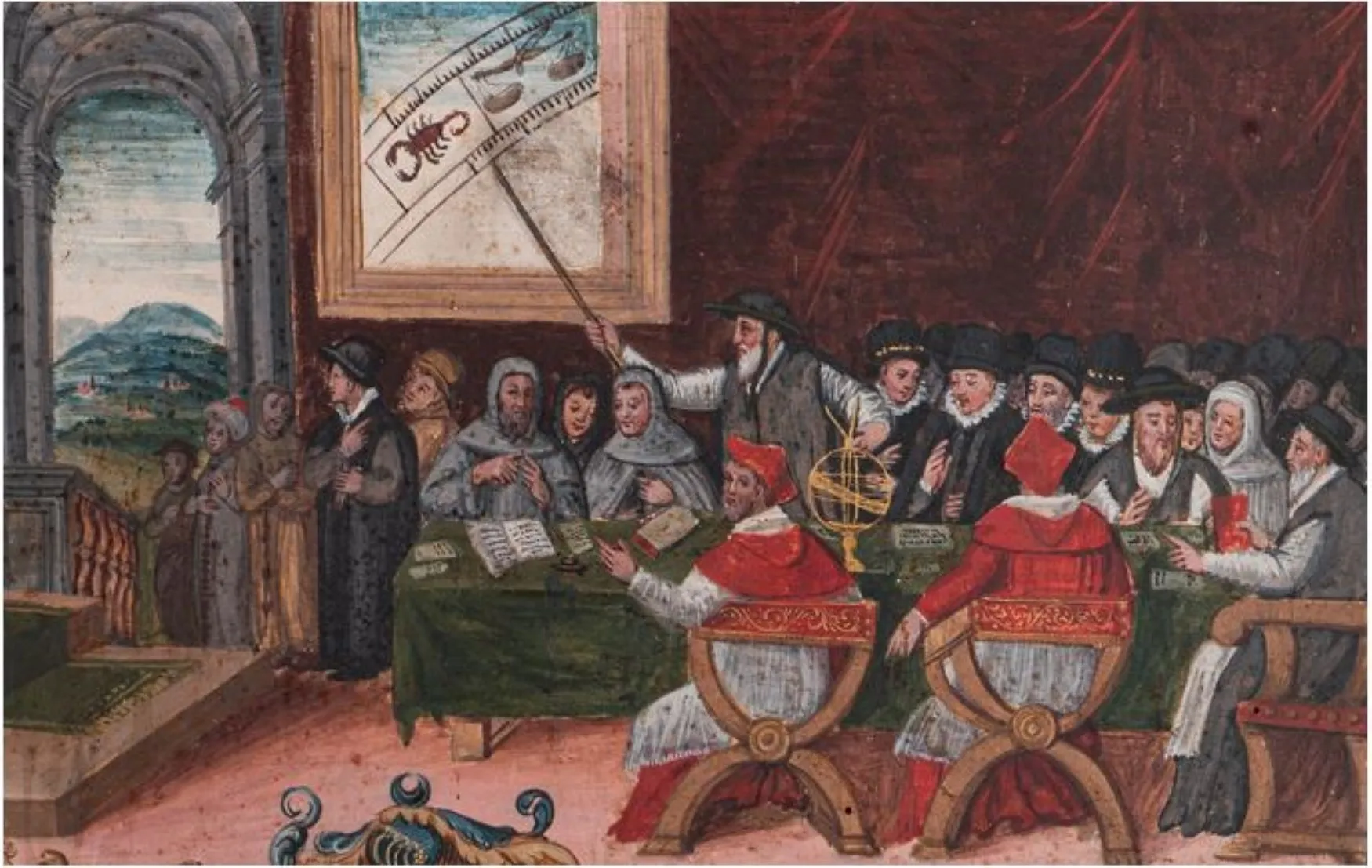
Crédits: DR - photo Luca Betti
Publications similaires :
 Nouvelles Rencontres d'Averroès – Marseille, la Méditerranée, le monde – 20-11-2025 – Marseille 7e Arrondissement
  Escape game "Lire ou ne pas lire… Telle est la question !" – 06-09-2025 – Saint-Vallier
  Exposition permanente Cosquer Méditerranée – 10-02-2025 – Marseille 2e Arrondissement
  Tatouage – Histoires de la Méditerranée – 17-05-2025 – Marseille 2e Arrondissement