Description
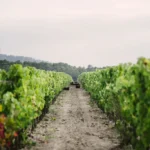
Le Pic Saint Loup au nord de Montpellier est un terroir AOP plantés de vignes sur un sol argilo-calcaire.
Les 11 ha de vignes de notre DOMAINE sont cultivés en Agriculture Biologique, semés d’engrais verts et paillés. La vinification se fait en toute simplicité, en levures indigènes, peu sulfitée, participant à la singularité de nos millésimes.
English
The Pic Saint Loup to the north of Montpellier is an AOP terroir planted with vines on a clay-limestone soil.
The 11 hectares of vines of our ESTATE are cultivated in Organic Agriculture, sowed with green manures and mulched. The vinification is done in complete simplicity, with indigenous yeasts, low in sulfites, contributing to the uniqueness of our vintages.
Deutsch
Der Pic Saint Loup nördlich von Montpellier ist ein AOP-Terroir, das mit Weinreben auf ton- und kalkhaltigem Boden bepflanzt ist.
Die 11 ha Weinberge unseres DOMAINE werden biologisch bewirtschaftet, mit Gründünger eingesät und mit Stroh bedeckt. Die Weinbereitung erfolgt in aller Einfachheit mit einheimischen Hefen und wenig Schwefel, was zur Einzigartigkeit unserer Jahrgänge beiträgt.
Dutch
De Pic Saint Loup, ten noorden van Montpellier, is een AOP terroir beplant met wijnstokken op klei-kalksteen bodem.
De 11 hectare wijnstokken in onze DOMAINE worden biologisch geteeld, met groenbemesting en mulch. Het vinificatieproces is eenvoudig, met inheemse gisten en weinig zwavel, wat bijdraagt aan het unieke karakter van onze wijnen.
Español
El Pic Saint Loup, al norte de Montpellier, es un terruño AOP plantado de vides sobre suelos arcillo-calcáreos.
Las 11 hectáreas de viñedo de nuestro DOMINIO se cultivan de forma ecológica, con abono verde y mantillo. El proceso de vinificación es sencillo, con levaduras autóctonas y poco azufre, lo que contribuye a la singularidad de nuestras añadas.
Italiano
Il Pic Saint Loup, a nord di Montpellier, è un terroir AOP coltivato a vite su terreni argillo-calcarei.
Gli 11 ettari di vigne della nostra DOMAINE sono coltivati con metodo biologico, utilizzando sovescio e pacciamatura. Il processo di vinificazione è semplice, con lieviti indigeni e poco zolfo, il che contribuisce all'unicità delle nostre annate.