Le Cellier Saint Pierre – Troyes
Description
English
Deutsch
Dutch
Español
Italiano
Description
Le cellier est un bâtiment datant de la fin du 12 ème siècle, il s’appelait le cellier aux dîmes . Le magasin de vente est une maison d’habitation de chanoine construite au 17 ème siècle, le tunnel de la cave permettait de rejoindre la cathédrale.
Des marchands de vins se sont installés au Cellier aux Champagnes dans les années 1800 . il est la propriété de la famille Formont depuis 1933.
La Prunelle de Troyes est distillée depuis 1840, elle a obtenu la médaille d’or à l’exposition universelle de 1900 à Paris.
Pour la fabrication, les noyaux de prunelle sont broyés et mis en macération dans l’alcool, puis on effectue une double distillation dans l’alambic.
L’alcoolat obtenu est marié avec d’autres ingrédients naturels qui lui donnent sa complexité et son secret de fabrication.
La prunelle de Troyes est une liqueur titrant 40 ° . elle se consomme en digestif, éventuellement glacée, en « trou Champenois » sur un sorbet ou sur du nougat glacé, en cocktail avec du Champagne ou bien simplement par gourmandise.
English
The cellar is a building dating from the late 12th century, known as the "cellier aux dîmes" (tithe cellar). The sales store is a canon's dwelling built in the 17th century, with a tunnel from the cellar to the cathedral.
Wine merchants set up shop in the Cellier aux Champagnes in the 1800s, and it has been owned by the Formont family since 1933.
Prunelle de Troyes has been distilled since 1840, and won a gold medal at the 1900 Universal Exhibition in Paris.
Prunelle stones are crushed and macerated in alcohol, then double-distilled in a still.
The resulting alcoholate is blended with other natural ingredients, giving it its complexity and secret.
Prunelle de Troyes is a 40° liqueur that can be enjoyed as a digestif, iced if desired, as a "trou Champenois" with sorbet or iced nougat, in cocktails with Champagne or simply as a treat.
Deutsch
Der Weinkeller ist ein Gebäude aus dem späten 12. Jahrhundert, das auch als Zehntkeller bezeichnet wurde. Der Verkaufsladen ist das Wohnhaus eines Domherren aus dem 17. Jahrhundert.
Weinhändler ließen sich in den 1800er Jahren im Cellier aux Champagnes nieder. Seit 1933 ist er im Besitz der Familie Formont.
Die Prunelle de Troyes wird seit 1840 destilliert und erhielt auf der Weltausstellung 1900 in Paris die Goldmedaille.
Für die Herstellung werden die Schlehenkerne zerkleinert und in Alkohol eingelegt, anschließend erfolgt eine zweifache Destillation im Destillierapparat.
Der gewonnene Alkoholat wird mit anderen natürlichen Zutaten vermählt, die ihm seine Komplexität und sein Herstellungsgeheimnis verleihen.
Die Schlehe von Troyes ist ein Likör mit einem Alkoholgehalt von 40 °. Er wird als Digestif getrunken, eventuell eisgekühlt, als "trou champenois" auf einem Sorbet oder auf glasiertem Nougat, als Cocktail mit Champagner oder einfach als Leckerbissen.
Dutch
De kelder is een gebouw uit het einde van de 12e eeuw, het werd de tiendenkelder genoemd. De verkoopwinkel is een kanunnikenwoning uit de 17e eeuw. De tunnel in de kelder bood toegang tot de kathedraal.
Wijnhandelaren vestigden zich in de jaren 1800 in de Cellier aux Champagnes, die sinds 1933 eigendom is van de familie Formont.
Prunelle de Troyes wordt gedistilleerd sinds 1840 en won een gouden medaille op de wereldtentoonstelling van 1900 in Parijs.
Om het te maken worden de sleepruimen geplet en gemacereerd in alcohol, waarna het dubbel gedistilleerd wordt in een distilleerketel.
Het resulterende alcoholaat wordt gemengd met andere natuurlijke ingrediënten om het zijn complexiteit en productiegeheim te geven.
Prunelle de Troyes is een likeur van 40° en kan worden gedronken als after-dinner drink, eventueel gekoeld, als een "trou Champenois" met sorbet of nougat, in een cocktail met Champagne of gewoon als traktatie.
Español
El sótano es un edificio de finales del siglo XII, conocido como la bodega del diezmo. La tienda de ventas es una vivienda canónica construida en el siglo XVII. El túnel del sótano daba acceso a la catedral.
Los comerciantes de vino se instalaron en el Cellier aux Champagnes en el siglo XIX. Desde 1933 es propiedad de la familia Formont.
Prunelle de Troyes se destila desde 1840 y obtuvo una medalla de oro en la Exposición Universal de París de 1900.
Para su elaboración, se machacan los huesos de endrina, se maceran en alcohol y se destilan dos veces en un alambique.
El alcoholato resultante se mezcla con otros ingredientes naturales para darle su complejidad y su secreto de fabricación.
Prunelle de Troyes es un licor de 40°. Puede tomarse como sobremesa, quizás frío, como "trou Champenois" con sorbete o turrón helado, en un cóctel con champán o simplemente como golosina.
Italiano
La cantina è un edificio risalente alla fine del XII secolo, noto come cantina delle decime. Il negozio di vendita è un'abitazione del canonico costruita nel XVII secolo. Il tunnel della cantina consentiva l'accesso alla cattedrale.
Nel Cellier aux Champagnes si sono insediati dei commercianti di vino nell'Ottocento e dal 1933 è di proprietà della famiglia Formont.
La Prunelle de Troyes viene distillata dal 1840 e ha vinto una medaglia d'oro all'Esposizione Universale di Parigi del 1900.
Per produrla, i noccioli di prugnola vengono schiacciati e fatti macerare nell'alcol, quindi sottoposti a doppia distillazione in un alambicco.
L'alcolato così ottenuto viene miscelato con altri ingredienti naturali per conferire la sua complessità e il suo segreto di fabbricazione.
La Prunelle de Troyes è un liquore a 40° che può essere bevuto come dopocena, magari ghiacciato, come "trou Champenois" con sorbetto o torrone ghiacciato, in un cocktail con lo Champagne o semplicemente come una delizia.
1 place Saint-Pierre, 10000 Troyes
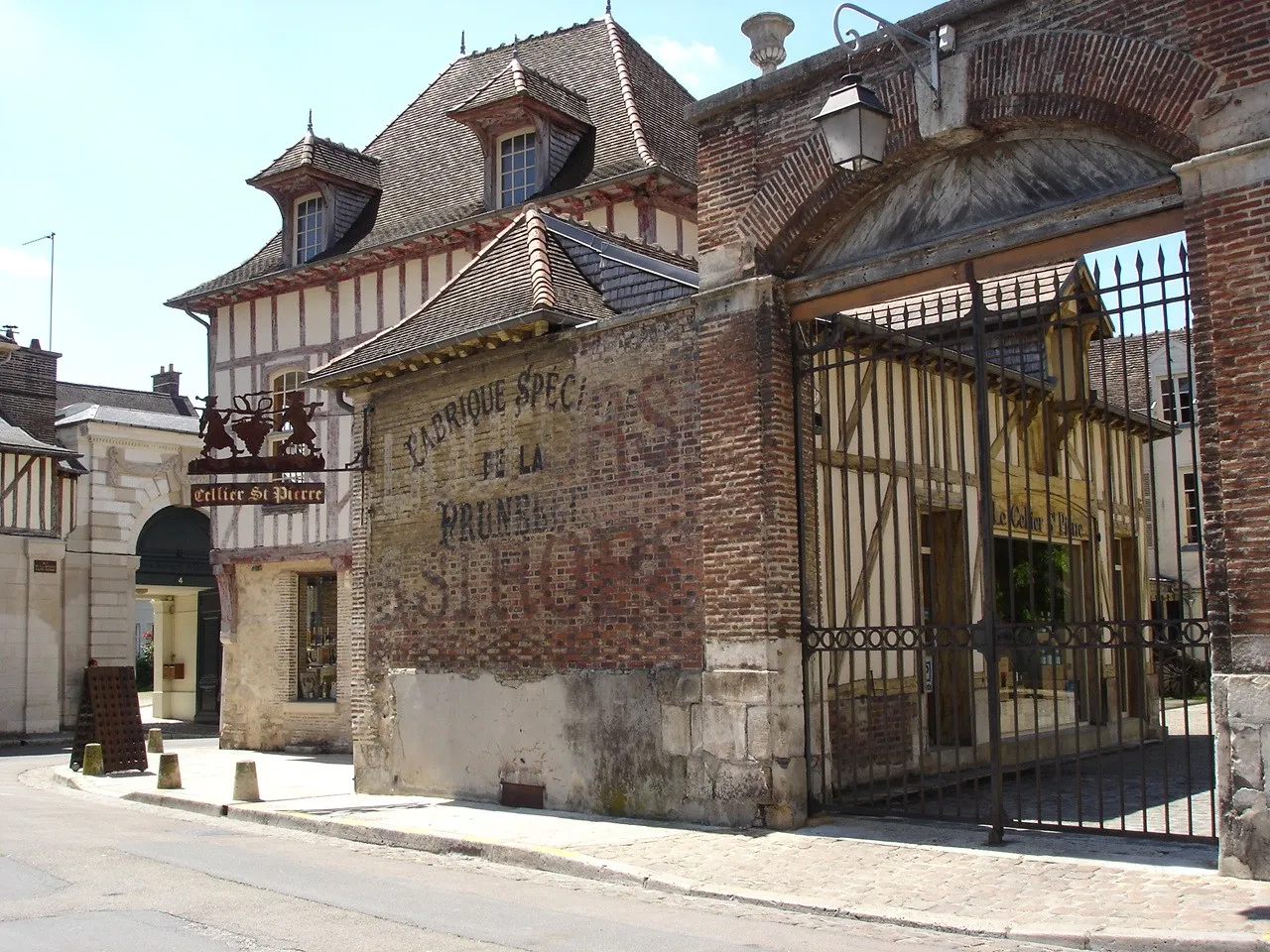
Crédits: Le cellier Saint Pierre